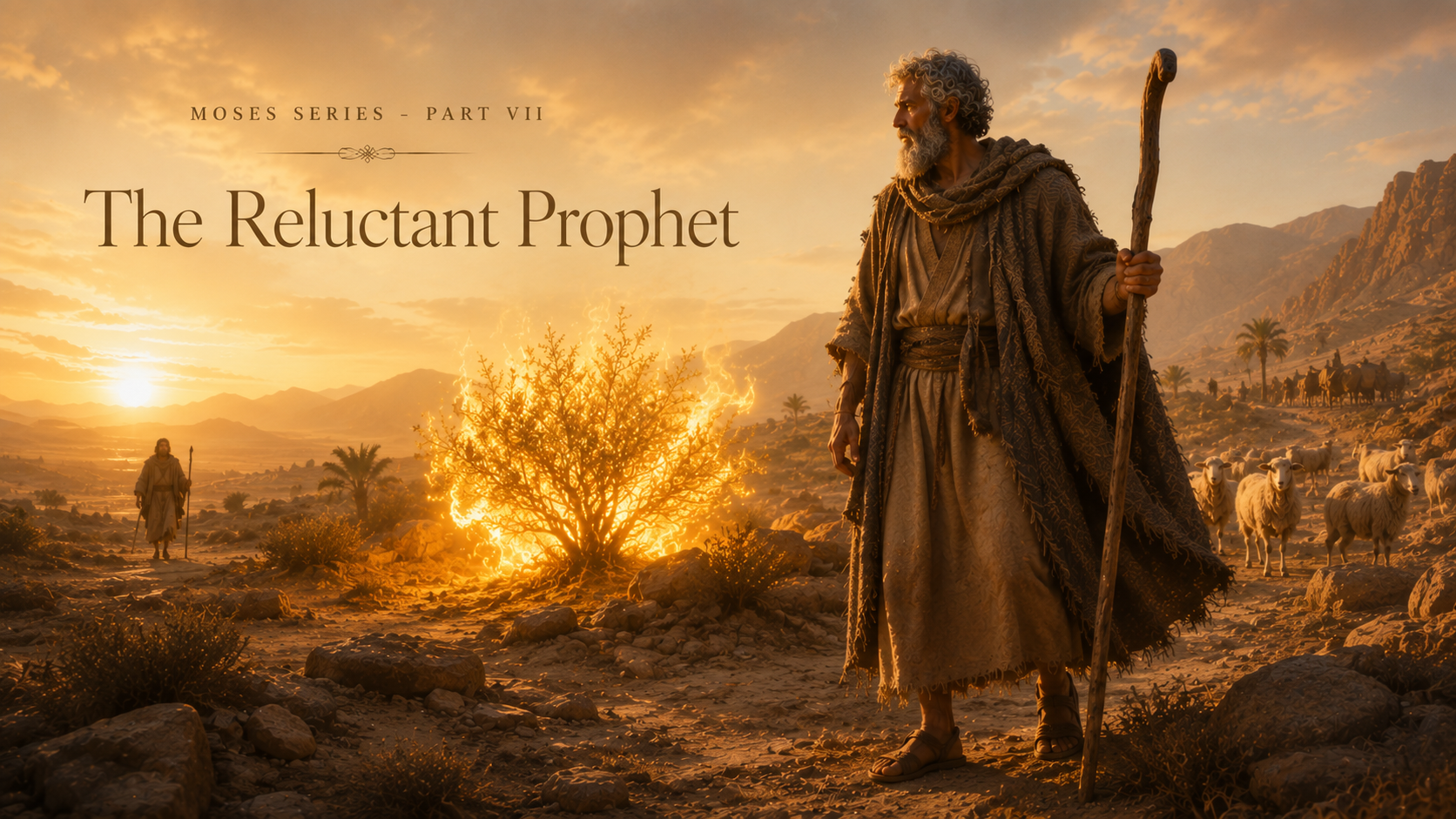
"Oh, my Lord, please send someone else."
— Exodus 4:13

Before You Begin This Study
Please Read These Passages First
Part Seven covers the journey between the burning bush and the first confrontation with Pharaoh — including one of the most mysterious and disturbing passages in the entire Bible. Read slowly and sit with the strangeness before the commentary tries to explain it.
Pay particular attention to Exodus 4:24–26. Do not skip it or rush past it. It is three verses that have occupied scholars for three thousand years, and the discomfort it creates is part of what it is teaching.
Exodus 4:18–31 Isaiah 6:1–13 Jeremiah 1:4–19 Judges 6:11–241 Kings 19:1–18
Optional deeper reading:
Genesis 17:9–14 (the covenant of circumcision);
Romans 8:26–27 (the Spirit interceding when we cannot);
Philippians 2:12–13 (working out salvation with fear and trembling);
Jonah 1 (the most extreme version of prophetic reluctance).
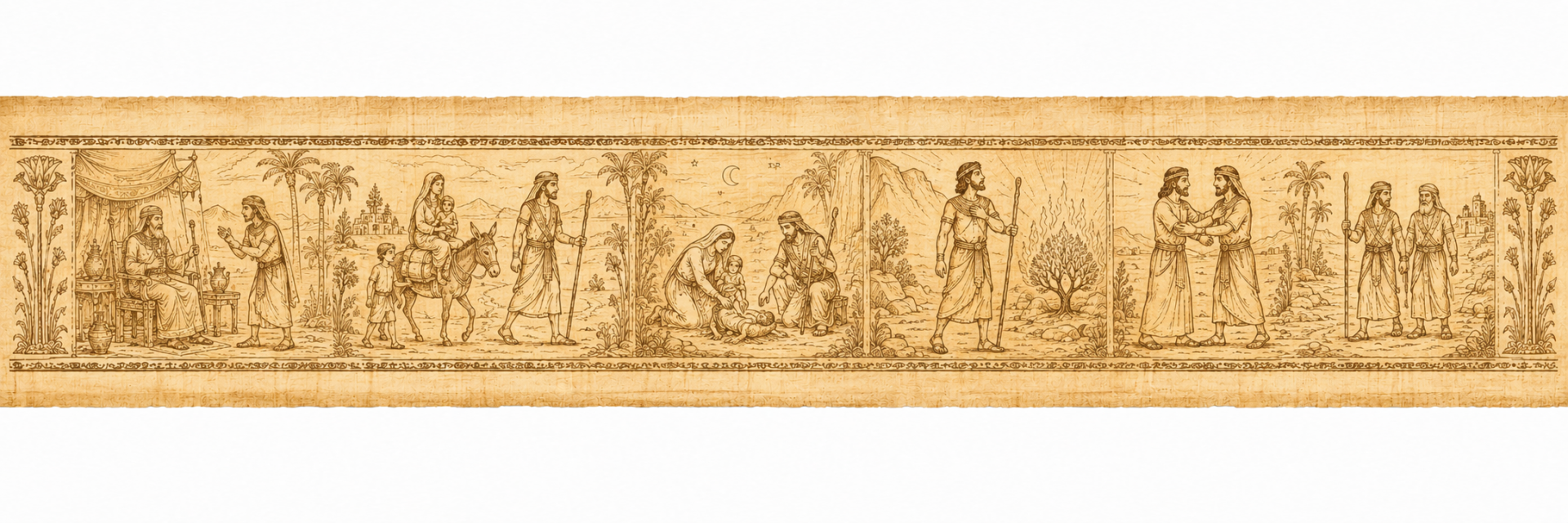
The Story
The Road Back to Egypt
Between the burning bush and Pharaoh's throne — the journey no one prepared him for
The following narrative reconstructs the journey from Midian to Egypt based on the biblical text, historical geography, and cultural context. Where Scripture is silent, imagination serves — always in submission to the text.
He went back to Jethro first.
That detail matters. Moses does not stride directly from the burning bush toward Egypt. He goes home. He packs his family. He asks his father-in-law's permission to leave. Exodus 4:18: "Moses went back to Jethro his father-in-law and said to him, 'Please let me go back to my brothers in Egypt to see whether they are still alive.'" It is almost painfully understated. He does not tell Jethro about the burning bush. He does not say "God has commanded me." He says: I want to go see if my brothers are still alive. As if he is asking permission for a personal errand. As if the most consequential journey in human history is something he needs to square with his father-in-law before he begins.
Perhaps he could not find the words. Perhaps the burning bush was too large to explain across a breakfast fire. Perhaps he was still not entirely sure what had happened to him. Or perhaps — most likely — Moses was the kind of man who, even when called by the God of the universe, still honoured the ordinary obligations of family and relationship. He belonged to Jethro's household. He would not simply disappear.
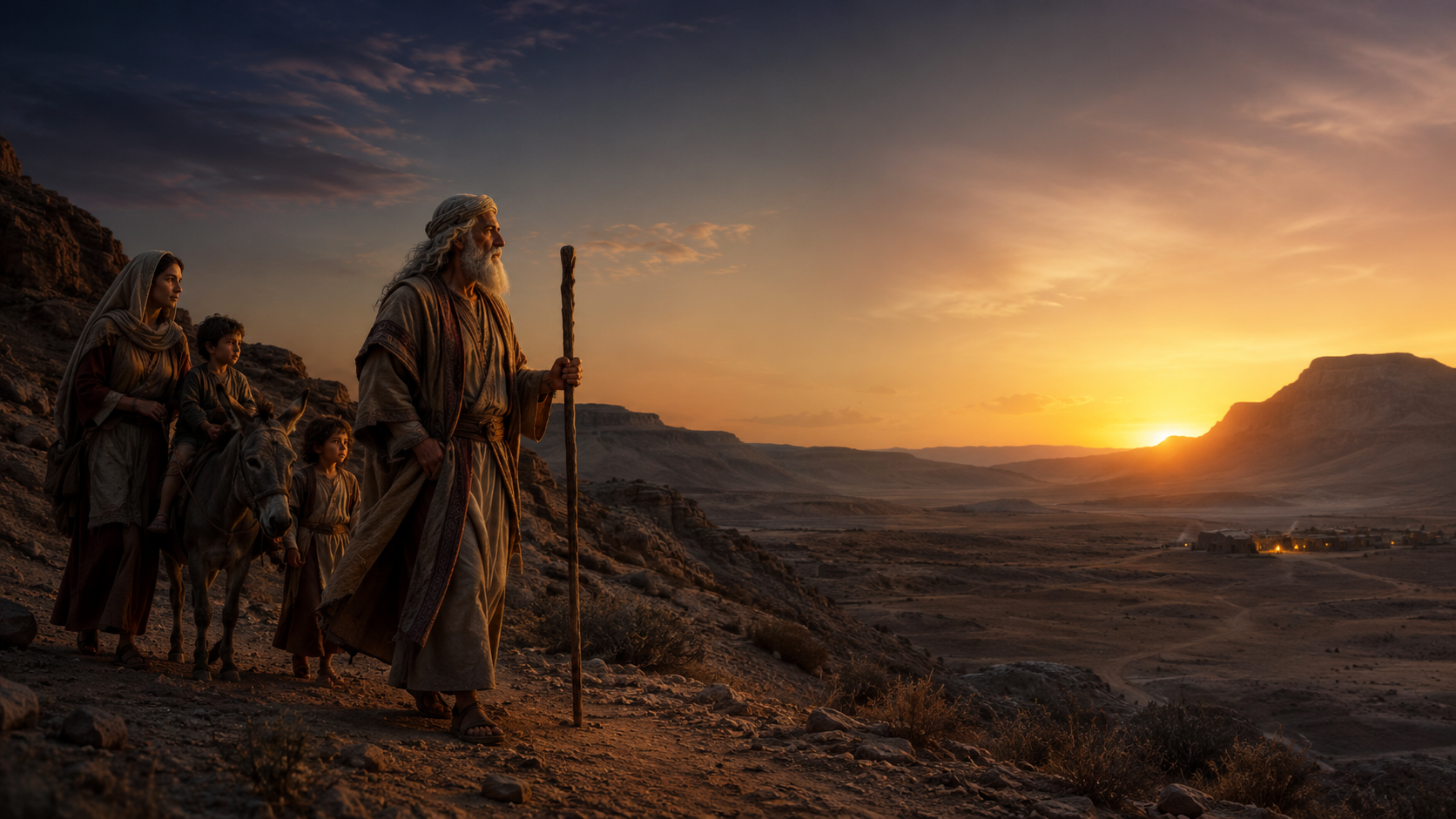
Jethro said: go in peace. And so Moses loaded his wife and his sons on a donkey and turned his face toward Egypt. He carried the staff of God in his hand. The same staff he had carried for forty years through every ravine and rockface of the Midian wilderness. Now it was something else. Now it was the instrument of signs. But it looked exactly the same as it always had — a shepherd's stick, worn smooth by forty years of desert use, carried by a man who was still, in every outward appearance, an old shepherd going home.
The journey from Midian to Egypt was not a short one. Whether we place Midian in the Sinai Peninsula or in northwest Arabia, the route to Egypt meant days of travel through harsh terrain — across the Sinai desert, past the Egyptian border fortresses, through the delta region toward the land of Goshen where the Hebrews lived. Moses had made this journey before, in reverse, forty years ago — a younger, faster, more terrified man running for his life. He was making it again at eighty years old, slower, unannounced, carrying a staff that could become a serpent and a message that could bring the greatest empire in the world to its knees.
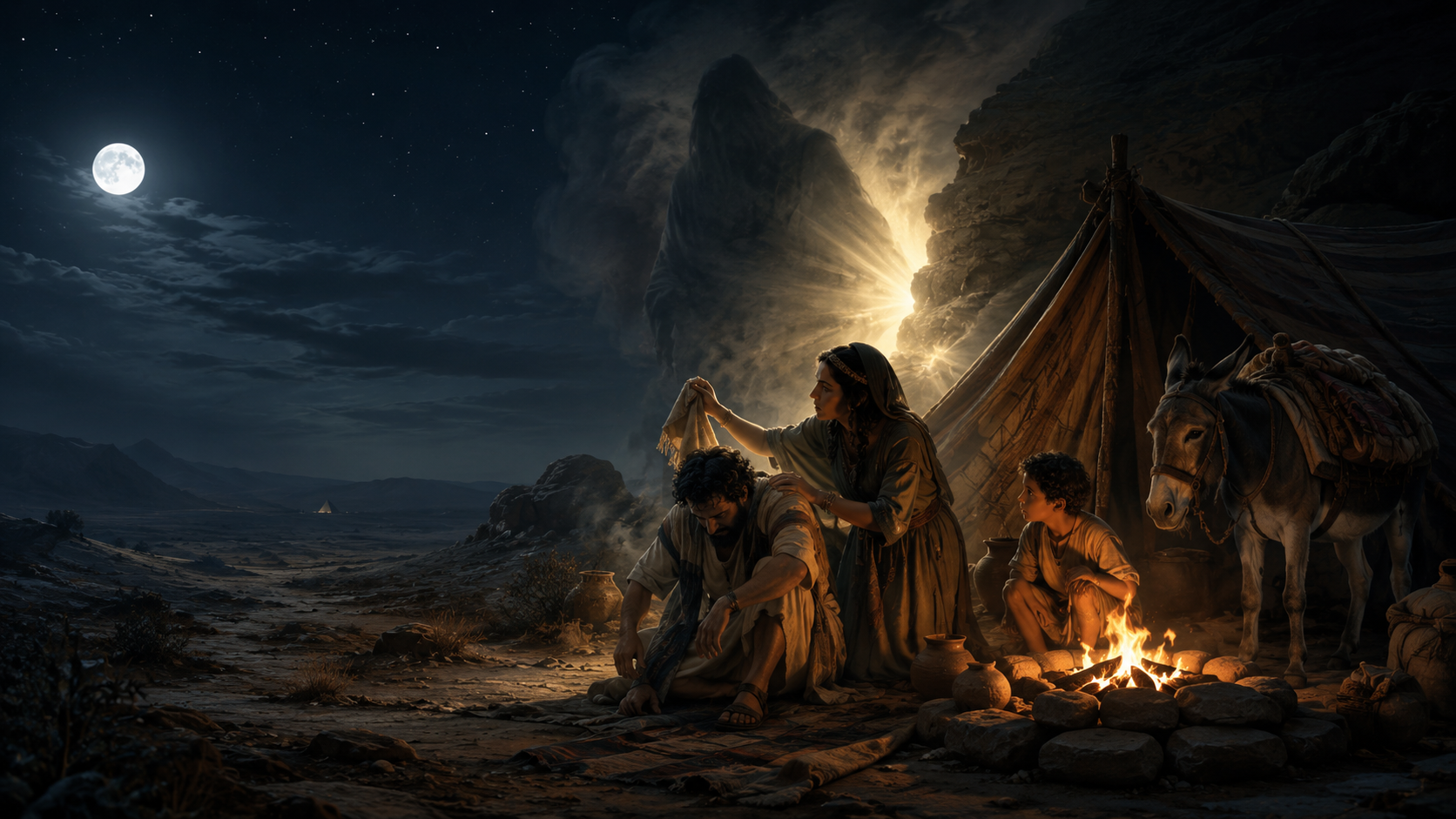
And somewhere on that road — in a lodging place, an inn, a wayside shelter — something happened that nearly ended the mission before it began.
The text is brutal in its brevity. Exodus 4:24: "At a lodging place on the way the LORD met him and sought to kill him." Three verses. No explanation. A God who has just spent two chapters commissioning Moses now, apparently, tries to kill him. The most prepared reader in the world hits this passage and stops. What is this? What is happening? Why?
Zipporah understood before Moses did. She took a flint and cut the foreskin of her son and touched it to Moses' feet — or perhaps to the son's feet, the text is ambiguous — and said: "Surely you are a bridegroom of blood to me." And the attack stopped. God let Moses go. And Zipporah sat with what she had done — saved her husband's life with a blade and a piece of flesh — and called him a bridegroom of blood. It is one of the strangest, most compressed, most theologically charged moments in the entire Bible. And it sits, almost unmarked, between the burning bush and the first meeting with Pharaoh, like a dark checkpoint on a road that everyone else is watching for something brighter.

The Theology of Reluctance
Why God so consistently chooses people who do not want to be chosen
Moses' reluctance at the burning bush — his five objections, his desperate final plea to send someone else — is not an anomaly in the biblical narrative. It is the norm. When we survey the major prophets and figures whom God calls to significant service, the pattern of reluctance appears with such consistency that it cannot be incidental. It is structural. It is deliberate. And once we see it, it raises a profound theological question: why does God so reliably choose people who do not want to be chosen?
What Reluctance Actually Signals
The instinct of most readers is to read prophetic reluctance as weakness — as a spiritual problem to be overcome, evidence of insufficient faith. But the biblical pattern suggests something more nuanced and more surprising: reluctance, in the right form, may actually be a qualification rather than a disqualification.
Consider what the reluctant prophet is actually communicating. They are saying: I understand the weight of what you are asking. I understand that I am inadequate to it. I am not trivialising your call by immediately agreeing to it. I am treating it with the seriousness it deserves. The prophet who immediately says "of course, send me, I'm ready" may be exhibiting not faith but presumption — the very quality that, as we saw in Moses' Exodus 2 killing, produces premature action and failed missions.
The reluctant prophet has been humbled enough to know their own limits. They are not naive about the cost. They are not performing false modesty. They genuinely do not feel adequate — which is the appropriate response to a genuinely impossible task. And their inadequacy makes them entirely dependent on divine provision rather than human competence. This is precisely where God can work most effectively.
The Theological Principle
2 Corinthians 12:9 — God's response to Paul's thorn in the flesh — articulates the principle most clearly: "My grace is sufficient for you, for my power is made perfect in weakness." Not "in strength that feels inadequate" — in actual weakness. The vessel through which divine power operates most purely is the vessel that has been emptied of self-sufficiency. Reluctance, at its deepest, is the psychological experience of that emptying.
The reluctant prophet is not the prophet who eventually overcomes their doubt and becomes confident. The pattern in Scripture is that they often remain somewhat reluctant throughout — Moses protests repeatedly even during the Exodus; Jeremiah repeatedly wishes he had never been born; Elijah asks to die under the broom tree. Their calling does not cure their humanity. It simply overrides it. God works through their weakness, not after it is resolved.

The Reluctant Prophets: A Comparative Study
Moses, Isaiah, Jeremiah, Gideon, Jonah — the pattern and what it means
The calling narrative in Exodus 3–4 follows a structural pattern that appears in remarkably similar form across multiple other biblical calling accounts. Mapping these narratives side by side reveals a consistent theology of divine calling that transcends any individual figure.
Calling Narrative Comparison — The Reluctant Prophet Pattern
| Figure | Objection | Theophany / Encounter | Divine Response |
|---|---|---|---|
| Moses - Exodus 3–4 | Five objections: Who am I? What is your name? They won't believe. I can't speak. Send someone else. | Burning bush; angel of the LORD; fire not consuming | Divine presence, the Name, signs, Aaron — provision for every specific fear |
| Isaiah Isaiah 6 | "Woe is me! For I am lost; for I am a man of unclean lips, and I dwell in the midst of a people of unclean lips" | The throne room vision; seraphim; the train of God's robe filling the temple; Holy, holy, holy | The coal from the altar; "your guilt is taken away and your sin atoned for." Then: "Who shall I send?" And Isaiah says: "Here I am. Send me." |
| Jeremiah Jeremiah 1 | "I do not know how to speak, for I am only a youth" — virtually identical to Moses' "I am not eloquent" | The word of the LORD comes; direct divine speech; no visual theophany — but God touches his mouth | "Do not say 'I am only a youth'; for to all to whom I send you, you shall go, and whatever I command you, you shall speak. Do not be afraid of them, for I am with you." |
| Gideon Judges 6 | "Please, Lord, how can I save Israel? Behold, my clan is the weakest in Manasseh, and I am the least in my father's house." | The angel of the LORD sitting under the oak at Ophrah; fire from the rock consuming the offering | "But I will be with you" — word for word the same assurance given to Moses. Then three signs (the fleece) to overcome continuing doubt. |
| Jonah Jonah 1–4 | No verbal objection. Physical flight — Jonah boards a ship in the opposite direction. The most extreme form of prophetic reluctance: not argument but desertion. | The word of the LORD comes — with no dramatic theophany. No burning bush, no temple vision. Just: arise and go. | The storm, the fish, the three days, the re-commissioning. God pursues the fleeing prophet across the sea and reclaims him from the depths. |
| Elijah 1 Kings 19 | "I have been very jealous for the LORD, the God of hosts. For the people of Israel have forsaken your covenant, thrown down your altars, and killed your prophets with the sword, and I, even I only, am left." | After the fire and the earthquake and the storm — the still, small voice at Horeb. The same mountain as Moses. | Food, rest, a new commission, the revelation of seven thousand who have not bowed to Baal. God reframes the prophet's catastrophising with reality. And sends him back. |
| Paul Acts 9; Galatians 1 | Not verbal reluctance — but structural: Paul was actively persecuting the Church. He is the most dramatically unsuitable candidate imaginable. | The light on the road to Damascus; the voice of the risen Christ; three days of blindness | "He is a chosen instrument of mine to carry my name before the Gentiles and kings and the children of Israel." Forty years of wilderness (Arabia) before public ministry. The pattern holds. |
What the Pattern Reveals About God
The consistent elements across all these calling narratives reveal something important about how God works. In almost every case: there is a theophany or direct divine encounter, the called person responds with a protest rooted in genuine self-awareness of inadequacy, God responds not by dismissing the objection but by providing a specific answer to the specific fear, and God adds a sign or confirmation as an act of gracious accommodation to human weakness.
The one notable exception to the verbal objection pattern is Jonah — who replaces argument with flight. And what is remarkable about Jonah is that God pursues him just as relentlessly as He pursues the protesting prophets. You cannot argue your way out of the call, and you cannot run your way out of it either. The prophet who objects is met with provision. The prophet who flees is met with a fish. God gets His prophet either way.
The Reluctance of Jesus — Gethsemane
The Christological expression of prophetic reluctance appears in its most profound form in the Garden of Gethsemane. Luke 22:42: "Father, if you are willing, remove this cup from me. Nevertheless, not my will, but yours, be done."
The eternal Son of God, fully divine and fully human, prays — three times in Matthew's account — for the cup to be removed. He sweats drops like blood. The writer of Hebrews says He "offered up prayers and supplications, with loud cries and tears" (Hebrews 5:7). This is not performance. This is genuine human anguish at an genuinely impossible assignment.
And yet: not my will, but yours. The ultimate hineni. The ultimate "here I am, send me." Jesus is the culmination of every reluctant prophet who ever said "please send someone else" — not because He ultimately ran or failed, but because He fully inhabited the human experience of being called to something unbearable, and chose the Father's will anyway. Moses' "send someone else" is answered, eventually, by a Saviour who said "send me" when no one else could go.
The Strange Attack: Exodus 4:24–26
The most mysterious three verses in the book of Exodus
"At a lodging place on the way the LORD met him and sought to kill him. Then Zipporah took a flint and cut off her son's foreskin and touched Moses' feet with it and said, 'Surely you are a bridegroom of blood to me.' So he let him alone. It was then that she said, 'A bridegroom of blood,' because of the circumcision."
Exodus 4:24–26
Three verses. No explanation. No preceding warning. No following commentary. The narrative simply drops this episode into the middle of the road to Egypt and moves on, as if what just happened is self-evident. For ancient readers, it perhaps was. For modern readers, it is one of the most disorienting passages in the entire Bible.
Questions that immediately arise: Who is the "him" that God sought to kill — Moses or his son? Why would God who just commissioned Moses now seek to kill him? What does circumcision have to do with it? What does "bridegroom of blood" mean? Why does Zipporah understand what to do when Moses apparently does not? And how does this passage connect to the rest of the Exodus narrative?
We cannot answer all of these with certainty. But we can map the serious scholarly and theological attempts to understand it — and discover that the passage, once inhabited, is not arbitrary but profoundly significant.
The Circumcision Crisis: What Had Gone Wrong
Background — The Covenant of Circumcision
In Genesis 17:9–14, God establishes circumcision as the covenant sign with Abraham and his descendants: "Every male among you shall be circumcised... Any uncircumcised male who is not circumcised in the flesh of his foreskin shall be cut off from his people; he has broken my covenant."
The penalty for failing to circumcise is being "cut off from his people" — a severe covenantal consequence, likely referring to exclusion from the community and from covenant blessing. This was not a minor ritual requirement. It was the physical mark of covenant membership, the sign inscribed in the body of every male Israelite that distinguished them as God's people.
Moses, during his forty years in Midian, had not circumcised at least one of his sons. This is the most widely accepted explanation for the attack. The identity of which son is debated — most scholars think it is the younger son Eliezer, since Gershom (the firstborn, named in Exodus 2:22) may have been circumcised. But whether one son or both, Moses has neglected the foundational covenant sign of the people he is being sent to lead out of Egypt.
Why This Is So Serious
The severity of God's response — approaching to kill Moses — seems disproportionate until we understand the stakes. Moses is about to go to Pharaoh as the representative of YHWH and the leader of the covenant people. He is going to tell Pharaoh that Israel is God's firstborn son (Exodus 4:22–23). He is going to demand the release of a nation bound to God by covenant.
And the man leading this covenant people has failed to mark his own son with the covenant sign. The contradiction is not just personal — it is representational. How can Moses demand that Pharaoh honour YHWH's claim on Israel when his own household is not bearing the covenant mark? The mission requires integrity between what Moses proclaims and what Moses embodies. Before he can confront Pharaoh about Israel's circumcision of heart and covenant identity, his own family must bear the covenant sign.
There is also a broader principle here that appears throughout Scripture: God holds leaders to a higher standard of covenant faithfulness than He holds the general community. Not because their souls are more valuable, but because their example is more influential. The shepherd who does not practice what he preaches poisons the flock.
Verse by Verse: Exodus 4:24–26
Exodus 4:24–26 — The Attack and the Resolution
Verse 24
"At a lodging place on the way the LORD met him and sought to kill him."
Hebrew Analysis
malon baderech — "lodging place on the way." The word malon refers to a night stopping-place — a wayside shelter or caravanserai. This is not a temple or sacred site. It is the most mundane possible location: a rest stop on a road. God meets Moses in the ordinary, not only the spectacular.
vayevakesh hamito — "sought to kill him." The Hebrew is stark and unmediated. There is no angel, no intermediary. The LORD Himself moves against Moses. The word hamito is the hiphil infinitive of mut (to die) — literally "to cause him to die." This is life-threatening divine confrontation.
The ambiguity of "him" is the interpretive crux. Some ancient versions (Septuagint, Targum Jonathan) read "him" as the son. Most modern scholarship reads it as Moses. If Moses, the passage describes a divine attack on the commissioned prophet himself. If the son, it may mean the child was struck ill.
The rabbinic tradition (Nedarim 31b-32a) suggests the attack came because Moses had prioritised settling in Midian over performing the circumcision — that the birth of Gershom (or Eliezer) had been followed by the circumcision being delayed, and that this delay, not the forty years per se, triggered the confrontation.
Verse 25
"Then Zipporah took a flint and cut off her son's foreskin and touched Moses' feet with it and said, 'Surely you are a bridegroom of blood to me.'"
Hebrew Analysis
vatikach Tziporah tzor — "Zipporah took a flint." The word tzor (flint) is the standard implement for circumcision in the ancient world — Joshua uses one in Joshua 5:2–3. Flint is extremely sharp and was preferred over metal for ritual cutting in archaic practice.
vatiga l'raglav — "she touched his feet." "Feet" in Hebrew is frequently a euphemism for the genitals (cf. Isaiah 7:20; Ruth 3:4). If this reading is adopted, Zipporah touches the foreskin to Moses' own genitals — perhaps symbolically completing the circumcision vicariously, or performing a ritual identification between the child's circumcision and the father's covenant obligation. The gesture is deeply archaic and its precise meaning is debated.
chatan damim — "bridegroom of blood." This phrase is untranslatable without ambiguity. Chatan (bridegroom) shares a root with Arabic khitanu (to circumcise). The phrase may therefore mean: "you are a blood-relative through circumcision," or "you owe your life to blood [the blood of circumcision]," or may carry the sense of: "the circumcision blood has made this relationship possible." Whatever the precise meaning, Zipporah is making a statement about the connection between the blood of circumcision and covenantal relationship.
Verse 26
"So he let him alone. It was then that she said, 'A bridegroom of blood,' because of the circumcision."
Hebrew Analysis
vayiref mimenu — "he let him alone" or "he released him." The verb rafah means to release, to let go, to desist. The attack stops. The circumcision blood — or the act of circumcision — is what resolves the crisis. The covenant sign has been applied. The covenantal deficiency has been remedied. And God releases His grip.
The narrator's brief explanatory note ("because of the circumcision") confirms that this reading is correct: the crisis was circumcision-related. Whatever the precise mechanics, the meaning is clear: covenant identity must be embodied before covenant mission can proceed. Moses could not lead Israel out until his own household was marked with Israel's covenant sign.
Zipporah: The Unsung Hero of Exodus 4
Zipporah is one of the most underappreciated figures in the entire Moses narrative. In three verses she saves her husband's life, performs a covenant rite, and speaks a theologically loaded statement — and then largely disappears from the main narrative (she and the sons are sent back to Jethro in Exodus 18:2, presumably shortly after this incident, reuniting with Moses only later).
What is striking about this passage is that Zipporah acts where Moses apparently cannot. Moses — the one who has just heard the divine voice from the burning bush, who has been given the staff of God, who has spoken with the I AM — is incapacitated by the divine attack. It is his Midianite wife who understands what is needed and acts. She, not Moses, resolves the crisis.
How did she know? The text does not explain. Several possibilities: she may have known about the covenant of circumcision through her Abrahamic heritage (the Midianites as descendants of Keturah's son). She may have understood intuitively, in the moment, what the attack signified. Or she may have been aware of the uncircumcised son as a source of ongoing tension — perhaps she had resisted the circumcision as painful and dangerous for the child, and now in extremis she overcomes her resistance.
Whatever the reason, the pattern is consistent with what we have seen throughout the Moses narrative: God's purposes advance through unexpected instruments. Pharaoh's daughter saves Moses. Miriam brokers his nursing arrangement. The seven daughters at the well connect him to Jethro. And now Zipporah, with a flint knife and blood, saves the life of the man who will save a nation. The women around Moses are not passive background figures. They are active participants in the redemptive mission.
Historical Context — Circumcision in the Ancient Near East
Circumcision was practiced in ancient Egypt — Egyptian reliefs and mummies provide evidence going back to the Old Kingdom period (c. 2500 BC). It was practiced as an initiatory rite for priests and military personnel, not universally for all males. The Midianites, as descendants of Abraham through Keturah, may or may not have practiced it regularly. Moses, raised in Egypt, would have been circumcised as part of palace practice. But his Midianite sons existed in a cultural liminal space between two traditions.
The use of a flint (rather than a metal blade) for circumcision reflects archaic practice. Joshua 5:2 specifically commands the use of flint knives for the circumcision of the generation born in the wilderness. This archaism likely reflects the ancient sacred character of the rite — using the "older" material for a primordial covenant obligation.
The phrase "bridegroom of blood" has a parallel in Arabic — khatan al-dam — used in some communities to describe the relationship established by circumcision. This suggests the phrase may be a genuine historical idiom with deep roots in Semitic culture, rather than a purely Hebraic invention.
What This Passage Means for the Overall Story
Exodus 4:24–26 is not an intrusion into the Exodus narrative. It is an integral part of its theology. It teaches several things that the burning bush account alone cannot:
- Commission is not the same as qualification.God's call at the burning bush does not automatically resolve every area of disobedience or neglect in Moses' life. He has been called. He has not yet been fully prepared. The road is part of the preparation.
- Covenant identity is embodied, not merely confessed.Moses could say all the right words about YHWH's covenant with Israel. But the covenant sign was not in his son's body. The attack confronts the gap between Moses' verbal theology and his embodied practice.
- God takes His own covenant more seriously than His prophets sometimes do.The attack is a reminder that YHWH is not a God who can be engaged and then domesticated. He is the I AM — whose covenant obligations are not negotiable even for the man He has just commissioned from a burning bush.
- The mission can be derailed by neglected covenant obligations.This is perhaps the most practically significant point for every person who reads this narrative. Moses nearly lost everything — not to Pharaoh, not to the wilderness, not to the doubt of the Israelites — but to an unresolved covenant issue in his own household, on a road, before he even arrived in Egypt
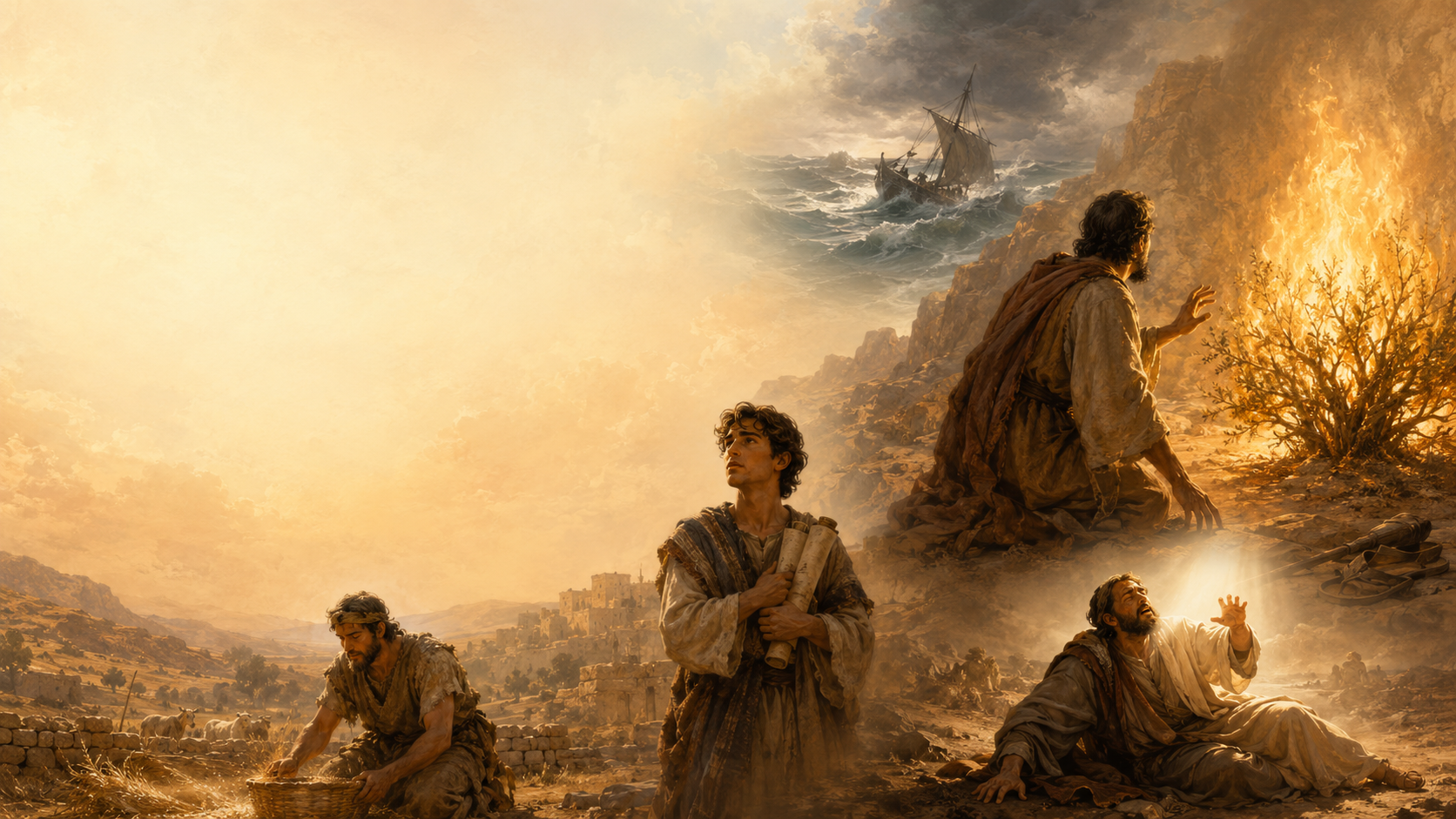
Why God Chooses the Unwilling
The theology behind the pattern — and what it says about divine power and human weakness
The Problem with Willing Volunteers
If we designed a divine recruitment process, we would probably screen for enthusiasm. People who volunteer eagerly, who are confident in their abilities, who have relevant experience and a strong desire to serve. This is how most human institutions fill important roles.
God's recruitment process looks nothing like this. The prophetic calling narrative, from Moses through Jeremiah through Paul, consistently gravitates toward people who are reluctant, who are inadequate, who are actively unsuitable by human metrics. Moses is a murderer and fugitive. Jeremiah is too young. Gideon is from the weakest clan. Paul is the chief persecutor of the people he will serve. Jonah actively flees. Why?
- To protect the glory. 1 Corinthians 1:26–29: "Not many of you were wise according to worldly standards, not many were powerful, not many were of noble birth. But God chose what is foolish in the world to shame the wise... so that no human being might boast in the presence of God." When God accomplishes extraordinary things through obviously inadequate instruments, the glory cannot be attributed to the instrument. The vessel is too transparently insufficient for anyone to credit the vessel. The glory goes where it belongs.
- To ensure dependence. A confident, capable, enthusiastic prophet tends to rely on their own gifts. They develop a theology of "God plus my abilities." The reluctant prophet knows, from the beginning, that their abilities are not sufficient. They have no option but to depend. And in that dependence, they become conduits of divine power rather than managers of their own competence.
- To match the scale of the task. The tasks God assigns to reluctant prophets are genuinely impossible. Confronting the greatest empire on earth. Telling a king to his face that God is angry with him. Taking a message of repentance to Israel's most feared enemy. These tasks are not achievable by human adequacy however great. A willing, confident prophet might walk into them and find that their confidence is the first casualty. A reluctant prophet, who never had confidence in themselves, has nothing to lose in the same way.
- Because the reluctance itself is a form of reverence. Isaiah's response to the throne room vision is not "yes, I'll go." It is "Woe is me." His reluctance arises from his recognition of who God is — a recognition so overwhelming that it makes his own unworthiness undeniable. This is the appropriate response to genuine holiness. The prophet who is too eager may not have fully apprehended what they are volunteering for.
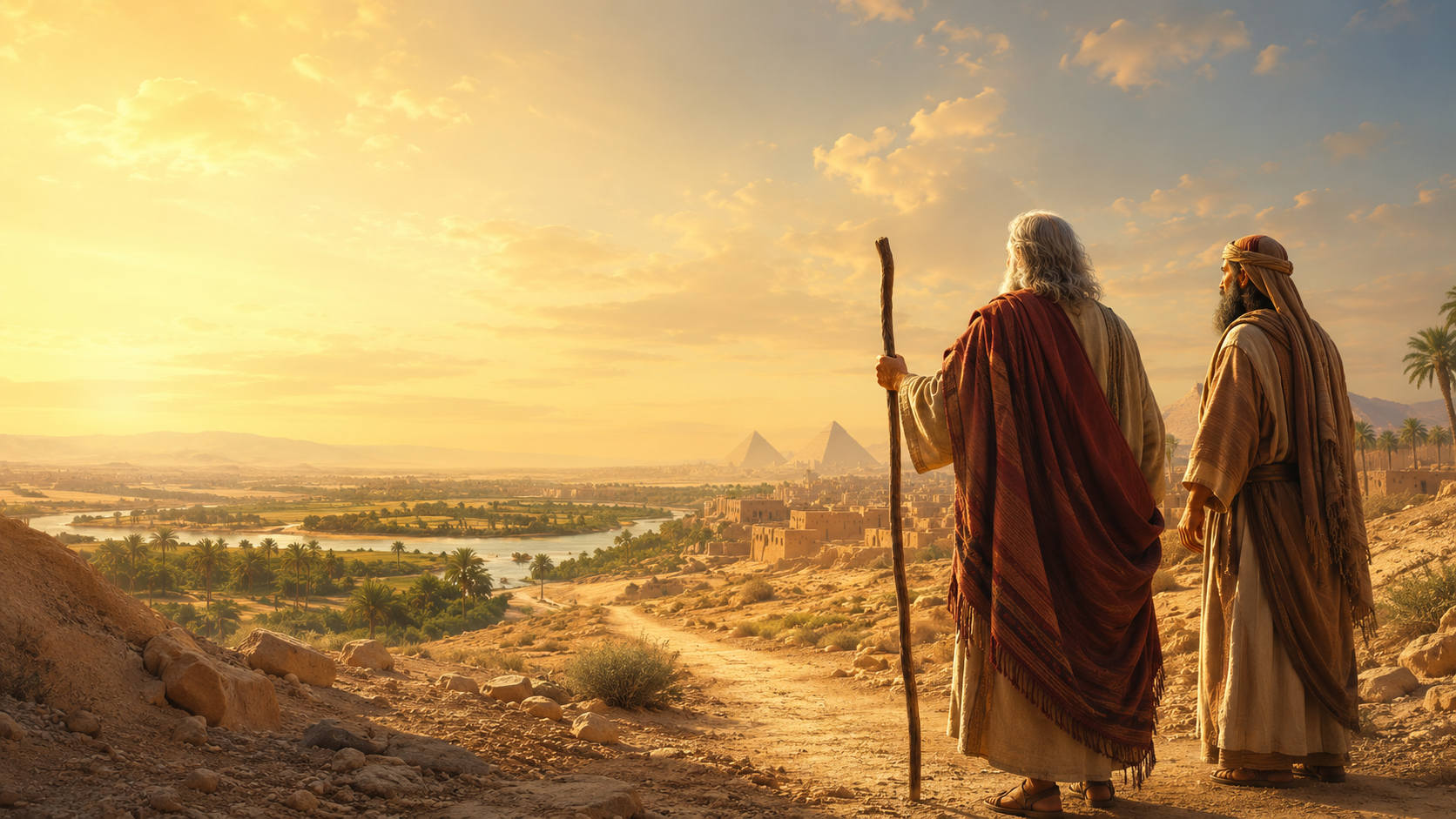
Arrival: The People's Response
Exodus 4:27–31 — the most important moment Moses had been afraid of
"Aaron spoke all the words that the LORD had spoken to Moses and did the signs in the sight of the people. And the people believed; and when they heard that the LORD had visited the people of Israel and that he had seen their affliction, they bowed their heads and worshipped."
Exodus 4:30–31
Moses' third objection at the burning bush was "they will not believe me" (Exodus 4:1). His deepest fear, rooted in the trauma of being rejected by the very people he tried to help forty years earlier, was that he would go back and be dismissed again. He had constructed in his imagination, over forty years of Midian, a scenario in which the Hebrew community turned on him once more — "who made you a ruler and a judge?" — and the mission ended before it began.
Exodus 4:31 is the answer to that fear. Aaron speaks. Aaron does the signs. And the people believe. Not just intellectually — they bow their heads and worship. The response is immediate, collective, and worshipful. The community that Moses was certain would reject him receives the message with faith.
This is one of the patterns of the Moses narrative that Scripture keeps returning to: the thing Moses feared most almost never arrives in the form he imagined. The rejection he feared did not materialise at this moment. Pharaoh is harder than Moses imagined. The Israelites are more difficult than Moses imagined in different ways. But the initial reception of the message — the moment that haunted Moses throughout his five objections — is met with worship.
What Moses Sees When He Arrives in Goshen
Moses would have been a stranger to almost everyone there. Most of the people who had known him — the Israelites who had watched the young prince pass by on palace business, the contemporaries who had witnessed the killing of the Egyptian and the flight — were dead. Forty years had passed. A new generation had grown up knowing Moses only as a story, if at all: the Hebrew prince who killed an overseer and ran away. A name from the past. A failed deliverer.
And now he was back. An old man. With a staff. With a brother walking beside him who the community did know and trust. And Aaron began to speak.
He told them everything. The burning bush. The divine name. The promise of deliverance. The land flowing with milk and honey. And then he did the signs — the staff became a serpent; the hand went leprous and was healed; the water turned to blood. And the people of Israel, who had been groaning under oppression for four hundred years, who had cried out without visible answer for so long that hope had become almost an act of defiance — these people looked at the signs and heard the words and believed.
And they bowed their heads. And they worshipped.
Moses, who had said "please send someone else," stood there and watched his people worship. And perhaps, in that moment, he understood for the first time what God had seen in him all along — not capability, not confidence, not eloquence. Just the right person, at the right time, on the right errand. Carrying a staff. Arriving home.

Devotional
God Meets the Reluctant Prophet — Even on the Road
Moses said "please send someone else" — and God sent him anyway.
There is a kind of person who reads the burning bush story and feels a surge of excitement: the dramatic theophany, the divine name, the signs, the commission. But Exodus 4:18–31 is where the real story begins, because it is where Moses has to actually go. After the bush, there is a road. After the commission, there is the journey. After the "I AM" there is the packing of the donkey and the goodbye to the father-in-law and the long walk toward the thing you were afraid of.
And on that road, God nearly kills him. Not to stop the mission — to complete the preparation. The attack at the lodging place is the final stripping. The last thing Moses was holding onto — the covenant negligence in his own household, the uncircumcised son, the one area where he had let duty slide — had to be resolved before Egypt. God would not send Moses into the confrontation of his life carrying an unresolved covenant issue. The road was not a safe space. It was still school.
And it is Zipporah — the woman Moses had not expected to be part of this mission at all, the one who would be sent back to her father shortly after, the Midianite outside the covenant — who acts. She picks up the flint. She makes the cut. She saves his life. And calls him her bridegroom of blood. There is something deeply human about this — the way the people closest to us sometimes see what we have missed, act where we have failed, cover our covenant negligence with their own hands and their own blood.
We talk about Moses as if he arrived at Egypt fully formed. He did not. He arrived at Egypt still being formed. The burning bush was not the end of his preparation. The attack on the road was still preparation. Even the first meeting with the elders of Israel, watching Aaron speak because his own voice was not yet ready — still preparation.
The reluctant prophet does not become un-reluctant before they go. They go reluctant. And God goes with them. And somewhere between the lodging place and Goshen, the mission begins not because Moses is finally ready but because God has run out of reasons to wait — and so has Moses.
Your reluctance is not the final word. God's call is the final word. And the gap between those two things is the road He will walk with you.

Reflection & Discussion Questions
Personal Reflection
1. Moses went home to Jethro before heading to Egypt — he asked permission, said goodbye properly, honoured ordinary relational obligations even in the middle of an extraordinary divine commission. What does this tell you about the relationship between the sacred and the ordinary? Are there ordinary obligations in your life that you sometimes feel justify abandoning because of a "bigger" calling?
2. Exodus 4:24–26 is deeply uncomfortable. God nearly kills the man He just commissioned. What is your emotional response to this passage? And what do you think it is teaching about the relationship between calling and covenant faithfulness — about what God expects from the people He sends?
3. Zipporah, the outsider, the Midianite, the wife — acts where Moses cannot. She sees what needs to be done and does it. Is there someone in your life who has acted in a moment where you were incapacitated — who carried you through a crisis you couldn't navigate alone? What does that experience reveal about how God provides?
Deeper Study
4. Read the comparison table carefully — Moses, Isaiah, Jeremiah, Gideon, Jonah, Elijah, Paul. What pattern do you see in their objections? Now look at your own resistance to what God may be calling you toward. Does your particular form of reluctance fit any of these patterns? Which prophet do you most resemble — the one who argues, the one who feels unworthy, or the one who runs?
5. Luke 22:42 — "not my will, but yours, be done" — is Jesus' Gethsemane prayer, the ultimate expression of surrendered reluctance. How does understanding Jesus' own experience of calling-as-suffering change how you relate to your own reluctance? Does it comfort you? Challenge you? Both?
6. Exodus 4:31 records that the Israelites believed and worshipped when Aaron spoke and performed the signs — the very moment Moses had most feared would be rejection. Have you experienced a situation where the thing you most feared would fail instead succeeded beyond your expectation? What did that do to your theology of calling?
7. The attack at the lodging place was about a neglected covenant obligation — an uncircumcised son that Moses had not dealt with. Are there unresolved covenant obligations in your own life that you know need addressing before the "next season" can begin? What is the practical equivalent of "circumcising the son" for you?
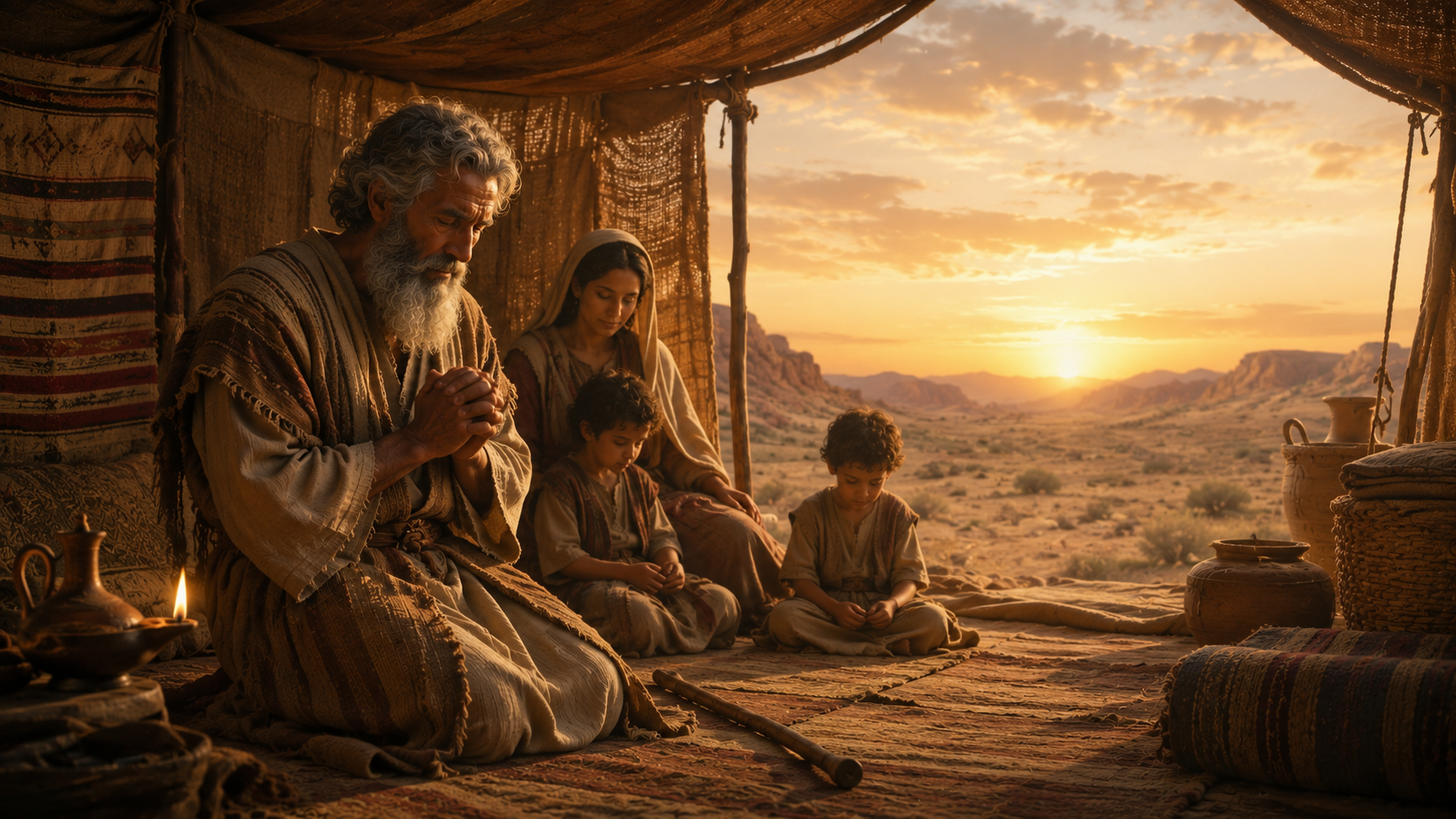
Closing Prayer
let's pray for the Reluctant and the Road-Weary
Father —
We confess that we are often Moses on the road. We have said yes to the burning bush — or we are trying to — and we are on our way toward Egypt, and the road is harder than the commission felt. And somewhere on this road, in the ordinary lodging places of our lives, You are meeting us with the things we have not resolved. The covenant obligations we have let slide. The uncircumcised areas of our households and our hearts that we have been meaning to address but haven't.
We are grateful that You do not let us take our unresolved things all the way to Egypt unchallenged. That You love us enough to stop us on the road rather than let us walk into the great confrontation of our lives carrying unfinished business. Even when the stopping is terrifying. Even when it looks, from the outside, like attack.
We pray for the Zipporah-people in our lives — the unexpected instruments who see what we have missed, who act where we cannot, who pick up the flint and make the cut that saves us. May we be humble enough to receive their help without shame. May we recognise the grace in being rescued by the people we least expected to need.
And we pray for the reluctant ones. The ones who have heard a call and said: please, not me. Not because they don't care. Because they care so much that they know the size of the gap between who they are and what the call requires. Lord, meet them with the same patience You showed Moses. Answer their specific fear with Your specific provision. Send them their Aaron. Give them their Zipporah. And when the time comes — walk with them down the road toward their Egypt, even though they are afraid, even though they feel they can't speak, even though they would still rather You sent someone else.
They will go reluctant. You have gone with reluctant prophets before. Go with us now.
In the name of the One who prayed in the garden "not my will, but yours" — and then went to the cross anyway —
Amen.

Coming Next in the Series
Part Eight: Return to Egypt — Zipporah, Circumcision, and the Strange Attack
We have touched the strange attack in Part Seven. Part Eight goes deeper — exploring the full context of Moses' return to Egypt, his first meeting with Pharaoh, what it meant to walk into the palace he had once belonged to as a supplicant rather than a prince, and the Hebrew phrase "Let my people go" as one of the most theologically charged demands in Scripture. We also examine Pharaoh's initial hardening, what "hardening the heart" means in Egyptian theology and Hebrew theology, and how the confrontation is already, from the very first meeting, a cosmic theological battle rather than a political negotiation.
Add comment
Comments