"He supposed that his brothers would understand that God was giving them salvation by his hand, but they did not understand."
— Acts 7:25
Before we begin
Please Read the Following Passages First
This study is designed to be read after you have sat with the biblical text itself. The goal is not to replace your reading of Scripture — it is to open it up. Read these passages slowly, perhaps more than once. Let the words land before we begin to unpack them.
As you read, pay attention to: what surprises you, what disturbs you, what confuses you, and what moves you. Bring those reactions into the study. They are often where the Holy Spirit is already working.
Exodus 2:11–25
Acts 7:17–36
Hebrews 11:24–27
Numbers 35:9–15
Genesis 4:8–16
Optional deeper reading:
Deuteronomy 19:1–13 (cities of refuge); Leviticus 25:47–55 (the go'el); Matthew 2:13–15 (the flight to Egypt).

The Story
A Man Walking Between Worlds
An imaginative reconstruction grounded in the historical and textual record
Note: The following narrative reconstructs the biblical account using archaeological, cultural, and historical context. It remains faithful to Scripture while filling in the texture of the world Moses inhabited. Where Scripture is silent, imagination serves — but always in submission to the text.
He had been walking the boundary for years.
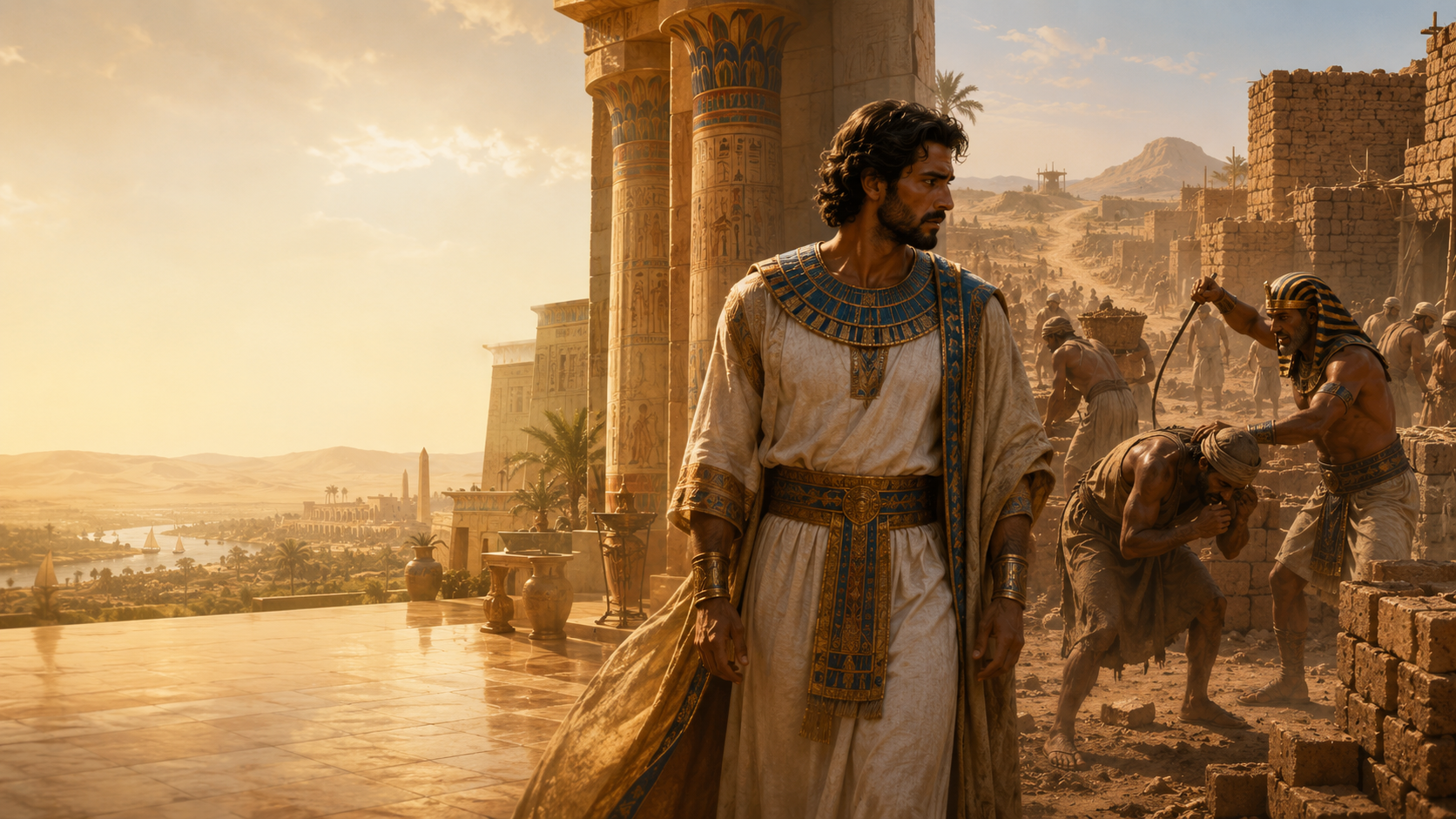
There is a place in every divided life where the two worlds press closest together — where the perfume of the palace mingles with the smell of sweat and brick dust, where you can hear both the laughter of servants attending royalty and the low, exhausted voices of men who have been carrying stone since before the sun came up. Moses knew that place. He had been walking its edge since he was old enough to understand what he was seeing.
Forty years old. That is what Acts 7:23 tells us — "when he was forty years old, it came into his heart to visit his brothers." Forty years of palace food and palace education and palace privilege, and none of it had resolved the question that Jochebed had planted in him before he was old enough to speak. You are not what they think you are. You are ours. Remember.
The day it finally broke open was not a carefully chosen day. It was an ordinary morning in what the Egyptians called Akhet — the season of inundation, when the Nile flood receded and the brick-making season began in earnest. The mud was perfect for working. Which meant the overseers were out early.
Moses had gone out el-echav — to his brothers. That phrase matters. He was not passing by. He was not taking the air. He went out with intention, to see. To look at what he already knew was there but had perhaps been careful, for four decades, not to look at too directly. Something had shifted in him. Maybe it was gradual — a slow accumulation of weight, year by year, meal by meal, each bowl of honeyed figs eaten while somewhere men were being docked rations for failing to meet their quota. Maybe it was sudden. The text does not say.
What it says is that he went, and he saw, and what he saw broke him open.
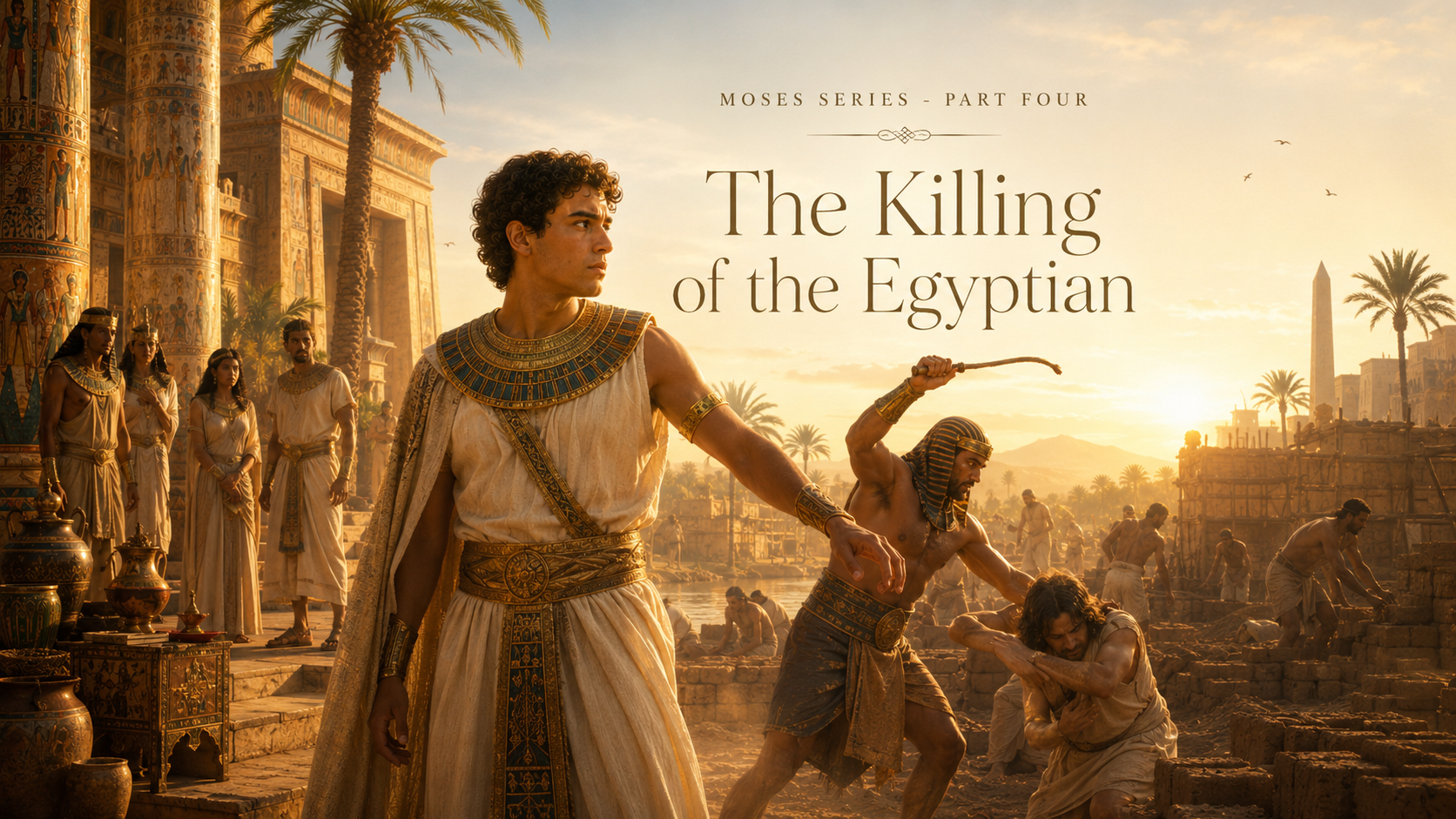
The overseer was Egyptian — ish mitzri, a man of Egypt. His name is not given. He is defined entirely by what he is doing: nakeh ivri mei-echav — striking a Hebrew, one of his brothers. The Hebrew word nakeh means to strike repeatedly, to beat. This is not a single blow. This is a sustained beating. The kind that breaks things.
Moses looked this way and that. The Hebrew is vayifen ko vako — he turned here and there. Three thousand years of readers and commentators have argued about what that look meant. Was it moral calculation? Fear? Deliberation? The search for a witness who might report him? The rabbis of the Talmud said he was looking into the spiritual realm, surveying the souls descended from this man to see if any righteous person would come from him. Others say he was simply checking whether anyone would see what he was about to do.
What he did next took less than a second and forty years to arrive at.
He killed the Egyptian. The Hebrew is vayak et-hamitzri — he struck the Egyptian. The same verb the overseer was using on his brother. An eye for an eye, a blow for a blow — except this blow was final. And then Moses buried him in the sand. The Nile delta sand, loose and shifting and deep. He pressed the body down into it with his hands. The hands that had held papyrus scrolls and mathematics problems and a palace education pressed a dead man into the sand of a country his people were building with their blood.
He stood up. The morning was ordinary. The Nile was ordinary. The brick pits were ordinary. And Moses had become, in a single moment, a murderer and a fugitive and a revolutionary — a man who had chosen, at the price of everything, which side of the wall he stood on.
The next day he went out again. This detail is important. He did not hide. He did not flee immediately. He went back. Perhaps that tells us something about how Moses understood what he had done — not as a crime to be concealed, but as a declaration to be followed through.
But the two Hebrews fighting were not grateful. The one in the wrong — harasha, the wicked one, as the Hebrew calls him without softening it — turned on Moses with a question that must have felt like a blade: "Who made you a prince and a judge over us?"
Who made you. Who gave you authority. Who asked you. The question contained everything Moses had feared most about himself: that his act was not justice but presumption, not solidarity but condescension, the palace boy playing at liberation while the people who actually lived under the stick had not asked to be liberated by him.
And then the worst part: "Do you mean to kill me as you killed the Egyptian?" They knew. The sand had not held its secret. In a world where everyone lived pressed against everyone else, in hovels with shared walls and communal courts, there were no private acts. Moses had buried the Egyptian at dawn. By midmorning the whisper network of the slave quarter had already passed it along. His great act of identification was now a liability to the very people he had acted for.
Pharaoh heard. Moses fled.
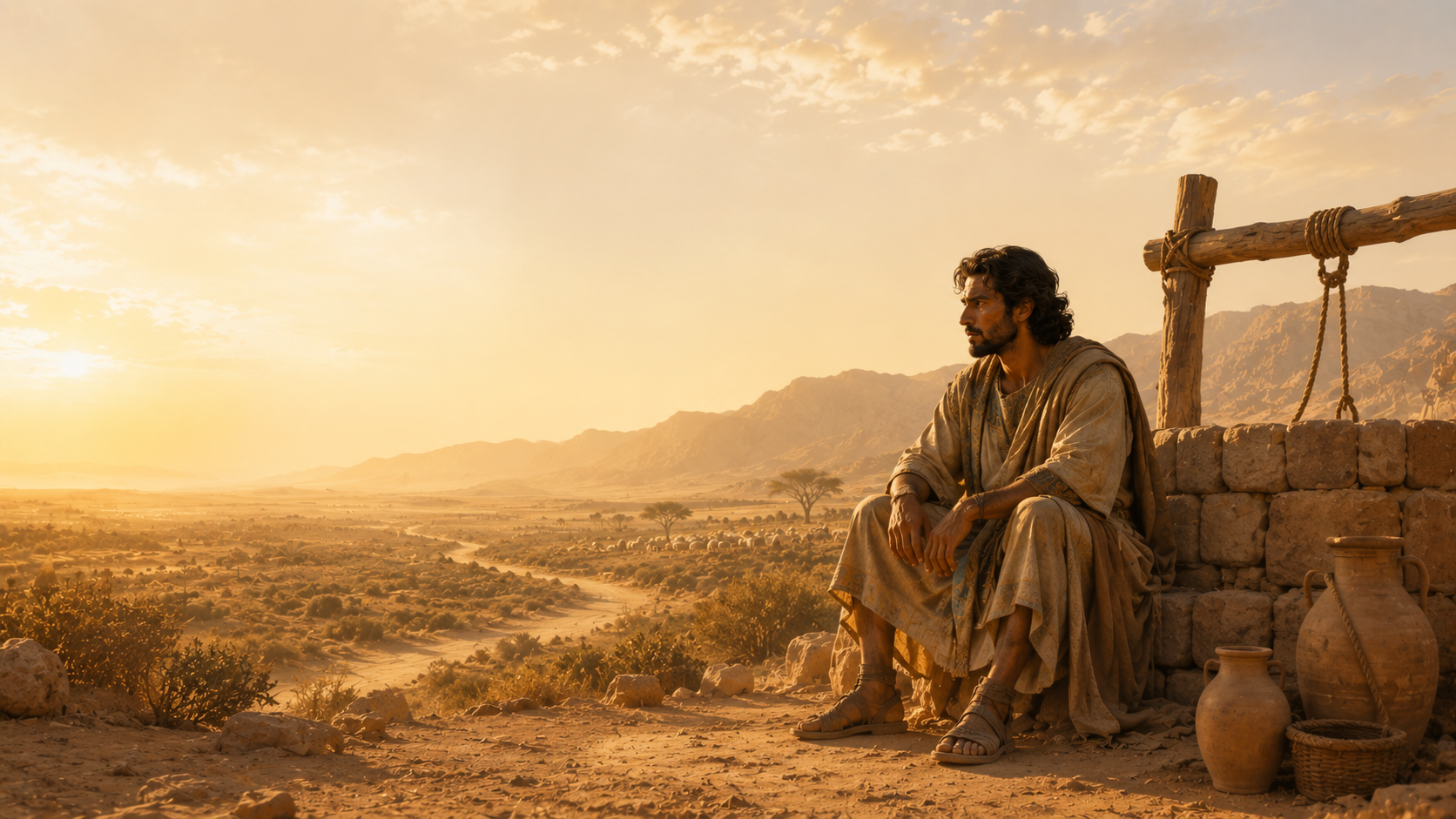
He crossed the Sinai and found his way to Midian — the land beyond the eastern edge of the Egyptian world. And there, by a well, a man who had run away from everything sat down. The text says simply: vayeshev. He sat down. It is one of the most human sentences in the entire Moses narrative. He sat down.
— ✦ —
Verse by Verse: Exodus 2:11–25
Every word carries weight — a close reading of the Hebrew text
The passage we are examining spans Exodus 2:11–25. It is fourteen verses. But every phrase in it has been scrutinized by rabbis, theologians, historians, and Church Fathers for three thousand years — and it still yields new depth. We will move through it carefully.
Exodus 2:11–12 — The Act
Verse 11
"One day, when Moses had grown up, he went out to his people and looked on their burdens, and he saw an Egyptian beating a Hebrew, one of his people."
Hebrew Analysis & Commentary
vayigdal moshe — "When Moses had grown up." The verb gadal means more than physical maturity. It means to become great, to reach full stature — morally and socially, not merely physically. The Septuagint (Greek OT) renders this megas genomenos — "having become great." This is the language of social arrival: Moses has reached the peak of his standing.
el-echav — "to his brothers." Not "the Hebrews." Not "the slaves." His brothers — kinship language, deliberately chosen. Moses has internalized his Hebrew identity. He goes to them as family, not as an observer.
vayar b'sivlotam — "he looked on their burdens." The root saval means to bear a heavy load, to suffer under a burden. This is not casual glancing. The same word appears in Isaiah 53:4 — "surely he has borne our griefs and carried our sorrows." The Suffering Servant and Moses both look at the same burden.
Verse 12
"He looked this way and that, and seeing no one, he struck down the Egyptian and hid him in the sand."
Hebrew Analysis & Commentary
vayifen ko vako — "He looked this way and that." Literally: "he turned here and there." The Talmud (Sanhedrin 58b) offers a remarkable midrash: Moses was not looking for human witnesses but scanning the spiritual realm — looking to see if any righteous descendants would come from this man. Finding none, he proceeded. This reading transforms the act from panic into prophetic judgment. The mainstream critical reading sees simple prudential caution. He May also have been looking to see if anyone else would intervene or see something wrong with the situation. Or whether he would be seen for what he was about to do.
vayak et-hamitzri — "he struck the Egyptian." The same verb — nakah — used in v.11 for what the overseer was doing to the Hebrew. Moses returns the blow. The word appears 502 times in the Hebrew Bible; it encompasses everything from a single slap to a killing blow to the smiting of nations by God. Context determines force.
vayitm'neihu bachol — "he hid him in the sand." The delta sand was fine, loose, and deep — archaeologically consistent with rapid burial. But the verb taman (to hide, to bury) also carries connotations of concealment that extend beyond the physical. Moses is hiding the act as well as the body — a detail the text does not let go of.
Exodus 2:13–14 — The Rejection
Verse 13
"When he went out the next day, behold, two Hebrews were struggling together. And he said to the man in the wrong, 'Why do you strike your companion?'"
Hebrew Analysis & Commentary
larasha — "to the wicked one." The Hebrew text does not soften this. The man starting the fight is simply called rasha — the wicked man, the one in the wrong. This is not neutral language. It is a moral judgment embedded in the narration itself. The author sides with Moses' intervention as morally legitimate.
The scene is a mirror image of the day before — but now it is Hebrew against Hebrew. Moses' challenge "why do you strike your companion?" uses rei'echa — your friend, your neighbour. Even in the middle of oppression, Moses calls them to a higher standard of solidarity.
Verse 14
"But he said, 'Who made you a prince and a judge over us? Do you mean to kill me as you killed the Egyptian?' Then Moses was afraid, and thought, 'Surely the thing is known.'"
Hebrew Analysis & Commentary
mi samcha l'ish sar v'shofet aleinu — "Who appointed you as a man, a prince and a judge over us?" The dual title — sar (ruler/prince) and shofet (judge) — is significant. Stephen in Acts 7:35 picks up exactly these two words: God sent Moses as archonta kai lutroten — ruler and redeemer. The Hebrews throw the titles back as insults. God will confirm them as appointments.
vayira moshe — "Moses was afraid." This is the first time we see Moses afraid. He has faced palace politics, a lifetime of double identity, and the risk of killing an overseer — and now fear comes. Not from external threat alone, but from the realization that the secret is out. The sand did not hold.
The word yoda — "it is known" — is the same root as the deep relational knowing we noted in Miriam's watching in Exodus 2:4. What was known was not just the fact of the death but the nature of Moses' solidarity. His identity had been made visible by his action. It was also now known where his loyalties lie.
Exodus 2:15–22 — The Flight and the Well
Verse 15 -17
"When Pharaoh heard of it, he sought to kill Moses. But Moses fled from Pharaoh and stayed in the land of Midian. And he sat down by a well. Now the priest of Midian had seven daughters, and they came and drew water and filled the troughs to water their father's flock. The shepherds came and drove them away, but Moses stood up and saved them, and watered their flock."
Hebrew Analysis & Commentary
vayeshev al-hab'er — "he sat down by a well." This tiny sentence carries enormous narrative weight. The well in the ancient Near East was not merely a water source — it was the social hub of pastoral communities, the place of encounter, business, and betrothal. Abraham's servant found Rebekah at a well (Genesis 24). Jacob met Rachel at a well (Genesis 29). Jesus meets the Samaritan woman at a well (John 4). The well is where covenant encounters happen.
Moses arrives as a fugitive, exhausted, displaced. He has nothing. He sits. And then, without even seeking it, a story begins to unfold around him — as stories always do around the people God has marked for something.
vayosha moshe — "Moses saved them." The verb yasha — to save, to rescue, to deliver. This is the root of the name Yeshua (Jesus). Moses, at the lowest point of his life, by a foreign well with no title and no home, performs his first act of yeshua. He saves. It is in his bones.
Verse 18 - 22
"When Pharaoh heard of it, he sought to kill Moses. But Moses fled from Pharaoh and stayed in the land of Midian. And he sat down by a well. Now the priest of Midian had seven daughters, and they came and drew water and filled the troughs to water their father's flock. The shepherds came and drove them away, but Moses stood up and saved them, and watered their flock."
Hebrew Analysis & Commentary
ish mitzri — "An Egyptian man." The daughters describe Moses as Egyptian. After forty years in the palace, Moses looks Egyptian — he speaks with an Egyptian accent, wears Egyptian clothes, has Egyptian manners. The very identity that felt like a mask in Egypt is now his surface identity. He cannot escape what he was formed to be, even in exile.
Reuel / Jethro — The father-in-law is called Reuel here and Jethro elsewhere in Exodus (3:1, 18:1). This is not a contradiction — it was common in the ancient Near East to have both a personal name and an honorific or priestly title. Reuel means "friend of God"; Jethro (Yitro) means "his excellence" or possibly "the excellent one." He was the priest of Midian — a worshipper of El, the high God, who may have had genuine knowledge of the God of Abraham before Moses arrived.
Gershom — Moses names his son "I have been a stranger/sojourner there." The name encodes his displacement. He is a man without a place. But the very act of naming his son — of beginning a family, of putting down the most tentative of roots — shows that the desert is not merely punishment. It is the beginning of a different kind of formation.
This often resembles our own Identity as sojourners in the world but not off the world.
Exodus 2:23–25 — The Turning Point of History
Verse 23 - 25
"During those many days the king of Egypt died, and the people of Israel groaned because of their slavery and cried out for help. Their cry for rescue from slavery came up to God. And God heard their groaning, and God remembered his covenant with Abraham, with Isaac, and with Jacob. God saw the people of Israel — and God knew."
Hebrew Analysis & Commentary
The Four Verbs of Divine Response
These three verses contain four of the most theologically loaded verbs in the entire Torah, describing God's response to the suffering of Israel. Read them in sequence — they are a crescendo:
vayishma Elohim — God heard. The groaning entered the divine consciousness. God did not miss it. The cries of enslaved people are not absorbed into the indifferent universe. They are heard.
vayizkor Elohim — God remembered. The Hebrew zakar does not imply prior forgetting. In biblical usage, to "remember" a covenant means to move from awareness to active engagement — to let the covenant begin to function again in history. God's remembering is the moment the gears begin to turn.
vayar Elohim — God saw. The same verb used of Jochebed when she looked at her son and saw he was tov. God looks at His people and sees them — fully, personally, with invested concern.
vayeda Elohim — God knew. The final verb — yada — the deepest Hebrew word for knowing. Not intellectual acknowledgment but intimate, relational, covenantal knowing. "God knew" is the climax of the chapter. It is the moment everything changes. In a Hebrew context, when God knows, something is about to happen.
The Go'el: The Law Behind the Act
Was Moses acting within an ancient legal framework — or outside it?
To understand what Moses did from within his own cultural and legal world, we need to understand the institution of the go'el — the kinsman-redeemer. This concept, which runs through the entire Old Testament and reaches its climax in Christ, may provide the legal and moral framework within which Moses understood his act.
Key Concept — The Go'el (גֹּאֵל)
The Hebrew word go'el (plural: go'alim) comes from the root ga'al — to redeem, to buy back, to restore.
In ancient Israelite law and custom, the go'el was the nearest male relative obligated to act on behalf of a family member who could not act for themselves. His duties included:
- Ge'ulat dam (blood redemption) — the obligation to avenge the death of a murdered kinsman (Numbers 35:19–21)
- Ge'ulat adama (land redemption) — buying back family land sold under duress (Leviticus 25:25)
- Ge'ulat eved (slave redemption) — buying a kinsman out of slavery (Leviticus 25:47–55)
- Levirate marriage (yibbum) — marrying a kinsman's widow to continue the family line (Deuteronomy 25:5–10; see Ruth)
Now: the formal go'el law as codified in Leviticus and Numbers was given after the Exodus, at Sinai. Moses could not have been consciously applying Mosaic Law to his act. But the underlying principle — that a kinsman bears responsibility to protect and redeem vulnerable members of his clan — was ancient Near Eastern custom predating the Law. It is visible in the Code of Hammurabi (c. 1754 BC) and in Ugaritic texts from the same period.
Moses, seeing a Hebrew — one of his brothers — being beaten, may have understood himself to be acting in the role of go'el: the nearest able-bodied kinsman present, obligated by blood to defend. The fact that no Mosaic Law had yet been given does not mean there was no law governing this situation in Moses' moral world. There was. And he was the go'el.
Historical Context — Ancient Near Eastern Parallels
The Code of Hammurabi (c. 1754 BC) — predating Moses by approximately 300 years — contains explicit protections for slaves being beaten to death by masters. Law 116: if a pledged man dies in a creditor's house through mistreatment, the creditor must answer for it. The principle that a beating resulting in death constitutes a prosecutable offense was widely recognized in ancient Near Eastern law.
Egyptian law itself recognized gradations of assault. The Maxims of Ptahhotep (c. 2400 BC) and the Instructions of Ani condemned unprovoked violence. While Egyptian law clearly privileged Egyptians over Semitic laborers, the principle that killing was categorically different from beating was legally recognized in the world Moses inhabited.
The flight to Midian is also legally coherent: Numbers 35:9–15 (given later but reflecting earlier custom) establishes cities of refuge for those who kill accidentally or under provocation, protecting them from the blood avenger until trial. Moses' flight is not cowardice — it is the legally prescribed response for someone who has taken a life and awaits adjudication of intent.
Go'el and the Entire Moses Narrative
Once you see the go'el concept, you cannot unsee it in the Moses story. Moses acts as go'el at the well in Midian (saving Jethro's daughters from the shepherds). Moses acts as national go'el in the Exodus — buying the people back, not with silver, but with blood and signs and wonders. God Himself is called the go'el of Israel: "Say to the Israelites: I am the LORD, and I will bring you out from under the yoke of the Egyptians... I will redeem you with an outstretched arm" (Exodus 6:6 — the verb is ga'alti, I will act as your go'el).
And then the line runs forward to the greatest Go'el of all. Job cries in the darkness: "I know that my Redeemer [go'el] lives, and at the last he will stand upon the earth" (Job 19:25). The book of Ruth is entirely structured around the go'el — Boaz as the kinsman-redeemer who buys back the land, the name, and the future of a destitute family. And the New Testament explicitly identifies Jesus as the ultimate Go'el: "In him we have redemption [apolytrosis] through his blood" (Ephesians 1:7). The same root. The same act. The kinsman who steps in, who pays the price, who restores what was lost.
Moses' killing of the Egyptian is the first rough, imperfect, premature sketch of what the perfect Go'el will one day do — completely, finally, and at the cost of His own life rather than someone else's.
— ✦ —
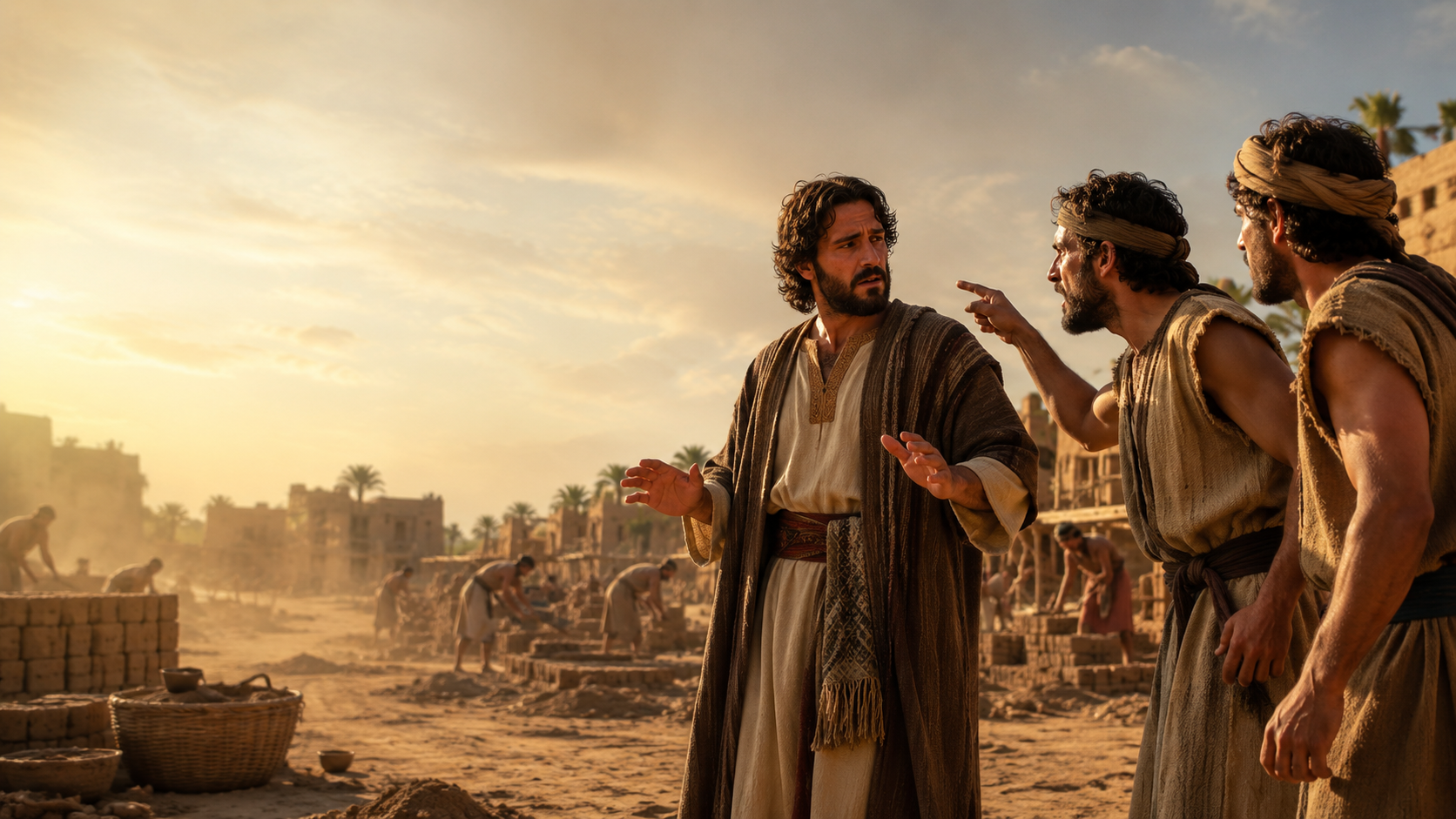
The Rejection: "Who Made You a Judge Over Us?"
The wound that prepared the prophet — and its Christological shadow
The rejection Moses received from the Hebrew fighting man is one of the most theologically loaded moments in the entire Old Testament. Stephen recognized it. The writer of Hebrews recognised it. And it is worth sitting with at length, because the pattern it establishes runs forward to the cross.
Christological Connection — Stephen's Sermon, Acts 7:23–35
Stephen, speaking before the Sanhedrin in Acts 7, constructs the most detailed Old Testament typology of Moses in the New Testament. He explicitly states that when Moses tried to reconcile the two fighting Hebrews and was rejected, Israel failed to understand that "God was giving them salvation by his hand" (Acts 7:25).
Stephen then draws the explicit parallel in verse 35: "This Moses, whom they rejected, saying, 'Who made you a ruler and a judge?' — this man God sent as both ruler and redeemer [archonta kai lutroten] by the hand of the angel who appeared to him in the bush."
The structure: rejected by his own → sent into exile → called back by God → sent again as deliverer. This is exactly the pattern of Jesus. Rejected by His own people (John 1:11), "exiled" into death, resurrected by God, and sent again — as the Holy Spirit continues His ministry and as He will return in glory.
The Sanhedrin listening to Stephen knew their Moses. Stephen's point is devastating: you are doing now what your ancestors did then. You are rejecting the one God sent. You are asking "who made you a judge over us?" — and the answer is: the same God who vindicated Moses.
The Psychology of Rejected Solidarity
There is a painful human truth in the Hebrew's rejection of Moses that transcends its theological significance. Moses had just committed an act of enormous personal cost — crossing a line from which there was no return, permanently destroying his Egyptian cover, risking his life — in order to defend a man he would never meet again. And the response from the community he acted for was suspicion, hostility, and exposure.
This is not an unusual dynamic. History is full of figures who tried to stand with an oppressed community from a position of relative privilege and found themselves rejected — accused of presumption, of not understanding, of doing more harm than good. The question "who made you a judge?" is the perennial challenge to every would-be liberator who has not yet been authorized by the community itself.
Moses had authority — but not recognized authority. He had passion — but not the trust of the people. He had the right cause — but the wrong method and the wrong moment. These are failures that God does not discard. He refines. Forty years in Midian will not teach Moses to stop caring about the oppressed. They will teach him where his authority actually comes from. It does not come from the palace. It comes from the burning bush.
— ✦ —
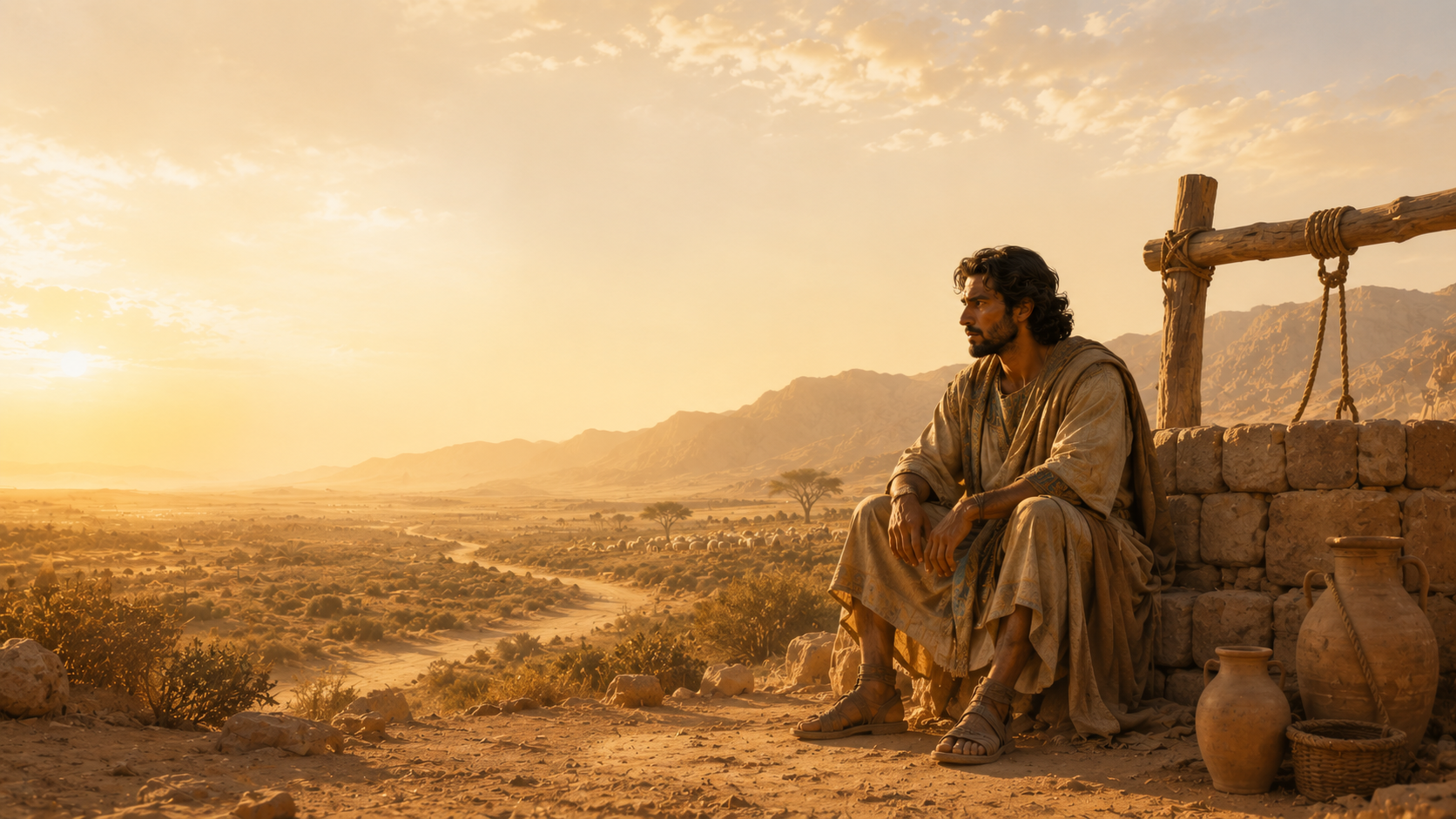
The Flight to Midian
Geography, the Midianites, and what the desert was about to do to Moses
Who Were the Midianites?
Archaeological & Historical Context — Midian
The Midianites were a confederation of semi-nomadic tribal peoples who inhabited the northwestern Arabian Peninsula and the eastern Sinai — roughly the region of modern northwest Saudi Arabia, southern Jordan, and the Sinai Peninsula. Genesis 25:2 identifies Midian, as a son of Abraham by his wife Keturah — making the Midianites distant relatives of the Israelites, descended from the same Abrahamic line.
Note: Yes Abraham married Keturah after Sarah's death and had fathered another six children.
Archaeological work at sites in the Hejaz (northwest Saudi Arabia) — including Qurayyah, which many scholars identify as the probable heartland of ancient Midian — has produced distinctive "Midianite pottery" (also called Qurayyah ware): a finely made, polychrome ware with geometric and bird designs. This pottery has been found at sites across the Sinai, the Negev, and even in Egypt itself, attesting to the wide-ranging commercial network of the Midianites in the Late Bronze Age.
The Midianites were not a primitive desert people. They were sophisticated traders who controlled key caravan routes connecting Egypt to Arabia and Mesopotamia. Joseph was sold to Midianite traders (Genesis 37:28). Moses will marry into this community, and his father-in-law Jethro is described as the kohen Midian — the priest of Midian — suggesting a formal religious role and social standing.
The Route of the Flight
The most likely route of Moses' flight from the Egyptian delta to Midian would have taken him east across the Sinai Peninsula — a journey of roughly 300-400 kilometres through increasingly harsh terrain. The Sinai is not empty desert. In the Bronze Age it contained established routes used by Egyptian mining expeditions to the turquoise mines at Serabit el-Khadim and copper mines at Timna. Moses would have known these routes from his military and administrative education.
At Serabit el-Khadim — the site of an Egyptian turquoise mining operation — archaeologists discovered in 1905 what are now called the Proto-Sinaitic inscriptions: the earliest known alphabetic writing, dated to approximately 1800–1500 BC, created by Semitic workers (almost certainly related to the Canaanite/Hebrew linguistic family) who adapted Egyptian hieroglyphs into a simplified alphabet. These inscriptions include what appears to be the name "El" and possibly "YHWH" in its earliest written form. Semitic people, working in Egyptian territory, writing in a new script — leaving linguistic traces of a God not yet fully revealed. Moses walked past these mines.
He eventually arrived in Midian — in a region that the book of Exodus connects with the "mountain of God" later identified as Sinai/Horeb. This means Moses' place of exile is also the place where God will speak to him. The geography of his failure and the geography of his calling are the same geography.
Jethro: A Priest of What?
Jethro is described as the priest of Midian (kohen Midian — Exodus 3:1). This raises a fascinating question: what did Jethro worship? The Midianites were descendants of Abraham and thus had some knowledge of the God of Abraham, though four centuries removed. Some scholars have proposed what is called the "Kenite hypothesis" — that YHWH-worship originated in the Midianite/Kenite communities of the Arabian Peninsula and was adopted by Israel through Moses' contact with Jethro. This view is held by a minority of scholars and is strongly contested; the biblical account presents YHWH as the God of Abraham predating Moses' Midianite years entirely.
What is clear from the text is that Jethro responds with genuine worship when Moses reports the Exodus. Exodus 18:10–12: "Jethro said, 'Blessed be the LORD... Now I know that the LORD is greater than all gods.'" He brings burnt offerings and sacrifices to God. Whether Jethro had prior knowledge of YHWH or came to him through Moses' testimony, he worships with what appears to be genuine, informed faith. Moses' father-in-law is one of the Bible's quiet righteous gentiles — outside the covenant community, yet drawn into the orbit of the living God.
— ✦ —
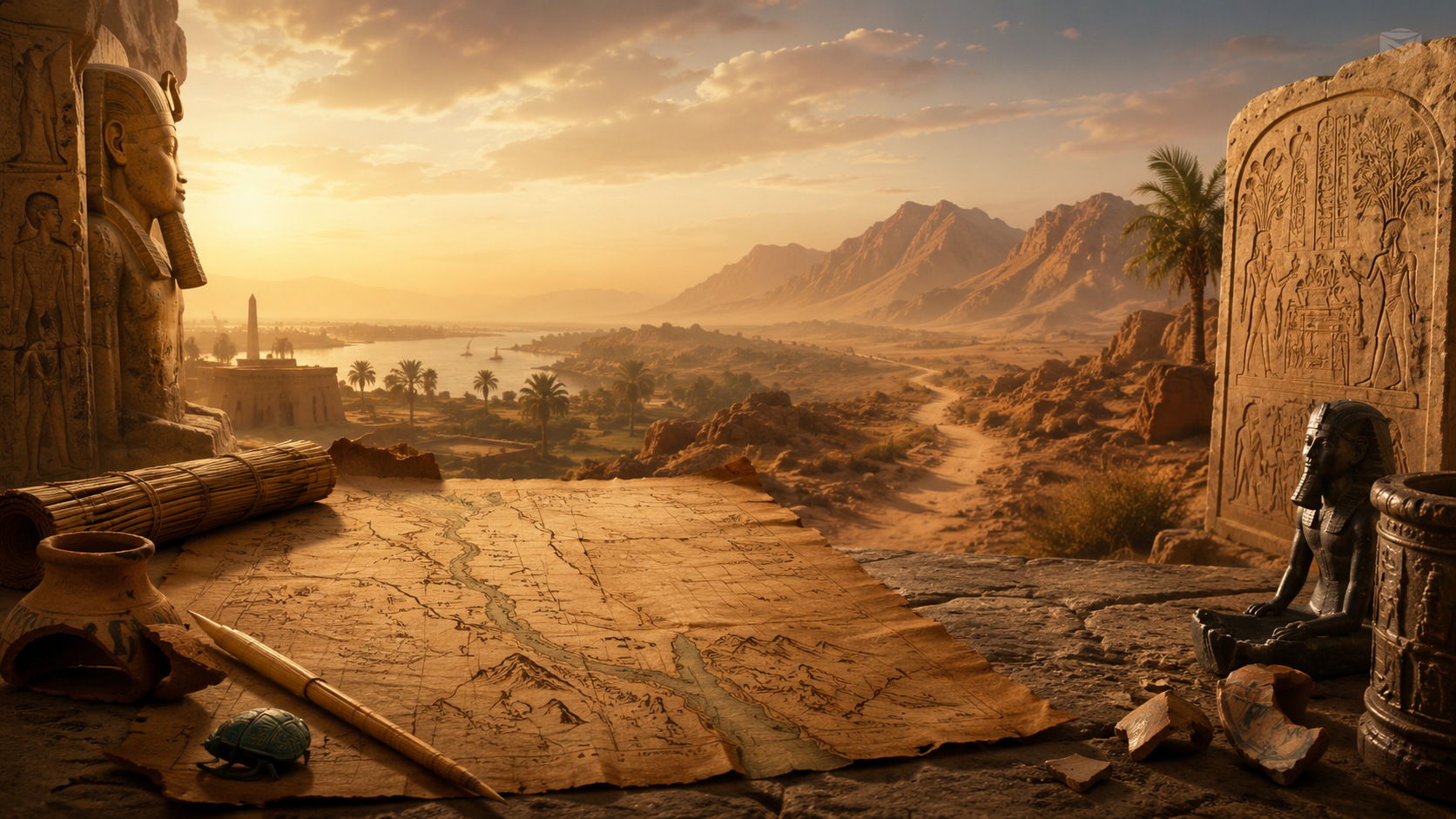
What Archaeology Tells Us About This Period
The physical world Moses moved through
The Death of the Pharaoh — Historical Candidates
Exodus 2:23 records that the king of Egypt died "during those many days" while Moses was in Midian. The timing of this death is crucial because it is what eventually enables Moses' return — a new Pharaoh means a potential amnesty for the fugitive from the previous reign. Identifying which Pharaoh died is part of the larger Exodus dating question we introduced in Part One.
Historical Candidates for the Pharaoh Who Died
If the Early Date (1446 BC Exodus): The Pharaoh who sought to kill Moses would have been Thutmose III (died c. 1425 BC), the great builder and military campaigner. Moses would have fled during his reign and returned after his death, when Amenhotep II took the throne — the Pharaoh of the Exodus under this chronology.
If the Late Date (c. 1250 BC Exodus): The Pharaoh of the oppression and pursuit would be Seti I (died c. 1279 BC), with Moses fleeing under him and returning under Ramesses II — the Pharaoh of the Exodus proper under this reading. Ramesses II reigned for 66 years, which would make him the long-lived Pharaoh under whom the Exodus occurred.
Interestingly, if the Exodus Pharaoh was Ramesses II, Exodus 2:23 ("the king of Egypt died") would refer to Seti I — and Moses would have spent his forty Midian years during the transition between these two reigns. Egyptian records confirm Seti I's death around 1279 BC and Ramesses II's accession. The forty-year gap fits the literary structure of Moses' age markers: forty years in Egypt, forty in Midian, forty in the wilderness.
Egyptian Responses to Murder of State Employees
How serious was Moses' act in the eyes of Egyptian law? The killing of a state overseer — a medjay or administrative foreman — would have been treated as a capital offense under Egyptian law, particularly in the New Kingdom period when state labor projects were under direct royal authority.
The Papyrus Salt 124, a complaint document from the reign of Ramesses III (slightly later than our period), gives us a detailed picture of how Egyptian administrative labor crime was prosecuted. It involves accusations of tomb robbery, corruption, and violence against workers — all handled through a formal judicial process called the qenbet, a local court presided over by officials. Murder of an overseer would have bypassed the local court and gone directly to Pharaoh's officials, which is exactly what the text implies when it says "Pharaoh heard and sought to kill Moses."
Moses' flight was the only rational response. There was no legal defense available to him — he had killed a state employee, buried the body, and attempted concealment. Under Egyptian law, the outcome of a trial would have been execution. Midian was the only option.
— ✦ —

Moses and Jesus: The Pattern Deepens
Typology & Christology
How the life of Moses is a shadow of the life of Christ
We began tracking the Moses-Christ typology in Part Two with the tebah (basket/ark) and in Part Three with the kenosis of chosen suffering. In this section, the parallels multiply and deepen. The early Church Fathers — Justin Martyr, Irenaeus, Origen, Augustine — spent extraordinary intellectual energy on this typology, and they were right to do so.
The Structural Parallels — Moses and Jesus
1. Birth under a death decree. Pharaoh commanded the death of all Hebrew male infants (Exodus 1:22). Herod commanded the death of all male children in Bethlehem under two years old (Matthew 2:16). Both deliverers were born under the sword of a king who feared the future.
2. Egypt as refuge and exile. Moses grew up in Egypt. Jesus fled to Egypt as an infant and returned (Matthew 2:13–15). Matthew's explicit citation of Hosea 11:1 — "Out of Egypt I called my son" — ties Jesus' Egyptian sojourn directly to the Exodus narrative. Both are called out of Egypt at the appointed time.
3. Rejected by their own people. Moses was rejected by the Hebrew fighting man: "Who made you a ruler and judge?" (Exodus 2:14). Jesus was rejected by His own people: "We have no king but Caesar" (John 19:15). Stephen makes this connection explicit in Acts 7.
4. Forty days/years in the wilderness. Moses spent forty years in the Midian wilderness before his calling. Jesus spent forty days in the wilderness before His ministry began (Matthew 4:1–11). The number forty in Scripture marks a period of testing and preparation.
5. Deliverer through water. Moses led Israel through the Red Sea — Paul calls it a "baptism into Moses" (1 Corinthians 10:2). Jesus institutes baptism as the rite of entrance into the new covenant community. Water, death, and new life — the pattern is identical.
6. Mediator of the covenant at a mountain. Moses received the Law at Sinai. Jesus gave the new law at the Sermon on the Mount. Matthew's structure is deliberate: Jesus is the new Moses, but greater — giving the Law from His own authority rather than receiving it from above.
7. Face shining with glory. Moses' face shone after being in God's presence (Exodus 34:29–35). Jesus was transfigured — "his face shone like the sun" (Matthew 17:2) — in the presence of Moses himself, along with Elijah.
The Go'el as Christological Climax
We have already traced the go'el concept in Section III. Its Christological significance deserves to be stated directly: Jesus is the ultimate Go'el of the human race.
In ancient Near Eastern law, the go'el had to meet three conditions: he had to be a kinsman (related by blood), he had to be willing to act, and he had to be able to pay the price. The Incarnation is the story of God satisfying all three conditions. By taking on human flesh, Jesus became our kinsman — "Since the children share in flesh and blood, he himself likewise partook of the same things" (Hebrews 2:14). He was willing: "Not my will, but yours be done" (Luke 22:42). And He was able: the infinite worth of the Son of God was sufficient to redeem an infinite debt.
Moses' impulsive, incomplete, premature act of go'el-redemption in Exodus 2 is a shadow on the cave wall. The real thing — the act that actually redeems — happens at Calvary. But the shadow helps us recognize the substance when it comes.
— ✦ —
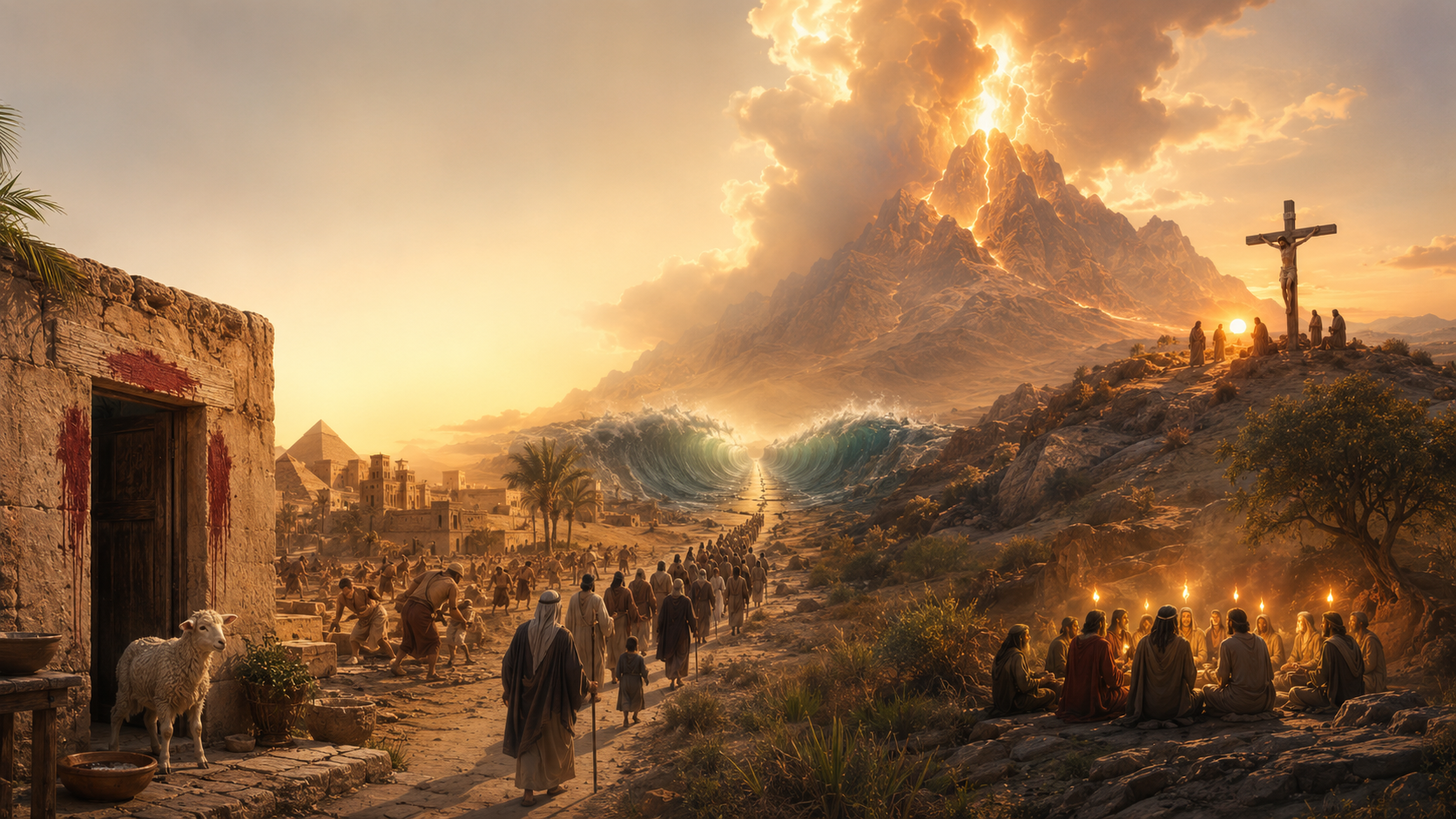
Passover, Pentecost, and the Thread Through History
Redemptive History
How this moment in Exodus 2 connects to the feasts — and to us
Passover — Pesach (פֶּסַח)
The Passover cannot be understood without the full arc of Israel's slavery, and the full arc of Israel's slavery cannot be understood without the events of Exodus 2. The groaning of Exodus 2:23 — the cry that rises to God — is the direct cause of everything that leads to the first Passover night. Without the cry, God does not move. Without God moving, there is no burning bush. Without the burning bush, there is no Moses returning to Egypt. Without Moses returning, there is no confrontation with Pharaoh, no plagues, no Passover night, no Exodus.
The Passover lamb's blood on the doorposts is, in a profound sense, the answer to the groaning that begins in Exodus 2:23. The blood of the lamb says: I have heard. I have remembered. I have seen. I have known. Those four divine verbs of Exodus 2:24–25 find their enacted answer in the Passover blood.
And then Paul: "For Christ, our Passover lamb, has been sacrificed" (1 Corinthians 5:7). The blood on the doorposts in Egypt was itself a shadow — pointing forward to the blood of the true Lamb, which answers the groaning of the entire human race under the slavery of sin and death. The chain runs: Exodus 2:23 → Passover night → Calvary. Same cry. Same God. Same answer. Deeper price.
The Pentecost — Shavuot (שָׁבוּעוֹת) — The Feast of Weeks
The connection between Moses and Pentecost is one of the most stunning threads in the entire biblical narrative, and one that most Western Christians have almost entirely lost.
Shavuot — the Feast of Weeks — was celebrated fifty days after Passover (hence the Greek name Pentecost, from pentekoste, fiftieth). In the Old Testament it was primarily an agricultural festival marking the wheat harvest. But by the Second Temple period, rabbinic tradition had added a crucial layer of meaning: Shavuot was also the commemoration of the giving of the Torah at Sinai.
The counting is significant. Israel left Egypt at Passover. They arrived at Sinai approximately fifty days later. The Law was given at Sinai. Therefore: the giving of the Law and the giving of the Spirit are not coincidental — they are structurally, liturgically identical moments. Both happen fifty days after the Passover/Resurrection. Both are covenant-inaugurating events. Both come with fire (Exodus 19:18 — the mountain blazes; Acts 2:3 — tongues of fire rest on the disciples).
The contrast Paul draws in 2 Corinthians 3 and the writer of Hebrews emphasizes throughout his letter is this: the first Pentecost gave the Law written on stone tablets — the external standard that revealed sin but could not cure it. The second Pentecost gave the Law written on human hearts by the Spirit (Jeremiah 31:33; Ezekiel 36:26–27) — the internal transformation that fulfils what the external Law could only demand.
Moses received the Torah from God at a burning mountain. The disciples received the Spirit at a burning gathering. Same fifty days. Same fire. Different covenant. Better promises (Hebrews 8:6).
The Cry That Started Everything
Here is the thread in full: the groaning of Exodus 2:23 sets the entire redemptive sequence in motion. That groaning leads to the Exodus, which leads to Passover (the pattern of redemption through blood), which leads to Sinai/Pentecost (the giving of the Law/Spirit), which leads — through centuries of shadow and preparation — to Calvary (the ultimate Passover lamb) and to Acts 2 (the ultimate Pentecost). The cry of slaves in Egypt is the first rung of a ladder that reaches to the throne of God.
And where does Moses fit? He is the hinge. The man formed in the palace, broken in the pit, exiled in the desert, called at the burning bush. The man who stands between the groaning and the answer, between the slavery and the freedom, between the Law and the people who will receive it. Every time we take communion — eating the Passover lamb in its new covenant form — we are celebrating the distant echo of what began with a mother hiding her son and a young man who couldn't look away from the suffering of his people.
The arc is long. But it bends toward redemption. It always does.
— ✦ —
The Theology of the Premature Act
The Right Thing at the Wrong Time
What happens when God's person runs ahead of God's timing?
One of the most pastorally significant theological questions raised by Exodus 2 is this: what happens when someone does the right thing at the wrong time? Moses was right that the Hebrew was being wronged. He was right that he was the kinsman-redeemer present. He was right that the oppressor had no legitimate claim to continue. He was right that Israel needed a deliverer.
He was wrong about the method. And he was wrong about the timing. And God, in His extraordinary patience, did not discard the man who got it wrong. He sent him to school.
A Pattern Throughout Scripture
Abraham was right that he would have a son — but he ran ahead and fathered Ishmael through Hagar. The promised son came fourteen years later. The premature son is still causing conflict in the world today.
Peter was right that Jesus was the Messiah — but he ran ahead and tried to prevent the cross. Jesus had to call it what it was: "Get behind me, Satan." The right confession, the wrong theology of what it meant.
The disciples were right that the Kingdom was coming — but they asked "will you at this time restore the kingdom to Israel?" (Acts 1:6). Right destination. Wrong timetable.
The pattern is consistent: God does not punish premature passion. He redirects it. The desert is not a wasteland. It is a waiting room for the right moment.
The Theology of Exile as Formation
Moses' flight to Midian is the first of several great biblical exiles — periods of displacement that are simultaneously punishment, protection, and preparation. Joseph in prison. David in the wilderness of En-gedi. Elijah under the broom tree and then at Horeb. Daniel in Babylon. John on Patmos. Paul in Arabia after his conversion (Galatians 1:17).
The consistent pattern is this: before the public ministry comes the private wilderness. Before the word is spoken publicly, it must first be received in silence. The people God uses most publicly are often the people who have spent the longest time hidden.
For Moses, Midian was not just forty years of waiting. It was the dismantling of the palace. Every Egyptian layer — the confidence, the privilege, the assumed authority, the expectation that things would work out because he was capable and well-placed — had to be stripped. The Moses who protests at the burning bush that he cannot speak, that no one will listen to him, that he is not eloquent — this man has been through something. He has been broken open.
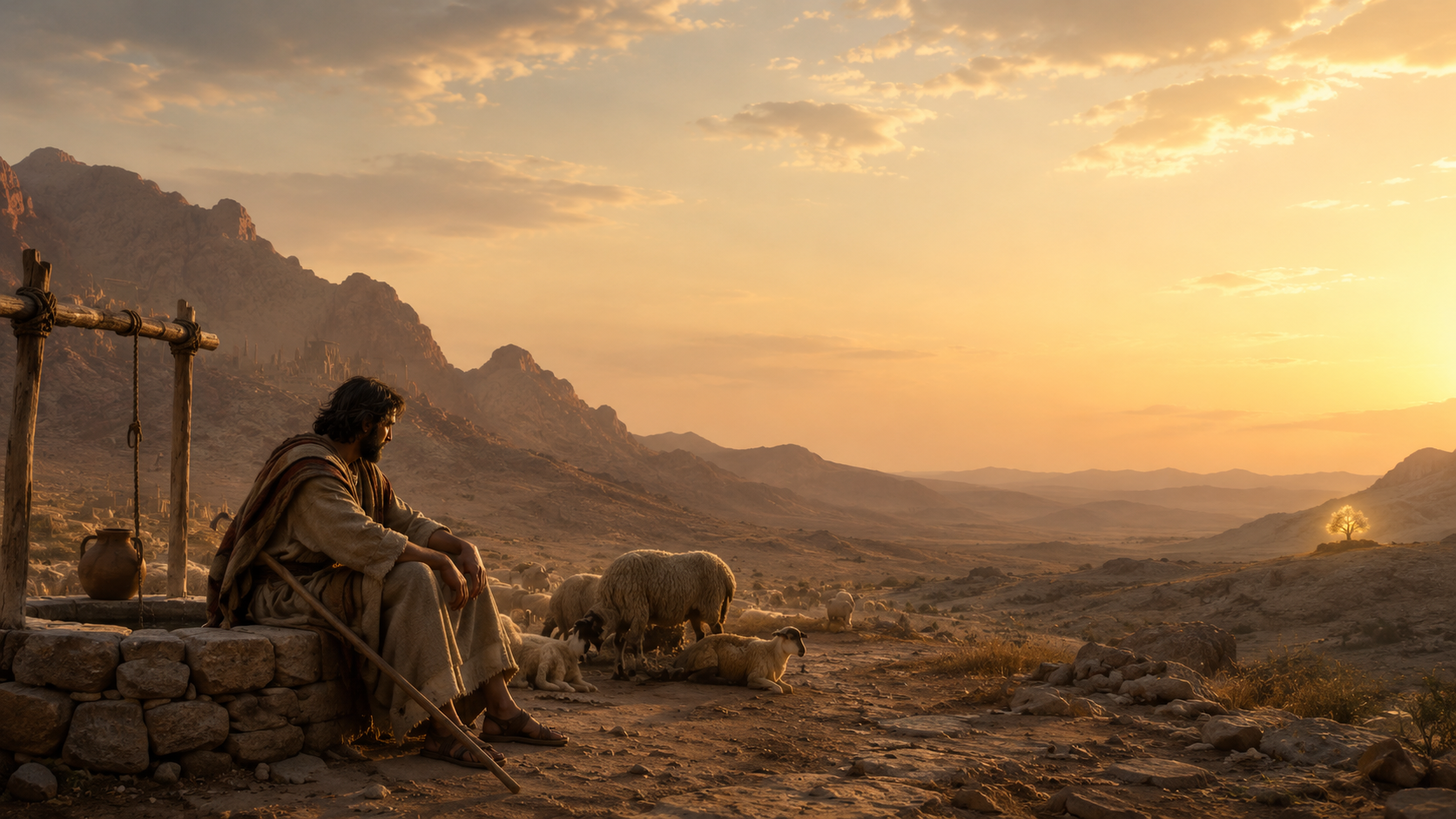
And here is the strange grace of it: the broken Moses is more useful to God than the palace Moses ever could have been. Not because weakness is better than strength. But because weakness that has been surrendered to God is infinitely more powerful than strength that is still managed by the self. The burning bush does not appear to a confident prince. It appears to a man who has run out of answers — sitting by a well in a foreign country, tending someone else's sheep, with no idea that his life is about to begin.
— ✦ —
Devotional
When You Have Run Ahead and Are Now Sitting in Midian?
Maybe you know what it is to have done the right thing at the wrong time. To have acted from a genuine place — out of love, out of justice, out of loyalty — and to have watched the whole thing unravel. The person you tried to help didn't want your help. The cause you championed turned on you. The line you crossed for someone else left you standing alone on the other side of it, with no way back.
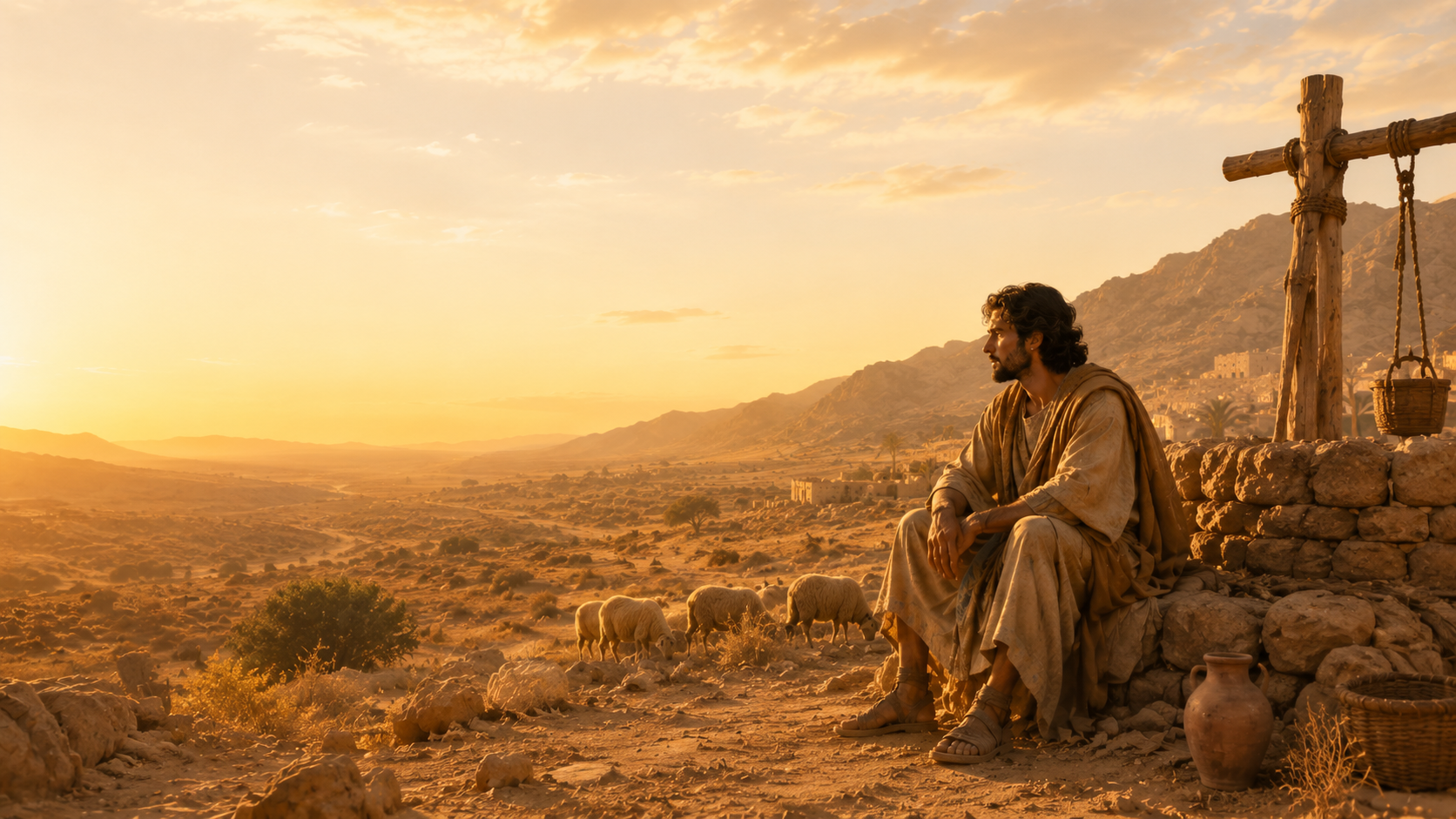
Moses sat down by a well in a foreign country. He had given up everything — palace, identity, future, safety — for people who had looked at his sacrifice and asked: who do you think you are? He was a man with no home in either world. The Egyptian world was closed to him. The Hebrew world had rejected him. He was forty years old, in the middle of nowhere, tending sheep that weren't his.
And yet. The same God who had allowed the rejection was already planning the restoration. Exodus 2:24 doesn't say God responded to Moses' groaning. It says God heard the groaning of the people — and God remembered His covenant. Moses didn't even get a specific promise in Midian. He just got forty more years of ordinary days, a wife, a son, a father-in-law, and sheep.
This is one of the hardest things in the spiritual life: that the waiting is not wasted even when it looks wasted. That the forty years in Midian are not a parenthesis in the story of Moses' life — they are the story. The man who could only look over his shoulder while killing the Egyptian will one day lift his staff over the sea without flinching. The man who ran because someone asked "who made you a judge?" will one day stand before the greatest king on earth and say: Thus says the LORD. That transformation doesn't happen in the palace. It happens in the desert.
If you are in Midian today — if you are in the in-between, sitting by a foreign well, tending someone else's sheep, wondering how you got here and whether you will ever get back — hear this: the God who heard the groaning of His people in Egypt hears yours. He has not forgotten the promise. He has not abandoned the plan. He is not wasting your desert years.
He is preparing the burning bush moment. And it will come at exactly the right time — which is His time, not yours.
A Reflection & Discussion Questions
Personal Reflection
1. Moses did the right thing at the wrong time, in the wrong way, and paid an enormous price for it. Have you ever experienced doing something you believed was right — and having it go terribly wrong? What did that season teach you about the difference between right passion and right timing?
2. The Hebrew who rejected Moses asked: "Who made you a prince and a judge over us?" There is a real question inside that rejection — about the source of authority, about who has the right to speak into a situation. Where do you believe your authority to act comes from? And how do you know when it has actually been given rather than assumed?
3.Moses named his son Gershom — "I have been a sojourner in a foreign land." He embedded his displacement into the next generation. Is there a "Midian" season you are in or have come through that is shaping how you understand yourself? What name would you give that season?
Deeper Study
4. The four divine verbs in Exodus 2:24–25 — God heard, remembered, saw, knew — describe a sequence of divine response to human suffering. Which of these four verbs resonates most with where you are right now? Which do you find hardest to believe God is doing in your situation?
5. The go'el concept — the kinsman-redeemer — runs from Exodus 2 through Ruth, through Job 19:25, all the way to Ephesians 1:7. Read Leviticus 25:47–55 and then read Ephesians 1:3–14 side by side. How does understanding the go'el change how you understand what Christ did at the cross?
6. The connection between Passover and Pentecost — fifty days, fire, covenant inauguration — is one of the great structural arches of Scripture. Before this study, were you aware of this connection? How does understanding the Old Testament Shavuot deepen your understanding of what happened in Acts 2?
7. Stephen in Acts 7 explicitly connects Moses' rejection by the Hebrews to Israel's rejection of Jesus. Why do you think Stephen chose to make this argument before the Sanhedrin — the very people who had authorized Jesus' execution? What was he hoping they would understand?
Closing Prayer
A Prayer for the Midian Season
Lord God — the God who hears, remembers, sees, and knows —
We come to You as people who have groaned. Who have cried out from slavery — not all of us to brick pits and overseers, but to things just as real: fear, failure, displacement, the ache of unanswered questions, the weight of a season that has gone on too long. For a season we just feel will never end.
We confess that we have sometimes been Moses at Exodus 2 — acting out of the right passion with the wrong tools, running ahead of You and then running away from the consequences. Forgive us for the times we have tried to do Your work with our own arms. Forgive us for mistaking urgency for anointing, and passion for calling.
We thank You that You are the God who goes to Midian. That You do not only inhabit the palace and the pulpit and the place of public ministry. You are in the foreign well and the borrowed flock and the forty ordinary years. You were in Midian before Moses arrived, preparing a family, growing a relationship with a priest who would become a father-in-law and a friend.
We thank you Father, that you love us with an everlasting love and are always preparing a way for us.
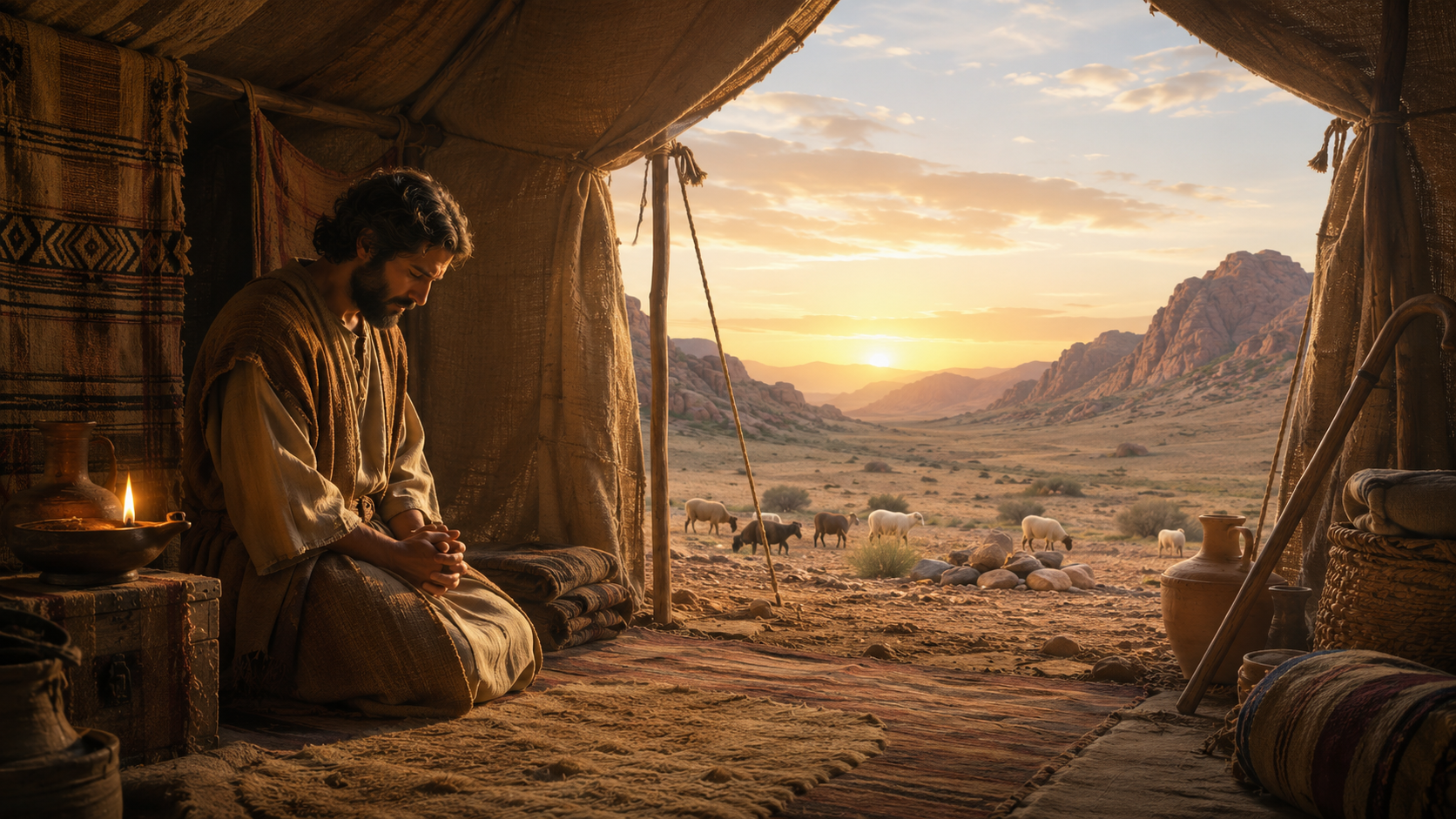
We ask You today to meet the people who are sitting down. The ones who ran out of road. The ones who crossed a line they can't uncross. The ones who were rejected by the very people they tried to serve. Meet them in their Midian, the way You met Moses — not just with immediate answers, but with bread, and family, and the slow gift of ordinary time in which to be undone and remade. Heal their wounds and restore them at your timing and in your plan.
And when the burning bush comes — when You are ready, when the moment is right, when the preparation is complete — give us the courage to turn aside and look. And to hear what You say when we do.
You are the ultimate Go'el. You are the kinsman who paid the price we couldn't pay. You are the Passover Lamb and the Pentecost Fire. You are the end of the story that began with a groaning in Egypt.
We trust You with the middle chapters of our own stories.
In Jesus mighty name,
Amen.
Coming Next in the Series
Part Five: Midian — The Desert School of God
Moses is forty years in the wilderness. We will explore what those forty years were actually like — the geography of the Sinai and Arabian Peninsula, the daily life of a pastoral nomad, what Jethro taught him, how the desert stripped the palace out of him layer by layer, and why God chose the wilderness as the classroom for the greatest prophet who ever lived. We will also explore the "forty" motif throughout Scripture — from Israel's forty years to Jesus' forty days — and what it means that God so often measures His preparation time in forties.

Add comment
Comments