The World He Was Born Into
Egypt, slavery, and 400 years of silence
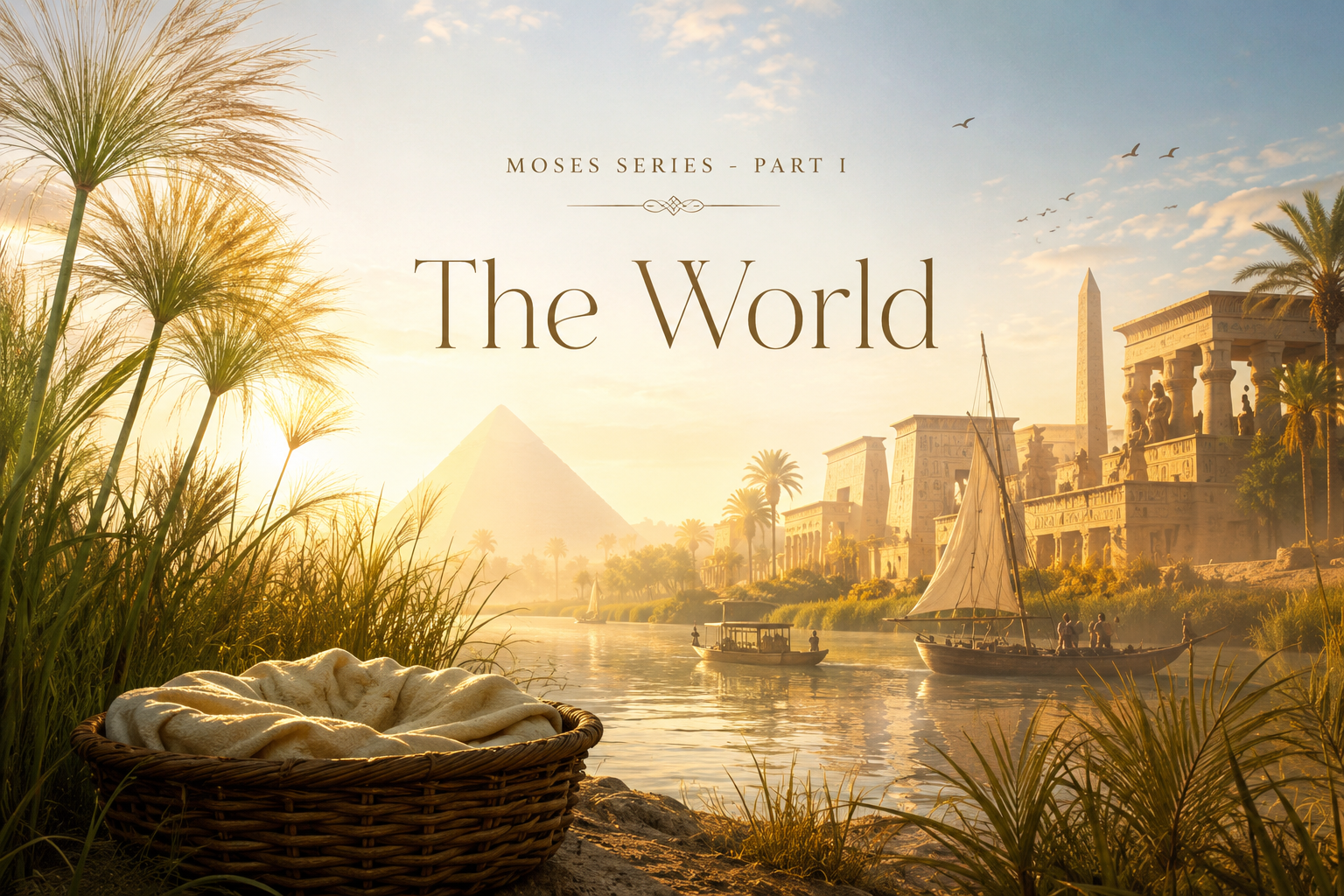
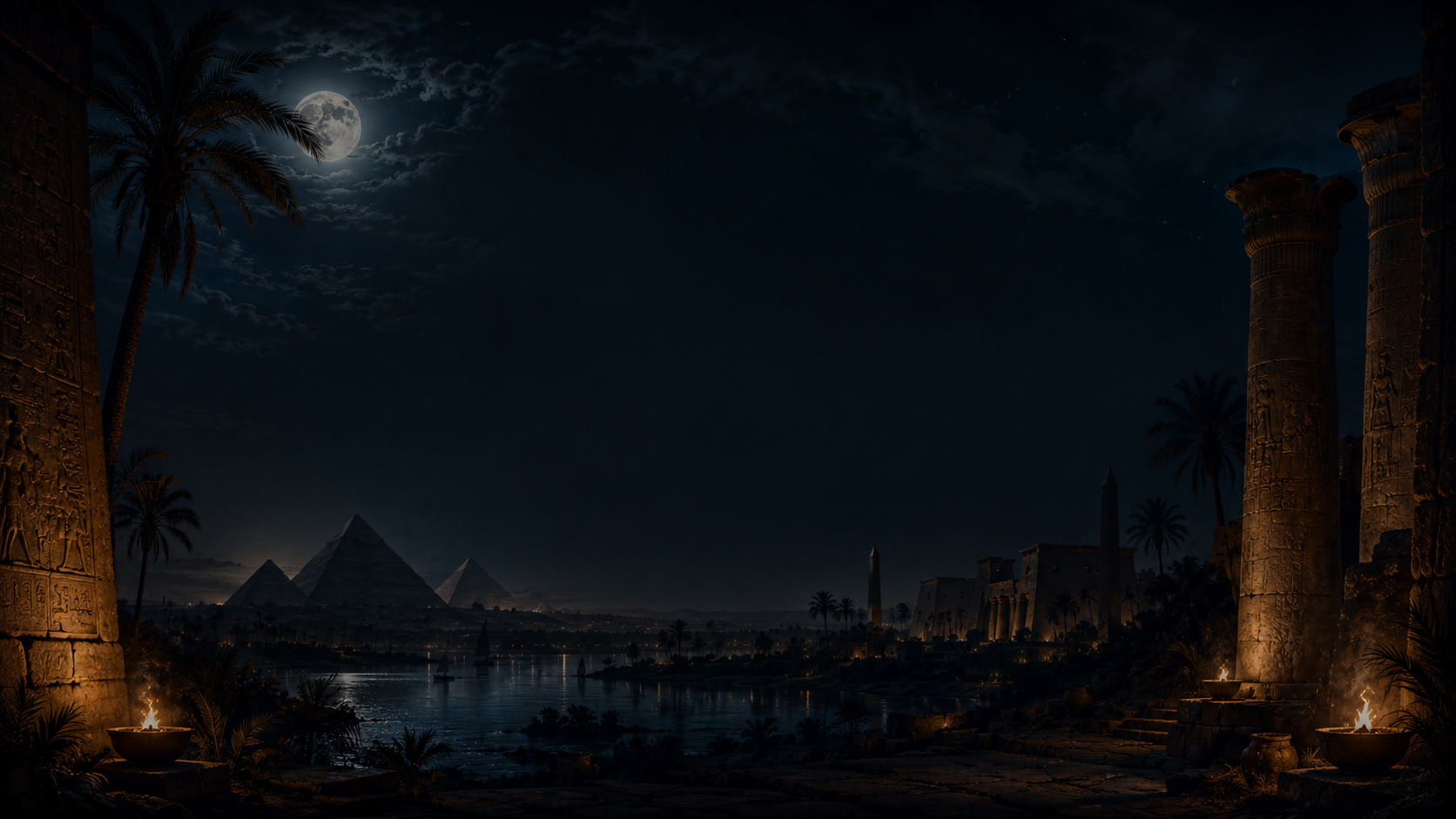
Egypt in the 13th Century BC: The World Stage
Slavery · Silence · Sovereignty
The Nile did not care about the screaming.
It moved, as it always had, wide and brown and ancient, carrying silt from Ethiopia down to the delta marshes where the papyrus grew thick. On its eastern bank, near the city the Egyptians called Pi-Ramesses, ten thousand mud-brick hovels pressed against each other in the heat. Before dawn, the overseers walked. They carried sticks. And in the hovels, men whispered in a language that was not Egyptian — a language their grandfathers' grandfathers had brought with them from Canaan, a language that still remembered a God who had promised something. Anything. But the promises felt very far away. And the Nile did not care.
Into this world — this grinding, mud-stinking, stick-bruised world — Moses would be born.
Which Pharaoh? The Ongoing Debate
Before we can understand Moses, we need to understand Egypt — and that means wading into one of the great unresolved questions of biblical archaeology: which Pharaoh enslaved Israel, and which Pharaoh did Moses confront?
Two main camps have dominated scholarship. The traditional view places the Exodus around 1446 BC during the reign of Amenhotep II, with the oppression beginning under Thutmose III. This is anchored to 1 Kings 6:1, which states that Solomon began building the Temple 480 years after the Exodus. Working backward from Solomon's fourth year (approximately 966 BC) gives a date of 1446 BC.
The second view — championed by many Egyptologists and some biblical scholars — places the Exodus during the reign of Ramesses II (1279–1213 BC), citing the reference in Exodus 1:11 to the Israelites building the city of "Ramesses." This is the "late date" Exodus, favored in part because of the extraordinary building projects Ramesses undertook using conscript labor.
A third position — the "New Chronology" proposed by scholars like David Rohl — challenges the entire Egyptian timeline, placing the Exodus in the Middle Kingdom period. Under this framework, archaeological evidence from Tell el-Dab'a (ancient Avaris) becomes very compelling: a large Semitic population, a palace, evidence of mass departure.
For our study, we will note the debate honestly but proceed with the narrative. The theological truth of what happened does not rise or fall on which Pharaoh wore the crown.
The Might of Egypt: What Moses Was Up Against
Egypt in the second millennium BC was the greatest empire on earth. The Old Kingdom had built the pyramids — engineering achievements that still baffle modern engineers. By the New Kingdom period, Egypt's sphere of influence stretched from the fourth cataract of the Nile deep into Nubia in the south, and north through Canaan, Syria, and into the borderlands of the Hittite empire.
Pharaoh was not merely a king. He was considered, literally, a god — the living embodiment of Horus while he ruled, and Osiris when he died. The Egyptian word for Pharaoh, per-aa, means "great house." He was the axis around which cosmic order (ma'at) was maintained.
When God said to Moses, "I will get glory over Pharaoh and all his host" (Exodus 14:17), He was not speaking about a provincial chieftain. He was speaking about the greatest military and religious power on earth. The stakes of the Exodus were staggering.
Egyptian Religion: The Gods the Plagues Would Confront
Egypt was not merely a political empire — it was a theological empire. The ten plagues were not random natural disasters. They were a systematic, theologically precise demolition of Egyptian religion, conducted by the God of Israel.
- Ra (Re)— The sun god, king of the gods, father of Pharaoh. The ninth plague — three days of total darkness — was a direct assault on Ra.
- Hapi— The god of the Nile flood and fertility. The first plague, turning it to blood, struck the very source of Egyptian life.
- Heqet— The frog goddess of fertility and childbirth. The second plague grotesquely inverted a god Egyptians considered sacred and protective.
- Khnum— The ram-headed god, protector of the Nile's source and livestock. The fifth plague attacked the animals under his care.
- Osiris— God of the dead and resurrection. The final plague — death of the firstborn — struck at Egyptian hope for dynasty and the future.
We will examine each plague in its own dedicated study (Parts 10–11). But understanding this framework now is crucial: when we read Exodus, we are reading not just a story of liberation but a cosmic theological confrontation. God was putting His glory on display before the entire ancient world.
— ✦ —
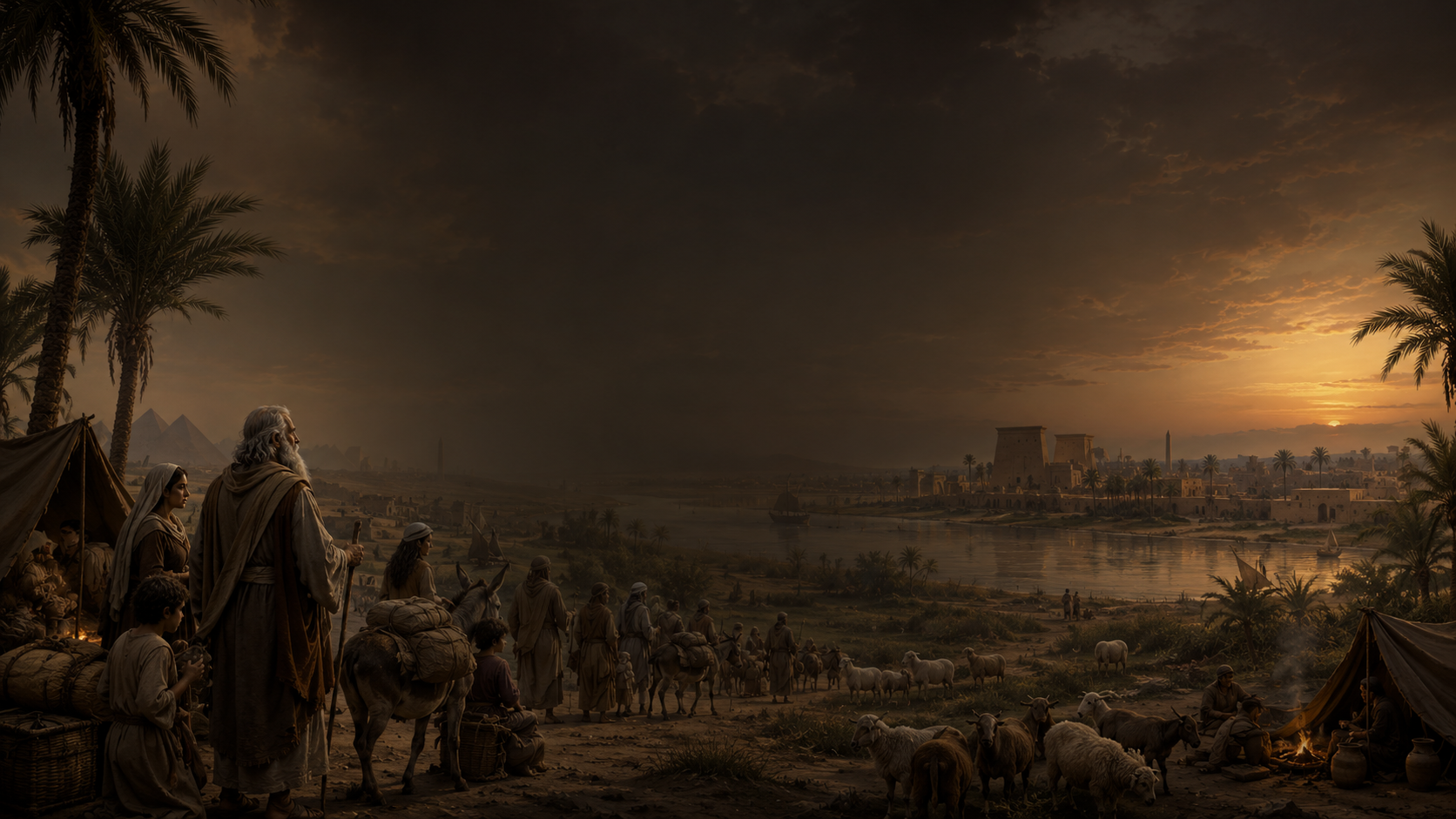
Four Hundred Years: The Silence Between Genesis and Exodus
The Gap Nobody Talks About
Genesis ends with Joseph dying at 110 years old, his bones preserved in a coffin in Egypt, waiting to be carried home. Exodus opens with a new king who "did not know Joseph" (Exodus 1:8). Between those two events lies approximately four hundred years.
Four hundred years of silence in Scripture. No prophets named. No miracles recorded. No burning bushes. No voices from heaven. Just — people. Having children, burying their parents, whispering the old stories, and wondering.
"Know for certain that your offspring will be sojourners in a land that is not theirs and will be servants there, and they will be afflicted for four hundred years. But I will bring judgment on the nation that they serve, and afterward they shall come out with great possessions."
Genesis 15:13–14
This was not a surprise to God. The four hundred years of slavery were within the sovereign plan. That does not make the suffering less real — the backs bent, the children born into bondage, the slow erosion of hope across generations. But it means that not one day of that suffering was outside God's awareness or outside His purpose. God is never absent during the silence. He is preparing.
How Did a Blessing Become a Bondage? (Exodus 1:1–14)
When Jacob and his family entered Egypt at Joseph's invitation, they numbered seventy souls. But they were prolific. Exodus 1:7 uses a string of verbs that should stop us in our tracks: the people of Israel were fruitful and increased greatly; they multiplied and grew exceedingly strong, so that the land was filled with them.
The Hebrew here is remarkable. Fruitful (parah) echoes Genesis 1:28 — the creation mandate. Swarmed (sharats) is the same word used for sea creatures in Genesis 1:20. The author is deliberately telling us: what is happening in Egypt is a fulfillment of the creation mandate. Israel is doing what humanity was made to do. They are filling the earth. They are flourishing.
And this becomes the reason for their oppression. Pharaoh looked at this growing Semitic population and felt what powerful people have always felt when they see the flourishing of those they consider beneath them: fear. The policy of oppression was a calculated political strategy. It was also, without Pharaoh knowing it, a catastrophic theological mistake. Because the people he was trying to crush were the people of the promise.
The Midwives: The First Act of Resistance (Exodus 1:15–21)
When Pharaoh's economic oppression failed, he escalated to genocide. He commanded two midwives — Shiphrah and Puah — to kill every Hebrew boy at birth.
These women are extraordinary. They are the first named heroes of the Exodus narrative — and they are not generals, prophets, or kings. They are working women whose names have survived three thousand years because they chose to fear God rather than Pharaoh.
The text says they "feared God" (Exodus 1:17). In Hebrew, yare elohim — the same phrase used of Abraham when God acknowledged his willingness to sacrifice Isaac. Fear of God, in the Old Testament, is not primarily an emotion. It is a moral orientation — a posture of reverence that shapes behavior. And God honored them: because the midwives feared God, He gave them families of their own. They protected life. Life was multiplied for them.
— ✦ —
Archaeological Window
Tell el-Dab'a and the Evidence for Israel in Egypt
Archaeological Context
The most compelling physical site connecting archaeology to the biblical account is Tell el-Dab'a in the northeastern Nile Delta — ancient Avaris, identified as the Hyksos capital and connected by many scholars to the biblical "land of Goshen."
Excavations led by Austrian archaeologist Manfred Bietak have revealed several remarkable findings:
— ✦ —
A large Semitic (non-Egyptian) population
A palace structure with a garden containing twelve tombs
Evidence of an abrupt, large-scale departure
The Leiden Papyrus 348, dating to Ramesses II, contains the line:
living in the delta region, dated to the Middle Kingdom and Second Intermediate Period, with distinct burial customs and pottery styles that differ sharply from native Egyptian practice.
— a number that has struck scholars as potentially significant. One tomb contained a statue of a man with Asiatic regalia, later defaced in antiquity.
— not a conquest, but an emptying. Semitic-style houses found abandoned, with animal bones suggesting inhabitants left in haste and did not return.
"Give grain rations to the soldiers and the Apiru who drag stone to the great pylon of Ramesses-Meriamon."Semitic laborers in Egyptian construction projects, in exactly the period many scholars associate with the Exodus.
What we can say without controversy: the Nile Delta region shows unmistakable evidence of large Semitic populations, their presence in Egyptian state service, and their abrupt departure. The Bible is not describing something culturally implausible. It is describing a world that archaeology continues to illuminate.
— ✦ —
Theological Depths
What the Silence Teaches Us
The Theology of the Hiddenness of God
Four hundred years. The people of the promise in a foreign land, building cities for a god-king who wanted them dead. Where was the God of Abraham?
He was there. But He was hidden. And this theological reality — the hiddenness of God — runs through Scripture like a subterranean river. Psalm 44 wrestles with it. Lamentations drowns in it. Job screams at it. The silence of God is not the absence of God.
Theologians have called this Deus absconditus — the hidden God. Martin Luther, drawing on Isaiah 45:15 ("Truly, you are a God who hides himself, O God of Israel, the Savior"), taught that God often works most powerfully through what appears to be His absence. The cross — the moment the Son of God cried "My God, my God, why have you forsaken me?" — is the ultimate expression of this theology. God at work in the darkness.
The Pattern of Redemption: Descent, Darkness, Deliverance
Notice the pattern already established in Genesis before Exodus begins:
- Abraham goes down to Egypt in a famine — and comes up with great wealth. He is given a preview of what will happen to his descendants.
- Jacob goes down to Egypt to save his family — and dies there. But he makes his sons swear to carry his bones home.
- Joseph is sold into Egypt, imprisoned, forgotten — and elevated to save many lives, including the very brothers who betrayed him.
The pattern is this: descent, darkness, deliverance. This is the shape of redemption in the Bible. It is not a straight line upward. It is a death and a resurrection. Egypt is always both the place of survival and the place of bondage. And the God who leads His people into Egypt is the same God who leads them out.
Jesus Himself recapitulates this pattern. Matthew 2:15 quotes Hosea 11:1 — "Out of Egypt I called my son" — applying it to Jesus' return from Egypt as a child. The life of Moses prefigures the life of Christ in striking detail. We will trace this thread throughout the series.
— ✦ —
15 where he stayed until the death of Herod. And so was fulfilled what the Lord had said through the prophet: “Out of Egypt I called my son.”
- Matthew 2:15
“When Israel was a child, I loved him,
and out of Egypt I called my son.
Hosea 11:1

Devotional
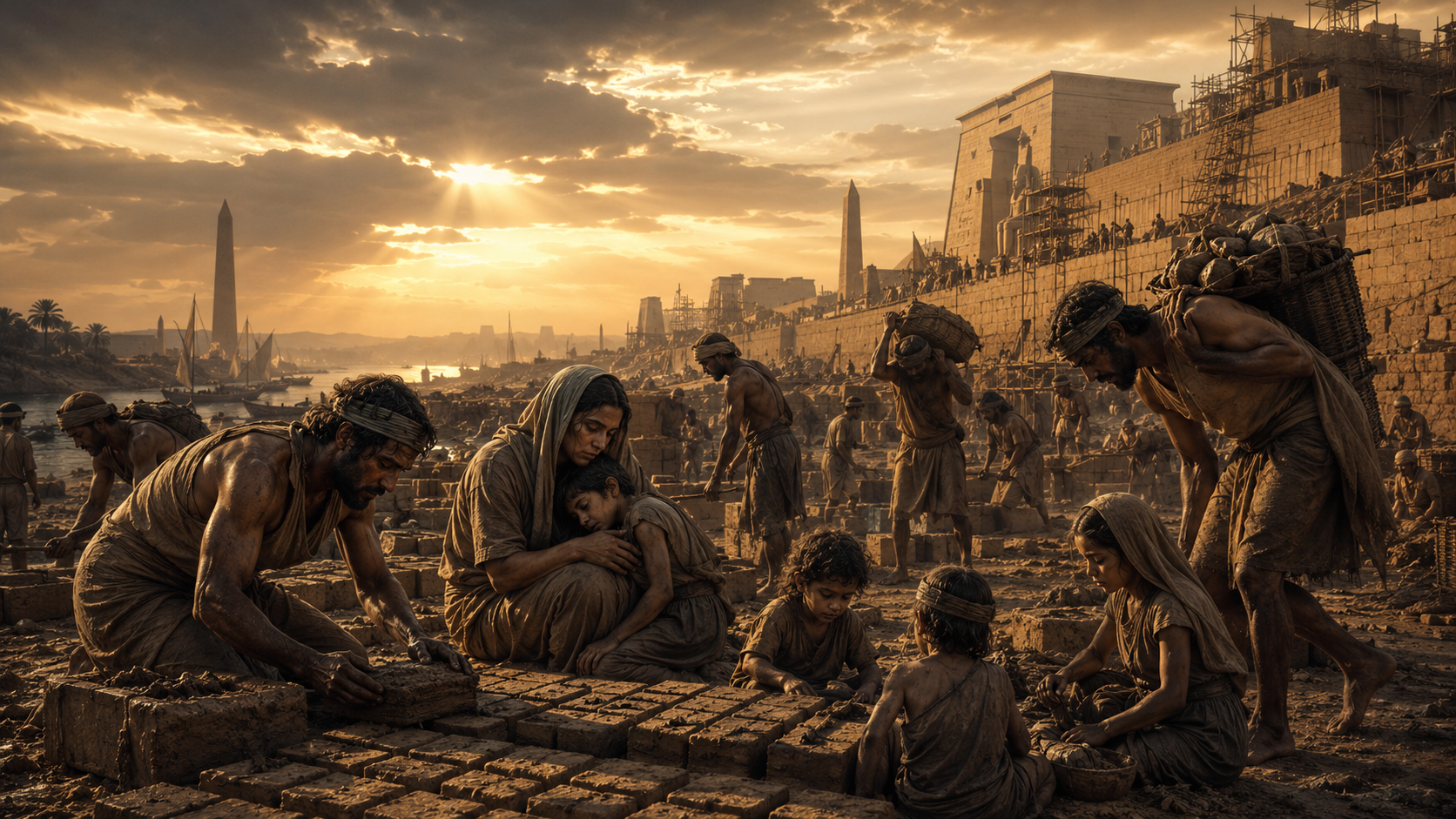
Perhaps you know what it feels like to be building someone else's city.
To pour your energy into a place, a job, a relationship — and to feel like what you are building doesn't belong to you. To feel like your labor is being taken. To wake up before dawn to the weight of it, and to wonder whether the God who made promises is paying any attention.
The Hebrews in Egypt were not there because they had failed. They were there because they were in the middle of a story that was bigger than any one generation could see. The seventy who went down to Egypt with Jacob were not wrong to go. The generations who suffered under Pharaoh were not being punished. They were being formed. They were inside God's 400-year answer to a 400-year prayer — a prayer they didn't even know was being prayed.
Here is what the silence of those four hundred years teaches us: God does not abandon His promises when He goes quiet. He is often most at work when He is least visible. The Nile that didn't care about the screaming? God heard every cry. Exodus 2:24 tells us: "God heard their groaning, and God remembered his covenant with Abraham, with Isaac, and with Jacob." He remembered. He had never forgotten. But the time of His remembering — the time when remembering became acting — was His to choose, not theirs.
Whatever Egypt you find yourself in today — whatever place of bondage, or waiting, or confusion — the God of Moses is your God. He does not despise the silence. He is in it with you.
— ✦ —
Reflection & Discussion Questions
Personal Reflection
1.Where in your own life have you experienced a "four hundred years" — a season of waiting that felt like God was silent? Looking back, what do you see now that you couldn't see then?
2.Shiphrah and Puah chose to fear God rather than Pharaoh. What does it look like in your daily life to "fear God" — to let reverence for Him shape your decisions when the cost is real?
3.The text says God "remembered" His covenant. Not that He had forgotten — but that remembering moved into acting. Have you ever felt a moment when God's remembering became visible in your situation?
— ✦ —
Deeper Study
4.Read Genesis 15:12–21. Notice the setting — deep sleep, dread, darkness. Why do you think God revealed the Egyptian slavery to Abraham in this context? What does this say about the nature of covenant?
5.Compare Exodus 1:7 with Genesis 1:28. What is the author of Exodus doing by using this language? What is he saying about Israel's suffering in the context of God's larger purposes?
6.The midwives were asked to participate in state-sponsored genocide. They refused — and deceived Pharaoh. The text does not condemn their deception. How do you think about this theologically? Are there situations where deception is morally justified?
— ✦ —
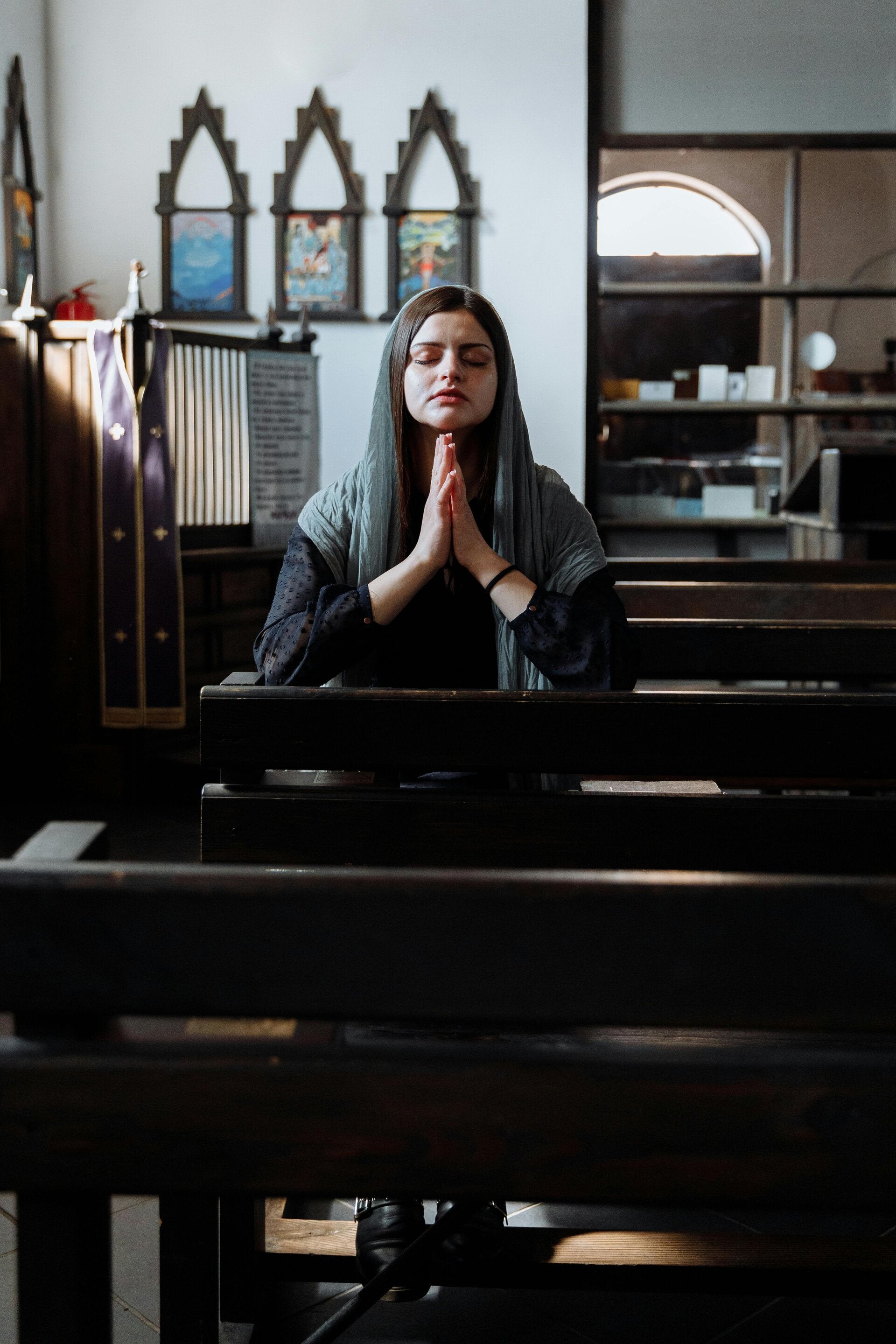
Closing Prayer
Closing Prayer
Lord God of Abraham, Isaac, and Jacob —
You are the God who speaks, and the God who is sometimes silent. You are the God who acts, and the God who sometimes waits. You are the God who is always present, even when You feel impossibly far.
We confess that silence is hard for us. That waiting feels like abandonment. That we often interpret Your quietness as indifference. Forgive us for the smallness of that vision.
Teach us the theology of the hidden God. Teach us that You are not idle in the darkness — that You are weaving, forming, preparing. That the four hundred years were inside Your plan, not outside it. That the mud and the bricks and the back-breaking labor were not wasted.
We ask today for the courage of the midwives — to fear You more than we fear the powers that press against us. And we ask for the faith to believe that You remember. That the covenant You made with Your Son, sealed in blood at Calvary, will not fail.
We are waiting for something. We name it before You now, in the silence of our own hearts.
You heard the groaning of Israel. Hear ours.
In the name of the One who came out of Egypt, Who set us free , In Jesus name
Amen.
— ✦ —
Coming Next in the Series
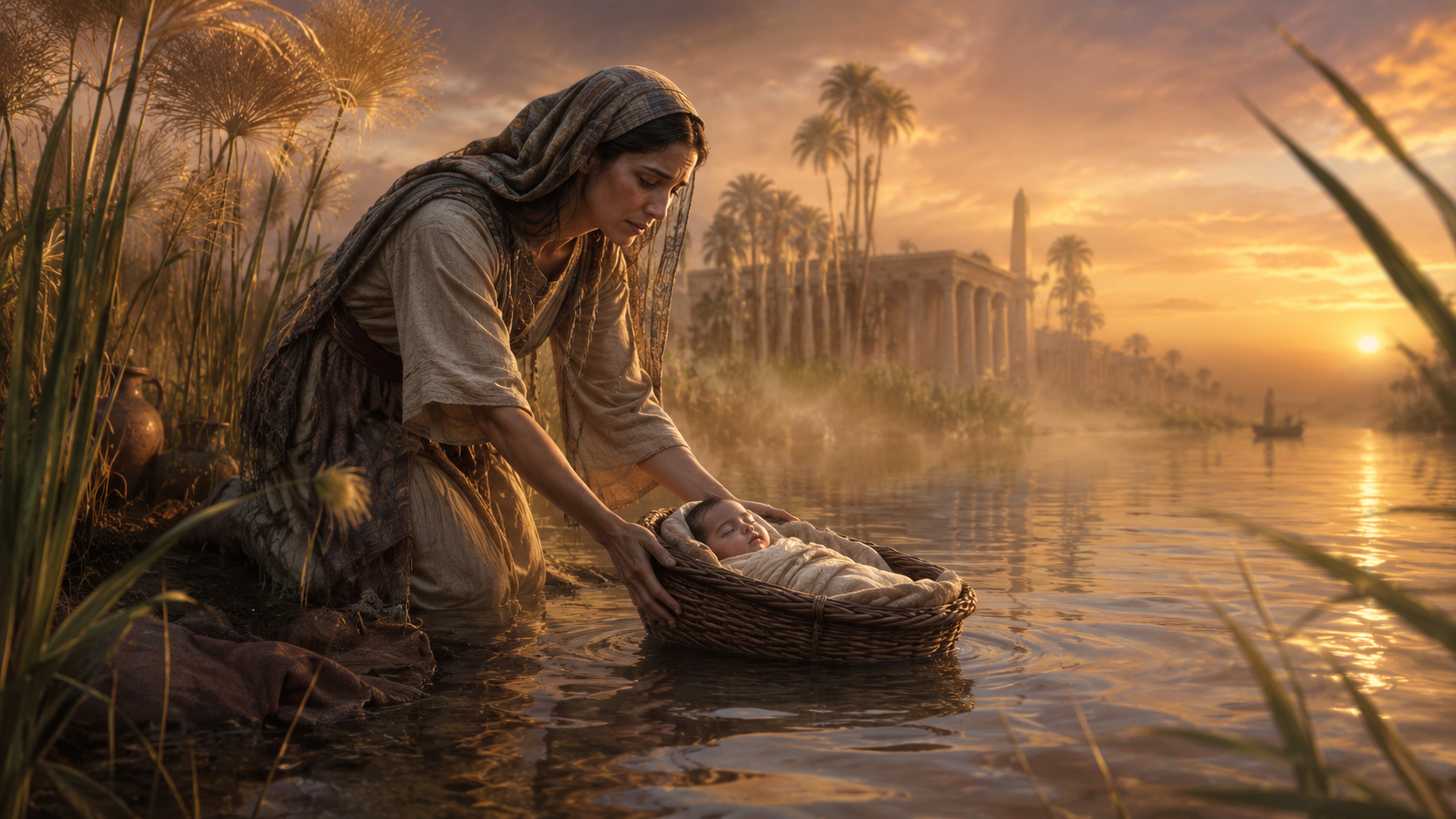
Part Two: A Mother's Impossible Choice
Jochebed places her three-month-old son in a papyrus basket and sets him in the Nile — the very river Pharaoh has turned into an instrument of death. We will explore the archaeology of papyrus construction, the terrifying theology of entrusting what you love most to the river that kills, the identity of Pharaoh's daughter, and what this act of desperate faith teaches us about releasing what we cannot control to the hands of God.
Add comment
Comments