
"The LORD, the LORD, a God merciful and gracious, slow to anger and abounding in steadfast love and faithfulness, keeping steadfast love for thousands, forgiving iniquity and transgression and sin."
— Exodus 34:6–7
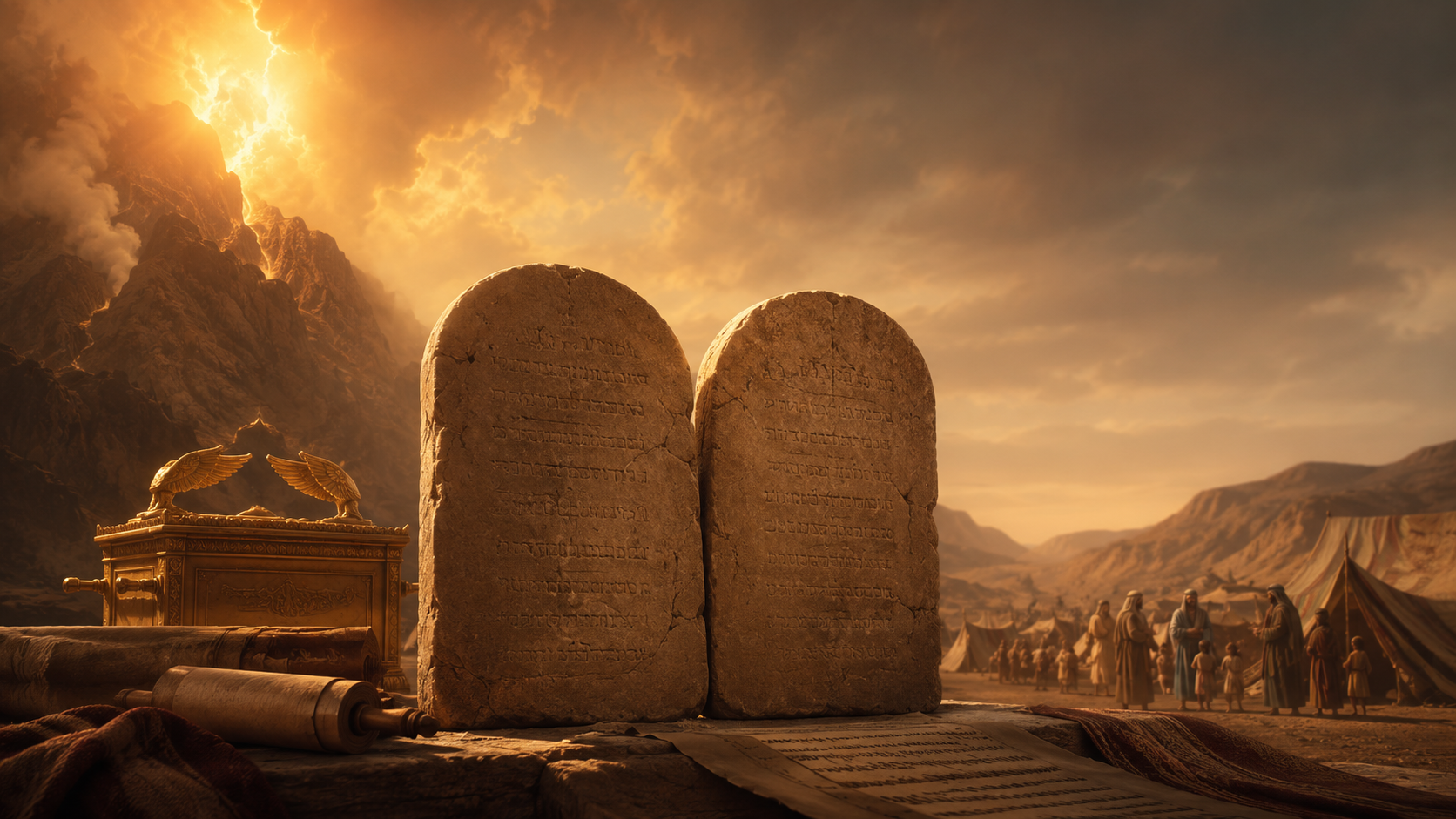
Before You Begin This Study
Part Eighteen is the most intimate chapter in the entire Exodus narrative — and carries the most important theological content in the whole Old Testament about who God actually is. Please read Exodus 33:12–34:9 before engaging the commentary. Read it slowly. Read it more than once. This passage contains what the Jewish tradition calls the Thirteen Attributes of God — the deepest and most direct self-disclosure of the divine character anywhere in Scripture before the Incarnation.
As you read, try to imagine Moses. He has just been through the worst events of his life. He is eighty years old. He has been on the mountain twice, for forty days at a stretch. He has broken the tablets God wrote. He has watched 3,000 people die. He is the loneliest man on earth. And now, in this context of exhaustion and grief and stunning spiritual aftermath — he asks for something extraordinary. Notice what he does not ask for. He does not ask for more signs. He does not ask for military victory. He does not ask for a fresh start. He asks to see God.
Exodus 33:12–23 Exodus 34:1–10, 29–35 Numbers 14:17–19 2 Corinthians 3:7–18
John 1:14–18
Optional deeper reading:
Psalm 103:8–13 (the great Psalm that quotes
Exodus 34:6–7 directly — one of the most beloved passages in all of Scripture);
Nehemiah 9:17 (the golden calf retelling that quotes the Thirteen Attributes);
Joel 2:13 (the prophet invoking the Thirteen Attributes as a reason to repent);
Jonah 4:2 (Jonah quoting the Thirteen Attributes in frustration — he knows God will relent because of who He declared Himself to be);
Matthew 17:1–8 (the Transfiguration, a deliberate echo of the Sinai glory encounter).
Exodus 33:12–17 Moses Pleads for God’s Presence
Exodus 33:18–23 “Please Show Me Your Glory
Exodus 34:1–10 Yahweh Proclaims His Name
Exodus 34:29–35 The Shining Face of Moses
Numbers 14:17–19 Moses Appeals to the Character of God
Second Corinthians 3:7–11 The Glory of the Old Covenant
Second Corinthians 3:12–18 The Veil Is Taken Away in Christ
John 1:14–18 The Glory Made Visible


The Story - The Man Who Asked the Impossible Thing
Scene One: The State of Moses
Try to imagine where Moses is standing as Exodus 33 opens.
He is eighty years old. His arms were held up by two men forty days ago while his people fought Amalek below him. He spent forty days on a burning mountain receiving the most detailed architectural and ritual specifications ever given to a human being. He came down carrying two stone tablets written by the finger of God. He saw the calf. He broke the tablets. He burned the calf and ground it and made the people drink it. He stood at the gate of the camp and said "who is on the LORD's side?" and watched the sons of Levi pick up their swords and kill three thousand of the people he had known for eighty years.
He has interceded twice for a people who do not deserve it. He has offered his own name to be blotted out of God's book — a self-sacrifice so costly that God Himself declined it and answered "whoever has sinned against me, I will blot out of my book." He has stood between wrath and Israel again and again, alone, with no one to stand between him and the weight of what he is carrying.
And now God has told him that He will not go with Israel anymore. That He will send an angel. That His presence itself — the pillar, the fire, the face-to-face conversation in the tent — might be withdrawn. And Moses has negotiated even this, argued even here: if your presence does not go with us, do not bring us up from here. And God has relented again. The presence will go with them.
Moses has won everything he asked for. The people will be spared. The presence will go with them. The journey will continue. He should be exhausted with relief. He should be sleeping. He should be grateful and quiet.
Instead, he asks for one more thing.
It is the one thing that nobody in his position would think to ask for. Not more power. Not more clarity about the journey ahead. Not protection from future failure. Not a guarantee that Israel will behave differently this time. He asks for the thing that was already the deepest need beneath everything else — the thing he has circled around since the burning bush, the thing that four hundred and thirty years of silence and then eighty years of divine communication have been preparing him to want:
"Please show me your glory."
He asks to see God.

Scene Two: The Cleft of the Rock
God's answer was both more and less than Moses asked for.
Less, because God says: you cannot see my face. No human being can see my face and live. I will cover you with my hand as I pass by, and you will see my back — but my face shall not be seen. Moses had asked to see the glory. What he will see is the back of it, the aftermath of it, the wake left by the passing of divine presence — like watching the light a second after the sun has moved, the glow that remains in the sky after the source has shifted behind the horizon.
More, because what God does instead of showing Moses His face — He proclaims His name. He tells Moses who He is. Not what He looks like. What He is like. Not the visual form of glory, which would destroy the human body that encountered it. The interior content of glory, which a human being can hold, can hear, can carry away in the hands and the memory and the very cells of the body.
And the means by which God protects Moses while this happens — the hiding place, the shelter while the presence passes — is one of the most beautiful images in the entire Old Testament: the cleft of the rock. A crack in the stone of the mountain. A hollow in the granite. God places Moses in a fissure in the rock face and covers him with His hand, and then passes by, and then removes His hand, and Moses sees — what? The back. The aftermath. The remaining radiance of a presence that has passed through.
Early the next morning Moses cut two tablets of stone, like the first ones. He went up the mountain with the tablets in his hands. And there God descended in the cloud and stood with him there and proclaimed the name of the LORD.
And the LORD passed before him and proclaimed:
"The LORD, the LORD, a God merciful and gracious, slow to anger and abounding in steadfast love and faithfulness, keeping steadfast love for thousands, forgiving iniquity and transgression and sin, but who will by no means clear the guilty, visiting the iniquity of the fathers on the children and the children's children, to the third and the fourth generation."
And Moses quickly bowed his head toward the earth and worshipped.
That is the divine response to the request "show me your glory." Not a vision of divine form. Not a blinding light or a theophanic display. God walks by and speaks His own character. He tells Moses His name. He defines Himself. In the cleft of the rock, covered by the hand of God, Moses hears the most complete self-disclosure of the divine character in the entire Old Testament — and he bows.

Scene Three: The Shining Face
Moses was on the mountain for another forty days and forty nights. He did not eat bread or drink water. The second forty days — like the first, like the forty years in Midian, like the forty years Israel would wander — the number that always accompanies the periods when God is forming something that will not be formed any other way.
He came down with the two new tablets in his hands. The covenant renewed. The law re-given. The words that the first tablets had carried, now re-engraved by the hand of Moses himself — because God gave the words, but this time Moses carved them. A shared act. A covenant re-entered together.
And when Moses came down from Mount Sinai, with the two tablets in his hand, he did not know that the skin of his face shone because he had been talking with God. He did not know. He could not see his own face. He was carrying the tablets. He was walking toward the camp. He had no idea that eighty days of dwelling in the vicinity of divine glory — eighty days of conversations so intimate that the tent of meeting described them as "face to face, as a man speaks to his friend" — had left a visible residue on his skin.
Aaron and the people of Israel saw Moses, and behold, the skin of his face shone, and they were afraid to come near him.
Moses called to them, and they came back. He spoke with them. He gave them the commandments. And when he finished speaking, he put a veil over his face. And whenever Moses went in before the LORD to speak with him, he would remove the veil. And whenever he came out and told the people what he had been commanded, the people would see Moses' face — that it was shining. And Moses would put the veil over his face again.
The man who went into the mountain asking "show me your glory" came down the mountain glowing. Not knowing it. Carrying the law in his hands and the glory on his face without being aware of either as something he himself possessed — because both had come from outside him, from the One he had asked to see, and the most honest person in that scene was the one who did not know what he was radiating.

Moses' State of Mind: What He Was Carrying
Understanding the emotional and spiritual weight Moses was under when he made this request
To understand the request "please show me your glory," we have to understand the person making it — and the condition they were in. Moses in Exodus 33 is not a man at the peak of his spiritual confidence making an ambitious theological request from a place of strength. He is a man at the edge of what human beings can carry, making the most essential request he knows how to make from a place of profound exhaustion and need.
What Moses Had Just Been Through — The Accumulated Weight
Eighty years of formation. Forty years of palace education, followed by forty years of desert hiddenness. Not a single year of his adult life had been his own. His identity had been stripped, rebuilt, stripped again, and rebuilt differently. He had been a prince, a fugitive, a shepherd, and now a prophet and leader of two million people — all before his eightieth birthday.
The burden of mediating between God and two million people. Every complaint, every crisis, every question, every judicial dispute — came to Moses. Jethro had seen him nearly collapse under this and restructured the system, but the weight of ultimate responsibility was still his. Every time Israel's faith faltered, Moses stood in the gap. Every time YHWH's wrath burned, Moses interceded. He was living between two infinitely demanding parties: a holy God and a frightened people — and he was the only bridge between them.
The shock and grief of the golden calf. Moses had broken the tablets that God Himself wrote. He had ordered the execution of three thousand people, some of whom he almost certainly knew personally. He had watched Aaron — his brother, his companion through Egypt and the plagues — give a transparently false excuse and escape judgment through Moses' own intercession. The spiritual and emotional aftermath of Exodus 32 would have been staggering.
The partial withdrawal of divine presence. God's announcement that He would send an angel rather than go Himself — even temporarily — would have been, for Moses, the most devastating development of all. Because Moses had learned, through eighty years, that everything depended on the presence. Not the destination. The presence. And the threat that it might be withdrawn would have cut him at the place he was most vulnerable.
This is the man who says: please show me your glory. Not from strength. From desperate, honest, beautiful need. The request is not a spiritual achievement. It is a spiritual hunger made articulate at the moment when there was nothing else left to ask for.
Did You Know — What Moses Had Already Seen
It is important to note what Moses had already experienced before he made this request — because the request "show me your glory" is even more remarkable in the light of what he had already been given.
Moses had already seen the burning bush. He had already experienced the ten plagues and the parting of the sea. He had already spoken with God face to face "as a man speaks to his friend" in the tent of meeting. He had already been on the mountain for forty days in the presence of divine fire. He had already entered the thick darkness where God was. In Exodus 24:9–11, Moses, Aaron, Nadab, Abihu, and the seventy elders went up the mountain and "saw the God of Israel" — the text says they ate and drank in the divine presence, and "God did not lay his hand against the chief men of Israel." Moses had already had more direct divine encounter than any human being before him in Scripture.
And it was not enough. Not because God had been stingy or Moses had been ungrateful — but because every genuine encounter with God produces a deeper hunger for more of God. The burning bush does not satisfy the desire for God. It creates it. Forty days in divine fire does not diminish the longing. It intensifies it. Moses had seen more of God than any other human being alive, and his response was: I need more. The more of God you encounter, the more of God you discover you still need. This is the pattern of the mystics and it is the pattern of Moses at the most honest moment of his life.

"Show Me Your Glory" — Exodus 33:18
The most audacious request in the entire Old Testament — and what it actually meant
Exodus 33:18 — The Request, and God's Initial Response (v.19)
Verse 18
"Moses said, 'Please show me your glory.'"
Hebrew Analysis — What "Glory" Means
har'eni na et-kevodecha — "Please show me your glory." The word kavod (glory) literally means weight, heaviness, substance — the same root as the kaved we have traced through Moses' heavy arms, Pharaoh's hard heart, the heavy cloud at Sinai. Kavod is what a thing truly is when stripped of appearances — the substantive reality behind the surface. When Moses asks to see God's kavod, he is asking to encounter God not as a phenomenon to observe but as a reality to know — not the effects of divine presence but the substance of divine being.
What has Moses already experienced at this point? The burning bush. The pillar of fire. The smoke of Sinai. The thick darkness. The face-to-face conversations in the tent of meeting. He has seen more of God than any human being before him. And still — "please show me your glory." The Hebrew particle na attached to the verb is an intensifying particle of entreaty — a polite but urgent "please." This is not a casual theological curiosity. It is a desperate personal longing. Moses needs to know that what he has been serving is real, is there, is present — not as a concept but as a reality he can encounter.
Verse 19
"And he said, 'I will make all my goodness pass before you and will proclaim before you my name "The LORD." And I will be gracious to whom I will be gracious, and will show mercy on whom I will show mercy.'"
God Redefines the Request
ani a'avir kol-tubi al-paneicha — "I will make all my goodness pass before your face." Moses asked to see God's glory. God says: I will make my goodness pass before you. The answer to "show me your glory" is: I will show you my goodness (tov). Glory is disclosed not in the blinding light of uncovered divine form — which would destroy Moses — but in the proclamation of divine character. God's glory is His goodness. The glory of God is not primarily a visual phenomenon. It is a moral reality — the beauty and weight of who God is expressed in how He is toward His creation.
v'chanoti et-asher achon v'richamti et-asher arachem — "And I will be gracious to whom I will be gracious, and will show mercy on whom I will show mercy." This sentence, which Paul quotes in Romans 9:15 to discuss divine sovereignty, is often misread as a statement of divine arbitrariness. But in its original context, it is the opposite — it is a statement of divine freedom from the principle of merit. God's grace and mercy are not constrained by human worthiness or desert. They flow from the divine character itself — freely, sovereignly, without being earned or compelled. This is good news in the aftermath of the golden calf: if grace were contingent on merit, Israel would have no claim whatsoever. But grace flows from who God is, and God is about to declare who He is.
Verse 20
"But... you cannot see my face, for man shall not see me and live."
The Necessary Limit
lo tukhal lir'ot et-panai ki lo-yir'ani ha'adam vachai — "You will not be able to see my face, for the human being cannot see me and live." The word tukhal (you will not be able) expresses incapacity rather than prohibition. It is not that God forbids Moses from seeing His face out of arbitrary restriction. It is that Moses' humanity — finite, creaturely, mortal — is structurally incapable of surviving direct encounter with the uncovered divine reality. The phrase is compassionate, not restrictive. God is not withholding from Moses. He is protecting Moses from what would destroy him. This is the same logic as the boundary around Sinai: not cruelty but care.
The Answer: Glory = Goodness = Character
The substitution of "goodness" for "glory" in Exodus 33:19 is one of the most important theological equations in the entire Old Testament. God tells Moses that seeing His glory means hearing His character declared — His goodness, His name, His moral and relational attributes. This equation — glory equals goodness — is foundational to the entire biblical theology of divine revelation:
God does not reveal Himself primarily through visual theophany. He reveals Himself primarily through proclamation of character. The most complete self-disclosure of God in the Old Testament is not the burning bush, not the pillar of fire, not the Sinai theophany with all its thunder and earthquake. It is thirteen Hebrew words proclaimed in a cleft of rock to a man hiding behind the hand of God. The most complete self-disclosure of God in the New Testament is not the Transfiguration with its blinding light. It is a Jewish teacher from Galilee saying: "Whoever has seen me has seen the Father" (John 14:9).
Glory is not light. Glory is character. The weight of who God is, expressed in how He relates to His creation. This is the revelation that Exodus 33–34 gives us — and it is the revelation that the whole New Testament will declare was embodied in the person of Jesus Christ.

The Cleft of the Rock: Exodus 33:21–23
The hiding place — and what it means that God Himself provided the shelter
"And the LORD said, 'Behold, there is a place by me where you shall stand on the rock, and while my glory passes by I will put you in a cleft of the rock, and I will cover you with my hand until I have passed by. Then I will take away my hand, and you shall see my back, but my face shall not be seen.'"
Exodus 33:21–23
The Cleft — Every Detail Matters
"There is a place by me." Yesh makom itti — "there is a place with me." Before Moses moves, before the logistics of the encounter are arranged, God tells Moses: the place already exists. The shelter is already there. The provision is ready before the need is announced. God is not improvising a solution to Moses' dangerous request. He has — in whatever sense applies to the eternal God — already prepared the place where this encounter will be possible without destroying the man He loves. The cleft existed before Moses knew he needed it.
"You shall stand on the rock." Moses stands on the rock — the same mountain of God that has been the site of every major divine encounter in the narrative. He does not stand in the valley below. He is on the mountain, on the rock, in proximity to what is happening. He is as close as a human being can come.
"I will put you in a cleft of the rock." v'samtika b'niqrat hatzur — "and I will place you in the crack/hollow of the rock." The word niqrat (crack, hollow, fissure) describes a natural opening in the rock face — not a cave, not a room, but a crevice. The most important detail: God places Moses there. Moses does not climb into the cleft by himself. God puts him in it. The shelter from divine glory is not something Moses achieves by finding the right hiding spot. It is something God provides, selects, and deposits Moses into.
"I will cover you with my hand." v'sakkoti kapi aleicha — "and I will cover you with my palm." The word kaf is the palm of the hand — the hollow of the hand, the cupped interior. God cups His hand over Moses in the cleft of the rock. Moses is covered by the hand of God while the glory passes. He cannot see out. He is sheltered, enclosed, protected. The hand of God between the human being and the full weight of divine glory is what makes the encounter survivable.
"You shall see my back." achorai — my back, my rear, the aspect of me that has already passed. Moses sees the aftermath of the glory — the remaining radiance, the wake, the trailing edge of divine presence that has moved through. He sees what the glory looks like from behind, after it has passed. This is not seeing less than glory. It is seeing all the glory that a human body can receive without being destroyed. It is the mercy of the cleft being expressed in what it makes possible to see — not the full uncovered reality, but the real and genuine remainder that a creaturely being can actually hold.
Did You Know — The Cleft of the Rock in Christian Hymnody and Mysticism
The image of the cleft of the rock became one of the most beloved images in Christian devotional literature, mysticism, and hymnody — because it captures something essential about how human beings encounter the divine: sheltered in something not of their own making, covered by a hand not their own, able to receive a glory they could not have approached alone.
Augustus Toplady's 1776 hymn "Rock of Ages, Cleft for Me" draws directly on this imagery: "Rock of ages, cleft for me, let me hide myself in thee." Written after Toplady reportedly sheltered in a rock cleft during a storm in Somerset, England, the hymn makes the connection explicit: Moses in the cleft of Sinai is the Old Testament type of the sinner sheltered in the wounds of Christ — the rock split at Calvary providing the hiding place that makes divine encounter survivable.
John of the Cross in The Spiritual Canticle meditates on this same image, drawing on Song of Songs 2:14 ("O my dove, in the clefts of the rock, in the crannies of the cliff") as a description of the soul sheltered in Christ while divine love passes by. The cleft is not a place of distance from God. It is the place of maximum proximity to God that a creature can safely occupy.
The theological point: you cannot approach the full uncovered glory of God on your own terms, in your own strength, without mediation. But God provides the cleft. God provides the hand. The shelter is His gift, not your achievement. And from inside the shelter, you see more of God than you would have seen had you stood in the open and been destroyed by what you could not bear.

The Passing By: Exodus 34:5–7
The moment God declared His own name — and what He said
Exodus 34:5–7 — The Divine Self-Declaration
Verses 5–6a
"The LORD descended in the cloud and stood with him there and proclaimed the name of the LORD. The LORD passed before him and proclaimed..."
The Structure of the Moment
Notice the precise choreography of this encounter. God descends in the cloud — the familiar medium of the divine presence that has accompanied Israel since Egypt, now serving as the context for the most intimate divine self-disclosure in the Old Testament. He stands with Moses — vayityatzev imo sham — "and stationed Himself there with him." God comes to where Moses is.
Then: vayikra b'shem YHWH — "and he called out in the name of the LORD." Who is the subject here? The grammar is slightly ambiguous — is it God calling out in His own name, or Moses calling out the divine name? The most natural reading and the overwhelming weight of the tradition understands it as God proclaiming His own name — the divine self-introduction that follows is God speaking, not Moses. God announces Himself. God introduces Himself. God defines Himself. This is one of the only moments in all of Scripture where God speaks His own character as a direct declarative statement to a specific human being.
Verses 6–7
"The LORD, the LORD, a God merciful and gracious, slow to anger and abounding in steadfast love and faithfulness, keeping steadfast love for thousands, forgiving iniquity and transgression and sin, but who will by no means clear the guilty, visiting the iniquity of the fathers on the children and the children's children, to the third and the fourth generation."
The Thirteen Attributes — Structure Overview
Jewish tradition identified thirteen distinct attributes of God in this declaration — the Shelosh-Esreh Middot (Thirteen Measures/Attributes). This passage became the most quoted, most prayed, and most theologically foundational description of the divine character in all of Jewish theology. It is recited on every major Jewish fast day. It is woven through the liturgy of Yom Kippur. It is invoked in every generation's crisis prayer to God.
The structure: the name is doubled (YHWH, YHWH), followed by a description of divine character (El rachum v'chanun — a God merciful and gracious), followed by descriptions of divine patience and love (erech apayim v'rav hesed v'emet), followed by descriptions of divine forgiveness (noser hesed la'alafim, noseh avon vafesha v'chata'ah), followed by the necessary counterbalancing statement about divine justice (v'nakeh lo yenakeh, poqed avon avot). The full arc: mercy → love → forgiveness → justice. Never mercy without justice, never justice without mercy.

The Thirteen Attributes of God: Every Word Examined
The most important fourteen words about God in the entire Old Testament
Attribute 1–2: YHWH, YHWH — The Name Doubled
YHWH YHWH — The divine name is proclaimed twice. Why? The rabbinic tradition offers two beautiful interpretations that are not mutually exclusive:
First interpretation: The first YHWH refers to God before the sin (God as He was before Israel's failure at the golden calf — the God of covenant relationship, graciously committed to Israel). The second YHWH refers to God after the sin (God as He is after Israel has failed — the God who remains, who relents, who does not abandon). Same name. Same God. Before the failure and after the failure, the same God. The doubling declares the continuity of divine love across the breach of human sin.
Second interpretation: The doubling is an intensifier — the emphatic repetition of the divine name, as one might say "I myself, I personally" in Hebrew (pronoun repetition for emphasis). God is saying: this is Me, truly, fully, without mediation. The name doubled is the divine name bearing its full weight — not a report about God but God speaking of Himself.
Attribute 3: El — God, the Mighty One
El — "God." The basic, most ancient designation for deity in the Semitic world. After the Tetragrammaton — the personal covenant name — God introduces the title that situates His personal relationship within the framework of His objective reality: He is God, the transcendent One, the Creator. The personal relationship does not reduce Him to a private deity. He is El — the God, the Mighty One — who happens also to have a personal name and a personal relationship with this man on this mountain.
Attribute 4: Rachum — Merciful/Compassionate
rachum — This word derives from the root rechem (womb) — the most intimate, most visceral metaphor for love and care in the Hebrew language. A mother's love for the child who grew inside her body. The compassion of one who is bound to another by the most irreducible physical and relational bond. When God describes Himself as rachum, He is not saying He has a sentimental affection for humanity. He is saying His love is womb-love — the love of the one who formed you, who carried you, who cannot be indifferent to your suffering because your suffering is felt in the place where your existence was generated.
Isaiah 49:15 uses this word in one of the most powerful maternal images in Scripture: "Can a woman forget her nursing child, that she should have no compassion (merachem) on the son of her womb? Even these may forget, yet I will not forget you." The word rachum at the head of the Thirteen Attributes is placing the foundational description of God in the most intimate possible human relationship — not the distance of a judge or the authority of a king, but the inseparable bond of a parent whose love is biological, physical, and prior to all deserving.
Attribute 5: Chanun — Gracious
chanun — Grace, from the root chen (grace, favour, beauty). The verb chanan means to show grace, to be generous, to give what is not earned or deserved. Chanun as a divine attribute describes the quality of divine giving that goes beyond what any covenant would require, beyond what any merit would earn — the excess of divine generosity that gives simply because giving is what God does.
The pairing of rachum and chanun — compassionate and gracious — is deliberate. Compassion responds to need and suffering with something like pain. Grace responds to unworthiness with something like excess. Together they describe a God who is moved by what you are going through (rachum) and who gives you more than you deserve (chanun) — simultaneously, always, as an expression of His nature rather than His calculation.
Attribute 6: Erech Apayim — Slow to Anger
erech apayim — Literally "long of nose/nostrils." In Hebrew idiom, anger is associated with the flaring of nostrils — the breath quickening, the nose flaring with hot breath. To be "short-nosed" (qetsar apayim) is to be quick-tempered, easily angered. To be "long-nosed" (erech apayim) is to be slow to anger — the nostrils are relaxed, the breath is even, the time between provocation and response is long.
The significance of this attribute in the context of Exodus 34 is enormous. God is declaring Himself to be slow to anger on the mountain where He has just seen His people build a golden calf forty days after receiving the covenant. The most recent evidence of what it takes to provoke YHWH to anger is fresh and devastating. And He declares: I am slow to anger. Not that I do not get angry — the events of Exodus 32 are evidence that He does. But the anger of God is not a hair-trigger response. It is the last resort of a God whose first response is always mercy, always compassion, always long-nosed patience.
Jonah 4:2 shows us an Israelite who knew this attribute thoroughly — and resented it. Jonah says to God: "I knew that you are a gracious God and merciful, slow to anger and abounding in steadfast love, and relenting from disaster." He had been counting on Nineveh's destruction. He knew God was slow to anger and hoped it would not extend this far. The same attribute that Israel found comforting, Jonah found frustrating when applied to his enemies. The slowness of divine anger is not a national privilege. It is a divine character trait — indiscriminate in its reach, extended to whomever God is dealing with at any given moment.
Attribute 7: Rav Hesed — Abounding in Steadfast Love
rav hesed — "abounding in steadfast love." The word hesed is one of the most important and most untranslatable words in the Hebrew Bible. English versions render it as "steadfast love," "lovingkindness," "mercy," "loyal love," "covenant faithfulness" — each capturing a facet, none capturing the whole.
Hesed describes love that is held in place by covenant commitment — not the romantic love that depends on feeling, not the parental love that depends on the child's response, but the love that was promised and keeps its promise regardless of circumstance. It is the love that does not leave when the situation changes. It is the love that maintains itself across failure, across distance, across the thirty-eight years of wilderness wandering that are about to begin. It is the love that Moses will invoke again in Numbers 14:17–19 when Israel fails again at Kadesh Barnea: "Let the power of the Lord be great as you have promised, saying, 'The LORD is slow to anger and abounding in steadfast love (rav hesed), forgiving iniquity and transgression.'"
Rav (abounding, great, much) quantifies the hesed. God does not merely possess hesed. He possesses it in excess — in quantities that overflow the need, that go beyond what any specific situation requires, that are available in the same generous measure to the thousandth generation of those who love Him as to the first. The abundance of divine hesed is not evenly distributed across the divine attributes. It is the attribute that God has in the most generous measure — more than anger (which visits to the third and fourth generation), more than judgment (which is measured and proportional), more than everything that might make us afraid of God.
Attribute 8: Emet — Faithfulness/Truth
emet — "faithfulness, truth, reliability." The root of amen. What you say amen to is what you are declaring to be emet — firm, reliable, true, trustworthy. God is emet: what He says, He means. What He promises, He keeps. What He says He is, He is. There is no gap between divine word and divine reality, no gap between what God declares and what God does. His character is not aspirational. It is ontological. He is what He says He is.
The pairing of hesed and emet — steadfast love and faithfulness — is one of the great Hebrew word-pairs, appearing together throughout the Psalms and Proverbs. They belong together because love without faithfulness is sentiment, and faithfulness without love is legalism. Together they describe the God who is both warm and reliable — who loves you and can be trusted to keep loving you. The love is not seasonal. The faithfulness is not conditional. They are held together by covenant, by character, and by the absolute consistency of the One who declared them to Moses in the cleft of the rock.
Attributes 9–11: Noser Hesed la'Alafim, Noseh Avon vaFesha v'Chata'ah
noser hesed la'alafim — "keeping steadfast love for thousands." Noser (keeping, guarding, preserving) — God actively maintains and preserves His hesed across thousands of generations. This is not just that the hesed is large. It is that God actively tends it, keeps it, preserves it across time. He is the Guardian of His own love — the One who makes sure it does not decay, diminish, or expire. "Thousands" in contrast to the "third and fourth generation" of judgment that follows: the reach of love is at minimum five hundred times the reach of judgment.
noseh avon vafesha v'chata'ah — "forgiving iniquity and transgression and sin." Three different Hebrew words for sin — each describing a different dimension of human wrongdoing:
Avon — iniquity, the distortion or twisting of what is good and straight. The guilt of deliberate moral deviation. Fesha — transgression, rebellion, the active crossing of known limits, the willful revolt against divine authority. Chata'ah — sin, missing the mark, falling short of the target, the failure of what ought to have been. Together they cover the full spectrum of human failure: the deliberate, the rebellious, and the inadvertent. God says He forgives all three. Not some categories of sin. Not the light ones and not the heavy ones. The iniquity, the transgression, and the sin — all of it can be forgiven by this God who is abounding in hesed.
Attributes 12–13: The Justice Counterbalance
v'nakeh lo yenakeh — "but who will by no means clear the guilty." Nakeh lo yenakeh is an emphatic negative — the doubling of the verb creates an absolute negation. By no means will He leave the guilty unpunished. The guilty will not be simply overlooked, swept aside, treated as though the sin did not occur. Divine mercy does not erase divine justice. Divine forgiveness is not the same as divine indifference to sin. The same God who is abounding in hesed is also the God who takes sin seriously enough that it will not simply be cleared as though it were nothing.
This is the necessary balance that makes the Thirteen Attributes a complete and honest portrait of God rather than a wishful description of a deity who never judges. The attributes of mercy, grace, patience, and love are real. The attribute of justice — that sin has consequences, that guilt is taken seriously, that God will not pretend wrongdoing did not happen — is equally real and equally essential. A God who never judged would not be good. A God who only judged would not be loving. The God of Exodus 34 is both — in the precise measure and proportion that the Thirteen Attributes declare.
poqed avon avot al-banim v'al-bnei vanim al-shileshim v'al-ribe'im — "visiting the iniquity of the fathers on the children and the children's children, to the third and the fourth generation." We have already addressed this in Part Sixteen (the second commandment). The generational reach of sin's consequences does not mean innocent children are punished for their parents' guilt. It means that patterns of behaviour, theological distortion, and damaged household culture have generational reach. But notice: the reach of love (thousands of generations) incomparably exceeds the reach of consequence (three to four generations). The architecture of the Thirteen Attributes builds this proportionality directly into the divine character.
Did You Know — The Thirteen Attributes Throughout the Bible
The declaration of Exodus 34:6–7 became the most quoted passage in the Old Testament — cited more often than any other single declaration about the divine character. Here are some of its most significant echoes:
Numbers 14:17–19: Moses quotes it verbatim when Israel refuses to enter Canaan at Kadesh Barnea. He stands before God and says: "Let the power of the Lord be great as you have promised, saying, 'The LORD is slow to anger and abounding in steadfast love, forgiving iniquity and transgression.'" He holds God to His own self-declaration.
Nehemiah 9:17: In the great confessional prayer after the return from exile, the Levites recite Israel's history of failure — including the golden calf — and ground every appeal for mercy in the Thirteen Attributes: "But you are a God ready to forgive, gracious and merciful, slow to anger and abounding in steadfast love."
Joel 2:13: The prophet calls Israel to repentance with the motive: "Return to the LORD your God, for he is gracious and merciful, slow to anger, and abounding in steadfast love." The Thirteen Attributes are the theological basis for the possibility of repentance. If God were not like this, repentance would be pointless.
Jonah 4:2: Jonah quotes the Thirteen Attributes in frustration after God spares Nineveh: "I knew that you are a gracious God and merciful, slow to anger and abounding in steadfast love, and relenting from disaster." He was right about the theology. He was wrong about being grateful for it.
Psalm 103:8–13: The great Psalm of steadfast love draws directly on the Thirteen Attributes — "The LORD is merciful and gracious, slow to anger and abounding in steadfast love" — and expands them into one of the most beloved extended meditations on divine character in the Psalter.
These attributes shaped the entire New Testament's understanding of who Jesus revealed God to be. When Jesus says in Matthew 5:45 that the Father "makes his sun rise on the evil and on the good, and sends rain on the just and on the unjust" — this is the Thirteen Attributes expressed in the language of common grace. When John writes "God is love" (1 John 4:8) — this is the Thirteen Attributes compressed to their theological core.
The New Tablets and the Covenant Renewed: Exodus 34:1–4, 10–28
The second set of tablets — and what is different about them
The Second Tablets — What Changed
Exodus 34:1: "The LORD said to Moses, 'Cut for yourself two tablets of stone like the first, and I will write on the tablets the words that were on the first tablets, which you broke.'" The comparison with the first tablets is significant and worth examining in full:
The first tablets: "The work of God, and the writing was the writing of God, engraved on the tablets" (Exodus 32:16). God made them. God wrote them. Moses carried them. They were entirely the divine initiative and the divine product.
The second tablets: Moses is told to "cut for yourself" (pesol lecha) — Moses cuts the stone. God will write the words again. But the material — the stone from which the tablets are made — is now Moses' work. He quarries it, cuts it, brings it up. God writes on what Moses has prepared.
This subtle shift — from God providing both stone and writing to Moses providing the stone while God provides the writing — is theologically significant. The covenant after failure is not simply a divine reset. It is a co-operative re-entry. Moses does his part. God does His. The renewed covenant is not a unilateral divine act but a shared undertaking in which the human partner contributes what he can and the divine partner contributes what only He can. The law that Israel broke returns — but the means of its return involves human participation in a way that the first giving did not.
This pattern becomes the New Covenant in miniature: God writes His law on the human heart (Jeremiah 31:33) — the human heart that human beings have offered. Both parties engaged. The new heart is the stone that the human will does not produce — but the turning, the offering, the coming to God in the aftermath of failure, is the "cut for yourself" that Moses provides.
Exodus 34:28: "And he was there with the LORD forty days and forty nights. He neither ate bread nor drank water. And he wrote on the tablets the words of the covenant, the Ten Words."
This is the second forty-day period on the mountain — the first was Exodus 24:18 (when the golden calf was made below). Both are forty days. Both involve Moses going without food and water for the entire period — a physical impossibility under normal conditions that underlines the supernatural character of the encounter. The human body cannot survive forty days without water. Moses' body was being sustained by something other than ordinary biological provision during both periods.
The forty-day pattern echoes throughout Scripture as the period of divine formation under extreme conditions: Noah's forty days of flood, Israel's forty years in the wilderness, Elijah's forty days to Horeb, and most significantly — Jesus' forty days of fasting and temptation in the wilderness (Matthew 4:1–2), during which He resisted the temptations that Israel failed at in the wilderness, and which preceded His public ministry in the same way Moses' mountain periods preceded the giving of the covenant.
The Shining Face: Exodus 34:29–35
The man who did not know what he was carrying
Exodus 34:29–30 — The Radiant Face
Verses 29–30
"When Moses came down from Mount Sinai, with the two tablets of the testimony in his hand as he came down from the mountain, Moses did not know that the skin of his face shone because he had been talking with God. Aaron and all the people of Israel saw Moses, and behold, the skin of his face shone, and they were afraid to come near him."
Hebrew Analysis — The Shining Skin
lo yada ki karan or panav — "he did not know that the skin of his face was radiant." The word karan (radiated, sent forth beams) is related to the word keren (horn, ray of light). The same root — which led to the famous mistranslation in Jerome's Latin Vulgate where Moses is depicted with literal horns (from karan as "horned") — which is why Michelangelo's famous statue of Moses in San Pietro in Vincoli in Rome has two small horns. The correct translation is "rays of light" — his face was emitting rays of light, the outward physical sign of proximity to divine glory.
The most significant detail in the sentence: lo yada — "he did not know." Moses was unaware of the radiance on his face. He came down the mountain carrying the tablets, thinking about the covenant he had just renewed, focused on the people below and what he needed to tell them — and he had no idea that his face was glowing. The visible sign of glory was not something Moses produced, achieved, or was aware of. It was the physical residue of the divine presence he had dwelt in — left on his face without his knowledge, visible to everyone else while invisible to him.
This is one of the most spiritually profound details in the entire Exodus narrative. The people who actually know God deeply are rarely the ones who are most aware of their own spiritual luminosity. The man who shines most brightly from divine proximity is typically the man who is least self-conscious about it — because he is not thinking about himself. He is thinking about God, and about the people God gave him, and about the words he is carrying in his hands. The glow is a byproduct of presence, not a performance.
The Nature of Moses' Radiance — What Was It?
The Hebrew word karan describes a physical emission of light from the skin of Moses' face. The text does not offer a scientific explanation — it simply describes the observable phenomenon: Moses' face was radiating light in a way that frightened Aaron and the people.
This was not a permanent alteration of Moses' physical nature. Exodus 34:34–35 establishes that the radiance was associated with specific encounters with God — it would be renewed after each conversation with YHWH in the tent of meeting, and would fade during the periods between. Moses' face shone when he came out from speaking with God, and was covered with a veil between those encounters. The glow was not a constant state. It was the visible, fading aftermath of specific divine encounters — like the warmth in a room after the fire has been stoked, gradually diminishing until the next encounter renewed it.
Paul interprets this fading in 2 Corinthians 3:13 — Moses "would put a veil over his face so that the Israelites might not gaze at the outcome of what was being brought to an end." The fading glory of the old covenant, Paul argues, was being concealed by the veil — not celebrated in its fading. Paul does not say the glory was unreal or unimportant. He says it was glorious, genuinely. But it was a glory that faded — and the greater glory of the new covenant in Christ does not fade. We will examine this in full in the Christological section below.

The Veil: Exodus 34:33–35
Why Moses covered his face — and what Paul does with this detail
Exodus 34:33–35 — The Function of the Veil
Verses 33–35
"And when Moses had finished speaking with them, he put a veil over his face. Whenever Moses went in before the LORD to speak with him, he would remove the veil, until he came out. And when he came out and told the people of Israel what he was commanded, the people of Israel would see the face of Moses, that the skin of Moses' face was shining. And Moses would put the veil over his face again, until he went in to speak with him."
The Veil's Pattern — Between Encounters
The veil was not worn constantly. Moses removed it for two occasions: when he went into the tent of meeting to speak with God (veil off — full exposure in divine presence), and when he came out and reported to the people what God had said (veil off — the people could see the radiance that confirmed the authenticity of the message). Between those times — in ordinary daily life, moving through the camp, going about his business — Moses wore the veil.
The text does not explicitly explain Moses' motivation for wearing the veil. Two main interpretations exist: (1) Moses wore the veil because the radiance frightened the people and the veil made him approachable. (2) Moses wore the veil to conceal the fading of the glory — so the people could not observe the gradual diminishment of the radiance between divine encounters, which would have raised uncomfortable questions about the durability of what Moses had received.
Both interpretations are exegetically possible from the Exodus text alone. Paul's interpretation in 2 Corinthians 3 strongly favours the second.
2 Corinthians 3:7–18 — Paul's Extraordinary Interpretation of the Veil
Paul's treatment of the veil in 2 Corinthians 3:7–18 is one of the most theologically rich passages in the New Testament — and one of the most misread. He takes the image of Moses' veil and uses it to make three connected claims about the relationship between the old covenant and the new.
Claim 1 — Both covenants are glorious, but with different degrees (v.7–11): "Now if the ministry of death, carved in letters on stone, came with such glory that the Israelites could not gaze at Moses' face because of its glory, which was being brought to an end, will not the ministry of the Spirit have even more glory?" Paul does not denigrate the glory of the Sinai covenant. He calls it genuine, overwhelming glory — so much that the people could not look at Moses' face. But it was "being brought to an end" (katargoumenen — passing away, fading). The new covenant glory is permanent. Both are real. One fades. One does not.
Claim 2 — The veil concealed the fading (v.12–13): "...not like Moses, who would put a veil over his face so that the Israelites might not gaze at the outcome of what was being brought to an end." Paul says Moses veiled his face so the people could not see the fading of the glory — the gradual diminishment of the radiance between encounters. The veil was not protecting the people from glory. It was preventing them from seeing glory's end. This speaks to the nature of the old covenant itself: it pointed forward to something greater, but its own transience was partially concealed by the veil — a temporary covering of what was temporary.
Claim 3 — The veil has been removed in Christ (v.14–18): "But when one turns to the Lord, the veil is removed... And we all, with unveiled face, beholding the glory of the Lord, are being transformed into the same image from one degree of glory to another. For this comes from the Lord who is the Spirit." In Christ, the veil is gone. Believers do not stand before God through the mediation of a fading radiance that requires a veil to protect them from its diminishment. They stand before God with unveiled face — directly beholding the glory of the Lord in the face of Christ — and the beholding itself is transformative. The glory is not just on the mediator's face. It is transforming the faces of those who behold it.
The trajectory: Moses (veil on/off, fading glory, between-encounter covering) → the whole Old Covenant period (Israel looking through a veil, partially seeing, the full reality partially concealed) → Christ (the veil removed, the full glory available, transformation into the same image, no fading).

What This Passage Reveals About God and Moses
The Exodus 33–34 encounter as theological and biographical revelation
What We Learn About God
Seven Things Exodus 33–34 Reveals About the Character of God
1. God's glory is His goodness. When Moses asks to see glory, God answers with character. The visual splendour is secondary or inaccessible. The moral and relational character — the Thirteen Attributes — is primary and communicable. This establishes a foundational principle: knowing God is not primarily a visual or mystical experience. It is knowing who He is and how He is toward His creation.
2. God provides the shelter for the encounter He offers. Moses does not find the cleft of the rock. God places him in it. Every element of protection and access in this encounter is divinely provided. Moses' desire for God is his own — but the means of approaching God safely is entirely God's provision. This is the pattern of all grace: the longing may be ours; the meeting place is always His.
3. God defines Himself after the worst.. The Thirteen Attributes are proclaimed in the aftermath of the golden calf. This is the timing God chooses to make His most complete self-disclosure. Not at the triumphant crossing of the sea. Not at the initial covenant ceremony. But after failure, after grief, after broken tablets and 3,000 deaths and the withdrawal and re-extension of divine presence. God introduces Himself most fully in the context of recovery from catastrophe. His character is most clearly declared when the situation most requires it.
4. God is simultaneously more merciful and more just than any caricature of Him. The Thirteen Attributes refuse to be simplified. They will not permit an image of God that is only compassionate (which would make Him unable to be taken seriously about sin) or only just (which would make Him terrifying and unapproachable). The same proclamation that says He is abounding in steadfast love and forgives iniquity also says He will by no means clear the guilty. Both are true. Always simultaneously. The God of Exodus 34 cannot be domesticated into either sentimentality or severity.
5. God's love reaches vastly farther than His judgment. Thousands of generations of steadfast love. Three to four generations of consequence. The arithmetic is explicit and built into the structure of the declaration. The God who is both merciful and just is not equally balanced between the two. Mercy is quantitatively greater — by a ratio of at least five hundred to one if you take the numbers literally. This is not a loophole in divine character. It is the declared proportion.
6. God honours and rewards the boldness of genuine seeking. Moses asked for something extraordinary — something that went beyond what any human being had been given before. God's response was not rejection or rebuke. He gave Moses more than he knew to ask for. He gave him not a visual experience but the deepest possible knowledge of the divine character. The boldness of the request was honoured with the abundance of the answer. God does not resent the person who presses past comfort into the most honest and vulnerable expression of spiritual need.
7. God's character is stable across human failure. The God of Exodus 34 is the God of Exodus 3. The name has not changed. The character has not changed. The accessible divine person who spoke from the burning bush is the same person who speaks from the cleft of the rock. Israel's failure with the golden calf did not alter the divine character — it was the occasion for its most complete declaration. The God who was gracious before the calf is equally gracious after it, because grace is not contingent on Israel's performance. It is what God is.
What We Learn About Moses
Six Things Exodus 33–34 Reveals About the Character of Moses
1. Moses' deepest need was not power but presence. After the golden calf — after arguing for Israel's life, after breaking the tablets, after the 3,000 deaths, after the tent-of-meeting conversations — Moses does not ask for more authority, more resources, or a guarantee of military success. He asks to see God. His deepest need, revealed in his most desperate moment, is relational. He needs to know that the God he has been serving is real and present and knowable. This is the mark of genuine spirituality: the deepest cry is not for what God can give but for God Himself.
2. Moses had outgrown fear of God without losing reverence for Him. At the burning bush, Moses hid his face from God. At Sinai, Moses entered the thick darkness. In the tent of meeting, Moses spoke face to face. And now, in Exodus 33, Moses negotiates, argues, requests, and seeks — from a position of growing intimacy without diminishing awe. The arc from "I am afraid to look at God" to "please show me your glory" is the arc of a man who has spent his life getting closer to the One who terrified him on the mountain of the burning bush. The fear did not disappear. It was transformed into the boldness of intimate friendship.
3. Moses did not shine on purpose. The radiance on Moses' face was involuntary and unnoticed by Moses himself. He did not know it was there. He was not cultivating it, displaying it, or leveraging it. It was the residue of his time with God, left on him without his awareness, visible to everyone around him while he was focused on the task — bringing the covenant to the people. The people who carry the most genuine spiritual authority are frequently those who are least self-conscious about it. The glow is not performance. It is overflow.
4. Moses was a man of persistent intercession even when it cost him personally. He interceded before he knew the outcome. He argued with God before he had any assurance that the argument would succeed. He offered his own name in the second intercession without knowing whether the offer would be accepted. He went back up the mountain for a second forty days — without food, without water — to re-receive what Israel's failure had necessitated re-giving. His intercession was not heroic posturing. It was the sustained, costly work of a man who genuinely loved the people he served, genuinely loved the God he served, and was willing to live at the intersection of those two loves no matter what it cost.
5. Moses discovered that the aftermath of catastrophe can be the beginning of deeper encounter. Exodus 33–34 is better than Exodus 19–24. The encounter after the calf is deeper than the encounter before it. Moses receives the Thirteen Attributes, the revelation of the divine character, the renewed covenant, and the shining face — all in the aftermath of the worst spiritual catastrophe of Israel's history. Failure was not the end of his story with God. It was the beginning of a deeper chapter. The cleft of the rock came after the golden calf. The Thirteen Attributes came after the broken tablets. The shining face came after the 3,000 deaths. Not despite those events — in their aftermath, through them, because of what they cracked open in Moses and in the relationship.
6. Moses became, through his sustained encounter with God, a conduit of divine revelation that changed the face of human history. The Thirteen Attributes that God declared to Moses in the cleft of the rock became the most quoted, most prayed, most beloved description of God in three thousand years of Jewish and Christian worship. They shaped the Psalms. They shaped the prophets. They shaped Paul's understanding of grace. They shaped Jesus' understanding of His own Father. The encounter in the cleft was private — one man and God, hidden in a rock face on a mountain. The fruit of that encounter has never stopped rippling through the history of human worship of the living God.

Christ Connection: The Glory Made Visible
John 1:14–18, the Transfiguration, and what "the Word became flesh" means for Exodus 33
John 1:14–18 — The Thirteen Attributes Become a Person
John 1:14: "And the Word became flesh and dwelt among us, and we have seen his glory, glory as of the only Son from the Father, full of grace and truth."
The Greek phrase plērēs charitos kai alētheias — "full of grace and truth" — is John's deliberate translation of the Hebrew rav hesed v'emet — "abounding in steadfast love and faithfulness" — from Exodus 34:6. The phrase that God proclaimed about Himself in the cleft of the rock to Moses becomes, in John's prologue, the description of what was embodied in Jesus. The Thirteen Attributes are not abstract any longer. They have taken on a face, a name, a body, a history, a crucifixion, a resurrection.
John 1:17–18: "For the law was given through Moses; grace and truth came through Jesus Christ. No one has ever seen God; the only God, who is at the Father's side, he has made him known." The echo of Exodus 33–34 is unmistakable. Moses asked to see God. God said: no human being can see me and live. Moses saw the back — the aftermath, the remaining radiance, the declared character. Now John declares: what Moses could not see — the face of God — has been made visible. "No one has ever seen God" — confirming the Sinai impossibility. "The only God, who is at the Father's side, he has made him known" — the One who was in the Father's presence from before time has come into the world and made the Father known. Not in a rock cleft. In a human body. Not as a passing-by. As a thirty-three-year inhabitation of human history.
Jesus is the answer to Moses' request. Moses asked: show me your glory. God gave him the Thirteen Attributes in the cleft of the rock. Jesus is the Thirteen Attributes embodied, expressed, enacted, incarnated. He is the "gracious and merciful" in a body. He is the "slow to anger" with a face. He is the "abounding in steadfast love" with hands that touch lepers and feet that walk into the homes of tax collectors. He is the "forgiving iniquity and transgression and sin" in the voice that says "your sins are forgiven" and "neither do I condemn you." The glory Moses glimpsed from behind in the cleft of the rock, the world encountered face-to-face in the person of Jesus of Nazareth.
The Transfiguration — A New Exodus 34
Matthew 17:1–8 is constructed as a deliberate parallel to the Sinai theophany and the shining face of Moses:
Moses takes Aaron and the seventy elders up the mountain — Jesus takes Peter, James, and John up a high mountain. Moses' face shone — Jesus' face "shone like the sun, and his clothes became white as light." Moses came down the mountain and the people were afraid — the disciples "fell on their faces and were terrified." Moses heard the voice of God from the cloud — the disciples heard "a voice from the cloud: 'This is my beloved Son, with whom I am well pleased; listen to him.'"
And then the detail that connects it most explicitly to Exodus 33–34: Moses himself appears at the Transfiguration. The man who asked "show me your glory" — the man who saw the back of God in the cleft of the rock — is present at the moment when the disciples see the face of God in the person of Jesus. What Moses saw from behind in the rock, he now witnesses from the front on the mountain. The fullest disclosure of the divine glory — which Moses was told no human being could see and live — is given to Moses on the mountain of Transfiguration, in the face of the One who is greater than Moses, whose law Moses carried, whose face Moses had asked to see and had not been permitted to see directly, and who stands now before him, shining, and alive.
The Rock of Ages — 1 Corinthians 10:4 and the Cleft
Paul has already told us in 1 Corinthians 10:4 that "the Rock was Christ." The rock that followed Israel through the wilderness, the rock that provided water at Horeb — Paul identifies as Christ. Now consider the cleft of the rock in Exodus 33: God places Moses in the cleft of the rock and covers him with His hand while divine glory passes by. The shelter that makes the encounter survivable is a hollow in the Rock.
If the Rock is Christ — then the cleft of the rock is a wound in Christ. The hiding place that makes divine glory bearable is the pierced side of the One through whom the glory is now available to be seen. The Rock of Ages, cleft for me — the hymn is correct. The place where we shelter from the consuming weight of divine glory without being destroyed by it is not a geological feature. It is the crucified body of the Son of God — the split rock from which living water flows, the opened side into which Thomas placed his hand, the wound through which the world can hide from judgment and emerge to see glory.

Devotional
The More You See, the More You Need to See
Moses had seen the burning bush. He had seen the ten plagues. He had seen the sea part. He had spoken with God face to face, as a man speaks to his friend, in the tent of meeting. He had entered the thick darkness where God was on the burning mountain of Sinai. He had received the tablets written by the finger of God. He had seen more of God than any living human being.
And he said: please show me your glory.
The more of God you genuinely encounter, the more of God you discover you still need. This is one of the most important things Exodus 33 teaches us about the life of faith. The burning bush does not satisfy. It opens. Forty days in divine fire does not diminish the longing. It deepens it. Every genuine encounter with God reveals another dimension of Him that you had not yet seen — and that revelation produces hunger rather than satisfaction, because what is being revealed is infinite, and you are finite, and the finite can spend an eternity approaching the infinite without ever exhausting it.
Moses was not spiritually deficient in asking for more. He was spiritually mature. The person who feels that they have seen enough of God, known enough of God, received enough of God — has probably not yet seen very much. The people who have seen the most tend to be the ones most urgently pressing forward to see more. Not because they are greedy. Because God is genuinely more glorious than any previous encounter has managed to convey.
And notice what God does with the request. He does not rebuke Moses for asking something impossible. He does not dismiss him with "you've already had more than you deserve." He says: here is a cleft in the rock. I will put you in it. I will cover you with my hand. I will pass by. And I will tell you who I am.
What you will receive is not a vision that satisfies the desire. It is a proclamation that defines the One the desire is for — which deepens the desire while simultaneously giving you more of what you are hungering for. The Thirteen Attributes do not resolve the longing for God. They are the most complete statement yet of who it is you are longing for. They give you more language for the longing. They deepen the hunger by giving it a more complete object.
This is why the knowledge of God in Christian experience always produces more thirst rather than less. The more you understand of the hesed — the steadfast love, the covenant faithfulness, the love that will not let you go — the more you want of it. The more you understand of the rachum — the womb-love, the compassion that is physical and prior and irreducible — the more you need it. Every attribute of God that becomes real to you becomes simultaneously the reason you cannot live without more of Him.
You are standing at the foot of the mountain. Moses went in. He came out glowing, with the law in his hands and the glory on his face, not knowing what he was carrying. This is available to you, not as a one-time mystical experience, but as the fruit of the same thing Moses did: sustained, honest, daily seeking of the God who placed you in the cleft, covered you with His hand, and declared His name — full of grace and truth — in the person of Jesus Christ.

Closing Prayer
YHWH, YHWH —
You said Your own name twice. Before the failure and after the failure, the same God. The same grace, the same love, the same slow anger, the same abounding hesed — before the golden calf and after the golden calf, before our worst and after our worst, before we knew we needed You this much and after we discovered that we needed You even more than we thought.
Thank You that glory is goodness. That the most complete self-disclosure of who You are is not blinding light but proclaimed character: merciful, gracious, slow to anger, abounding in steadfast love, faithful, forgiving of iniquity and transgression and sin, never clearing the guilty but always reaching further in mercy than in judgment. Thank You that You told Moses who You were in the aftermath of the worst, because that is when we most need to hear it — when the tablets are broken and the calf has been ground and the cost has been counted.
We pray: please show us Your glory. We are not asking for a vision we cannot survive. We are asking to know You — to know what You are like, to have the Thirteen Attributes become real to us in a way that outlasts this moment and shapes how we live and how we love and how we pray and how we show you to others. To go down the mountain carrying Your words in our hearts, not knowing that our faces are shining.
Make us people who carry Your presence without performing it. Who glow because we have been with You, not because we are trying to look like we have been. Who come back to the camp with the law of love in our hands and the radiance of encounter on our faces and no awareness of either — because we are focused on You, and on the people You gave us, and on the task You placed in our hands.
In your name, The LORD, the LORD. Before and after. Always and Forever. Amen.

Reflection & Discussion Questions
Personal Reflection
1. Moses had seen the burning bush, the plagues, the sea crossing, and forty days in divine fire — and still asked "please show me your glory." Have you ever experienced the strange phenomenon that genuine encounters with God deepen hunger rather than satisfy it? What does this tell you about the nature of God — and about the kind of relationship He is inviting you into?
2. Moses asked his most desperate and honest request from a place of exhaustion and grief — not from spiritual confidence. What does this tell you about the conditions under which genuine prayer happens? Is there a request you have been holding back — waiting until you feel spiritually "ready enough" to ask it — that God might be waiting for you to simply speak from wherever you actually are?
3. Moses' face shone after his time with God — and he did not know it. He was focused on the tablets, the people, the task. What would it mean in your own life to spend so much time in the presence of God that the radiance is visible to others while you are focused on something else? And conversely — is there a performance of spirituality in your life that is more self-conscious than genuinely derived from time in the presence?
Deeper Study
4. God answers Moses' request to see glory by proclaiming His goodness — the Thirteen Attributes. This equation (glory = goodness = character) is foundational to biblical theology. What does it mean that God's glory is primarily moral and relational rather than visual? And how does this equation change how you understand John 1:14's claim that "we have seen his glory" in the person of Jesus?
5. Examine the Thirteen Attributes in Exodus 34:6–7 closely — the rachum (womb-compassion), the chanun (grace), the erech apayim (slow to anger), the rav hesed (abounding in steadfast love), the emet (faithfulness), the forgiveness of avon/fesha/chata'ah, and the counterbalancing justice. Which of these attributes do you find hardest to believe about God? Which do you most need right now? And what does it mean that these attributes are God's own self-disclosure — not the disciples' theological constructions — but what God said about Himself?
6. Read 2 Corinthians 3:7–18 alongside Exodus 34:29–35. Paul says Moses wore the veil to conceal the fading glory from the Israelites. What is the difference between the fading glory of Moses' face (old covenant) and the "unveiled face beholding the glory of the Lord" available to believers in Christ (new covenant)? And what does it mean to be "transformed from one degree of glory to another" — is this an experience you recognise in your own life?
7. John 1:14 describes Jesus as "full of grace and truth" — the precise Greek translation of the Hebrew rav hesed v'emet from Exodus 34:6. This means John is deliberately presenting Jesus as the Thirteen Attributes embodied in a person. Read through the Gospels with this lens: where do you see Jesus enacting the specific attributes of Exodus 34:6–7? Can you identify moments where Jesus is specifically being the rachum, the erech apayim, the noseh avon, the v'nakeh lo yenakeh? What does this reading add to your understanding of Jesus?
Coming Next in the Series
Part Nineteen: The Tabernacle — God's Blueprint for His Dwelling Place
After the covenant is renewed and the second tablets given, God returns to what He was trying to give Israel all along — the instructions for the Tabernacle, the portable sanctuary that would house His presence in the midst of the camp. Part Nineteen examines the theology of divine immanence that the Tabernacle embodies: why God wanted to dwell in the middle of His people, what every element of the structure means — the ark, the mercy seat, the lampstand, the altar of incense, the bread of presence — and how the entire Tabernacle is a three-dimensional picture of the person and work of Jesus Christ, from the gate to the Holy of Holies.
Add comment
Comments