The Forty Days · Post Two of Four
Days 9–20 · The Galilee Period
Going Back to What You Knew · The Sea of Galilee · The Charcoal Fire · Three Questions

"Just as day was breaking, Jesus stood on the shore; yet the disciples did not know that it was Jesus... That disciple whom Jesus loved said to Peter, 'It is the Lord.' When Simon Peter heard that it was the Lord, he put on his outer garment, for he was stripped for work, and threw himself into the sea."
John 21:4, 7 · The Sea of Tiberias · The Galilee Appearance
The Journey
Going Home
At some point in the first two weeks after the resurrection, the disciples left Jerusalem and walked north.
The journey from Jerusalem to the Sea of Galilee was roughly ninety miles — three to four days on foot through the Jordan valley, past Jericho, through the heat and dust of the rift, climbing finally into the green hills of Galilee. They had made this journey dozens of times. They knew every bend in the road, every place to rest, every inn. They had walked it with Jesus at the start of the Passover pilgrimage six weeks before, full of expectation. Now they walked it back.
They went because Jesus had told them to. Before the crucifixion, on the road to Gethsemane, he had said: "After I am raised up, I will go before you to Galilee" (Matthew 26:32). On resurrection morning, the angel at the empty tomb had repeated the instruction to the women: "Go, tell his disciples and Peter that he is going before you to Galilee. There you will see him." And after the first locked-room appearance, Jesus himself had told them: "Do not be afraid; go and tell my brothers to go to Galilee, and there they will see me" (Matthew 28:10).
Three separate instructions — before the death, at the empty tomb, after the resurrection — all pointing the same direction. North. Home. Galilee.
Why Galilee? Jerusalem was the centre of religious power. It was where the Temple stood, where the Sanhedrin sat, where everything important to Jewish life was located. If you were launching a new movement, Jerusalem was where you would want to be. But Jesus kept pointing his disciples away from the centre of institutional authority and back to the margins — to the lake, to the fishing boats, to the place where the Kingdom of God had first been announced not in the Temple courts but on a hillside beside the water.
"The Galilean countryside was where Jesus had spent most of his public ministry. The lake was where he had first called the fishermen. Going back was not retreat — it was return to the place where everything had begun, to meet the one who had begun it."
The Geography of Resurrection · Jerusalem Ends Where Galilee Begins
The Sea of Galilee
The Lake They Had Always Known
The Sea of Galilee — also called Lake Tiberias or the Sea of Tiberias — is not a sea. It is a freshwater lake in the Jordan Rift Valley, thirteen miles long and eight miles wide, sitting two hundred metres below sea level. Surrounded by hills on almost every side, it is vulnerable to sudden storms as cold air funnels down from the Golan Heights and clashes with the warm lake surface — which is why the disciples knew exactly how dangerous an overnight voyage could be.
A Working Lake
In the first century, the Sea of Galilee was one of the most productive fishing waters in the known world. The Jewish historian Josephus reported 230 fishing boats working the lake simultaneously.
The towns around its shores — Capernaum, Bethsaida, Magdala, Tiberias — were prosperous fishing centres.
Salted and dried Galilean fish were exported across the Roman Empire.
This was not a hobby for the disciples who were fishermen. It was a serious, skilled, physically demanding commercial trade.
Night Fishing
First-century fishing on the Galilee was typically done at night. The fish — primarily the species we now call St.
Peter's fish (tilapia), sardines, and carp — were more easily netted in the dark when they rose closer to the surface.
Fishermen would go out at dusk and work through the night, returning at dawn to sell or salt the catch.
The disciples in John 21 fished "that night" and caught nothing — a familiar pattern of failure, one they had experienced before, long ago, before a carpenter from Nazareth had told them to try the other side.
The Jesus Boat
In 1986, during a drought that lowered the lake's level, archaeologists discovered a first-century wooden fishing boat preserved in the lakeshore mud.
It dated from between 100 BC and 100 AD — exactly the period of Jesus's ministry.
Twenty-seven feet long, large enough for thirteen men, with evidence of many repairs suggesting years of hard commercial use.
It is now preserved in a museum at Kibbutz Ginosar on the lake's western shore. It is the kind of boat the disciples would have used. It makes the story physical.
The Memory of the Place
This lake was dense with memory for these men. It was where Jesus had first called Peter, Andrew, James and John — standing on the shore, watching them mend nets, saying "Follow me, and I will make you fishers of men."
It was where he had stilled the storm while they panicked.
Where he had walked on the water toward Peter's sinking boat.
Where he had fed five thousand people on the hillside above the northern shore.
Every mile of this coastline carried a story. Returning here was returning to the beginning of everything.
The Night Before the Morning
A Long Night Catching Nothing
"I am going fishing," Peter said. And they all went with him.
Read that sentence carefully. Peter, who had been appointed the rock on which the church would be built, who had received a private resurrection appearance, who had been in the locked room when Jesus breathed the Holy Spirit on the gathered disciples — Peter was going fishing. Not metaphorically. He was going to get a boat and go out on the water and catch fish. The occupation he had left behind three years ago when a man on the shore said "Follow me."
What was he doing? Scholars have debated this for centuries. Was it a permanent abandonment of the call — a giving up? Or was it simply practical necessity — they were in Galilee with no income, no food, and a commission to wait, and the men who knew how to fish were hungry? Or was it something harder to name: the instinct to return to the familiar when the unfamiliar has proved too overwhelming, too large, too transforming? When everything has changed, sometimes you go back to what your hands know.
Seven of them went out: Peter, Thomas, Nathanael, James and John (the sons of Zebedee), and two unnamed disciples. They fished through the dark hours of the night, casting and dragging, the familiar rhythm of the lake, the familiar sound of water against the hull, the familiar smell of fish and lake water — and caught nothing. Nothing. All night. The professional fishermen who had given three years to follow a rabbi had apparently also lost their ability to catch fish.
In the grey light of dawn, a man appeared on the shore. At a distance of about a hundred yards, in the half-light, with the exhaustion of a sleepless night, they could not make out who it was.
"Children, do you have any fish?"
John 21:5 · The First Words from the Shore · Before They Knew Who Was Asking
Paidia — "children." It is a term of affectionate address — not "men" or "disciples" but something warmer, more familial. Some translations render it "friends." The word from the shore was not a greeting between equals but the address of someone who cared for these tired men in a parental way.
"No," they said.
"Cast the net on the right side of the boat, and you will find some."
They had been fishing all night. A stranger on the shore was telling them to try the other side. A stranger they could not even recognise. And they obeyed — probably with the shrug of men too tired to argue — and suddenly the net was full of large fish, so many that they could not haul it in. The net was straining. The boat was tilting. And John, the beloved disciple, looked from the net to the shore and knew.
"It is the Lord."

The Man Who Could Not Wait
Peter and the Shore He Had to Reach
John saw and understood. Peter heard John say "It is the Lord" — and did something that was very Peter. He put his outer garment on — he had stripped for work, which in first-century fishing meant removing the rough outer robe to avoid it getting soaked and heavy — and threw himself into the sea. Not into a boat. Not waiting for the others to row in. He put his clothes back on and jumped into the water and swam a hundred yards to shore.
Think about that for a moment. Every other disciple stayed in the boat to bring the fish in. Sensible, practical. Someone had to manage the catch. But Peter could not wait. Something in him could not remain on the water when the Lord was on the shore. The same man who, in a fit of devotion during the storm-walking episode, had said "Lord, if it is you, command me to come to you on the water" — and then stepped out — now, in a different kind of desperate hope, threw himself into the lake rather than spend one more minute apart from Jesus.
He had last seen Jesus looking at him across a courtyard as a rooster crowed. The memory had not left him. And now the Lord was standing on the shore, and Peter's body made the decision before his mind could second-guess it.
John saw and understood. Peter heard John say "It is the Lord" — and did something that was very Peter. He put his outer garment on — he had stripped for work, which in first-century fishing meant removing the rough outer robe to avoid it getting soaked and heavy — and threw himself into the sea. Not into a boat. Not waiting for the others to row in. He put his clothes back on and jumped into the water and swam a hundred yards to shore.
Think about that for a moment. Every other disciple stayed in the boat to bring the fish in. Sensible, practical. Someone had to manage the catch. But Peter could not wait. Something in him could not remain on the water when the Lord was on the shore. The same man who, in a fit of devotion during the storm-walking episode, had said "Lord, if it is you, command me to come to you on the water" — and then stepped out — now, in a different kind of desperate hope, threw himself into the lake rather than spend one more minute apart from Jesus.
He had last seen Jesus looking at him across a courtyard as a rooster crowed. The memory had not left him. And now the Lord was standing on the shore, and Peter's body made the decision before his mind could second-guess it.
On the Shore
When the others brought the boat in, dragging the net of fish, they found something already on the shore. A fire — anthrakia, a charcoal fire — with fish laid on it, and bread.
John uses a very specific Greek word for that fire. Anthrakia — charcoal fire. It is the same word he used in John 18:18, to describe the fire in the High Priest's courtyard where Peter stood warming himself on the night he denied Jesus. In the entire New Testament, the word charcoal fire appears in only two places: both in John's Gospel, both connected to Peter. The first fire, Peter stood beside as he said three times "I do not know the man." The second fire, on the shore of the lake, Jesus had prepared before they even arrived.
John did not put that detail in accidentally. He was one of the most careful literary craftsmen in the New Testament. He wanted you to feel the weight of that second fire — the deliberate, prepared echo of the first one. Jesus had chosen this detail. He had made a charcoal fire on the beach and was cooking breakfast, and the smell and the sight of it would have landed in Peter's chest like a stone.
The Breakfast
Come and Have Breakfast
Jesus said: "Come and have breakfast."
John 21:12 adds an observation that is easy to miss: "None of the disciples dared ask him, 'Who are you?' They knew it was the Lord." The sentence holds a tension. They knew — and yet something about the encounter was different enough that the question hovered in the air, unasked. The risen body was recognisably him but not simply him as he had been. The recognition came through the whole person — through the act of the net, through the word from the shore, through the fire, through the bread he took and gave — rather than instantly and obviously, the way you would recognise someone unchanged. This was the same pattern as the Emmaus road, as Mary in the garden. The disciples were learning that the risen Jesus was encountered through acts, through voice, through bread, through the familiar things he did — not simply through the appearance of a face they had always known.
He took the bread and gave it to them. He did the same with the fish. The eucharistic echo is impossible to miss — the same gesture, the same structure, as the Last Supper and the feeding of the five thousand. The risen Christ at breakfast on a lakeside was performing the same act of gift-giving that he had performed at the table on Thursday night and on the hillside with the crowds. At every table, at every meal, in every act of bread broken and given, Jesus was showing them how the Kingdom worked: he provides, he gives, they receive.
They ate together. The risen Lord and seven tired, salt-soaked fishermen, on the shore of the lake they had always known, in the light of a morning that had come after a long, dark, fishless night. This is one of the most underrated scenes in the entire New Testament. Not a locked room, not a theological statement, not a commission. Just breakfast. Just the Lord eating with his people, on an ordinary morning, by the water.
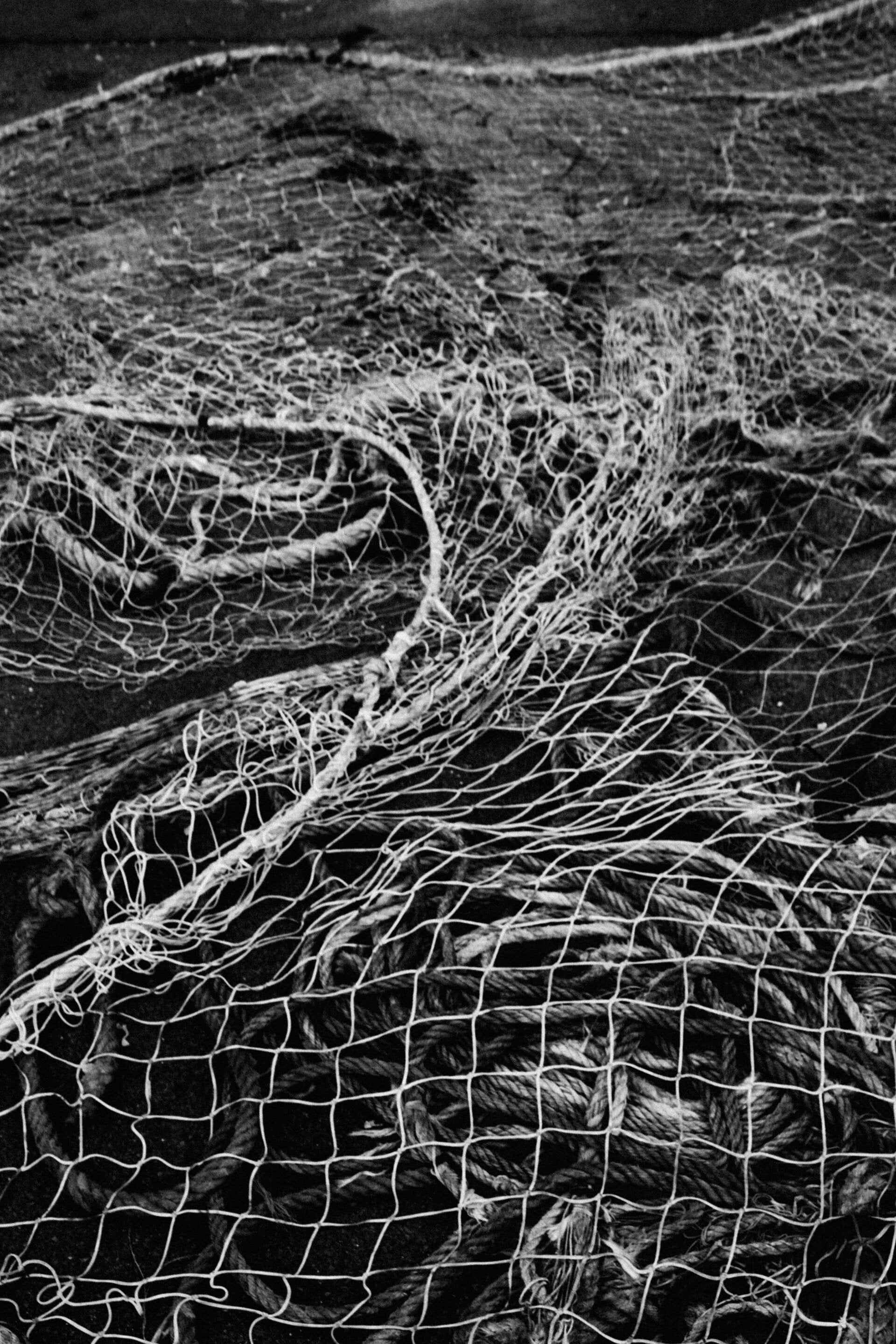
The Significance of the 153 Fish
Why does John count them? The precision — not "many" or "about 150" but exactly 153 — has fascinated readers for two thousand years and produced an extraordinary range of interpretations. The most credible are worth knowing.
Jerome (4th century) argued that Greek zoologists of his day had catalogued 153 different species of fish in the known world. If that was the accepted total, then the 153 fish represented a catch of every kind — a symbolic statement that the mission of these fishermen would reach every kind of person in the world. The net unbroken despite the impossible weight is then a picture of the Church holding all kinds without tearing.
Augustine (4th century) saw a mathematical structure: 153 is the 17th triangular number — the sum of all integers from 1 to 17. And 17 is 10 (the Law) plus 7 (the gifts of the Spirit). The number is thus a picture of the Law fulfilled and completed by grace — the full number of God's people gathered in.
The simplest reading is the one that should not be bypassed: John counted them because he was there. This is eyewitness precision of the kind that distinguishes living memory from legend. No one making up a resurrection story invents the number 153. They say "many fish" or "a great catch." The specificity is the signature of someone who was in the boat, who counted, and who never forgot.
All three may be true simultaneously. The risen Christ has a way of making specific historical events carry multiple layers of meaning. The fish were real. The count was real. And John — who knew his Ezekiel, who had read the Psalms, who understood numbers in a way that modern readers do not — may have seen all the symbolic resonance and included it because it was all true at once.
The Restoration
Three Questions by a Charcoal Fire
After breakfast, Jesus spoke to Peter. Not to all of them — to Peter. The others were present, witnessing, but the conversation was between Jesus and the man who had denied him three times by a charcoal fire in the High Priest's courtyard.
Before unpacking the three questions, one thing needs to be said clearly about the Greek: every English sermon you have ever heard about this passage has probably told you that Jesus uses two different words for love — agapao (selfless, divine love) the first two times, and phileo (mere brotherly affection) the third time, and that this represents a ladder from higher love to lower. This interpretation is elegant. It is also almost certainly wrong. Here is why it matters to say so.

Ἀγαπᾷς / Φιλεῖς - Agapao / Phileo · The "Two Loves" Debate
The popular interpretation: Jesus asks "do you agapao me?" twice (unconditional, Godly love) and Peter answers "I phileo you" (mere friendly affection). On the third question Jesus drops to Peter's level and uses phileo. This has been preached as a story about God meeting us where we are.
Why the major scholars disagree: F.F. Bruce, D.A. Carson, Raymond Brown, and most modern NT scholars point out that John uses these two words interchangeably throughout his Gospel. John 3:35 says the Father agapaō the Son; John 5:20 says the Father phileō the Son — same relationship, different word. The "beloved disciple" is described with agapaō four times and phileō once in the same Gospel. If John intended a meaningful difference, he undermined it with his own usage everywhere else.
What actually matters: John tells us exactly why Peter was grieved — "because he said to him the third time, 'Do you love me?'" (John 21:17). Peter's grief came from the repetition — a third question, echoing three denials, pulling the splinter from a wound that had been festering since a rooster crowed. The real literary signal is not the word for love. It is the charcoal fire. It is the number three. The symmetry is the restoration: what was broken three times is being set right three times, in the same material form — the same kind of fire, the same kind of question, the same number of answers.
With that established, here is what the scene actually contains:
First Question · John 21:15
"Simon, son of John, do you love me more than these?"
Notice Jesus uses the name Simon — the old name, the pre-calling name, before the new identity "Peter" (rock) was given. He is reaching back to the beginning, before all of it, addressing the fisherman rather than the apostle. "More than these" — more than the other disciples? More than the boats and nets beside you? Either reading adds weight. Peter had once boasted that even if all the others fell away, he would not. The question quietly excavates that claim. Peter did not answer "more than these." He said simply: "Yes, Lord; you know that I love you." Jesus said: "Feed my lambs."
Second Question · John 21:16
"Simon, son of John, do you love me?"
The comparison has been dropped. No "more than these." Just the bare question. Peter answered the same way: "Yes, Lord; you know that I love you." Jesus said: "Tend my sheep." Three different responses from Jesus — feed my lambs, tend my sheep, feed my sheep — each using slightly different vocabulary, in the way that a careful teacher repeats a lesson with variation so that multiple facets of the same truth lodge in the student. The shepherd imagery is deliberate: Jesus is the Good Shepherd who laid down his life for the sheep. He was transferring that shepherding responsibility — the same sacrificial, costly, personal care — to Peter.
Third Question · John 21:17
"Simon, son of John, do you love me?"
The third question. John tells us: "Peter was grieved because he said to him the third time, 'Do you love me?'" The grief is the key. The third question landed in Peter with a weight the first two had not — because in Peter's memory, there was another third time. A third denial. A rooster. A look across a courtyard. Jesus was not torturing Peter; he was healing him. You cannot unsay three denials by making a single grand declaration of loyalty. You can say three times, clearly, in the cold morning light, to the man you denied, that you love him. Peter said: "Lord, you know everything; you know that I love you." And Jesus said: "Feed my sheep." Then he told Peter what following him to the end would cost.
The Cost of the Commission
"When You Are Old, Another Will Lead You"
The three questions were not the end of the conversation. What followed them is one of the most sobering passages in the resurrection accounts — and the one that most clearly marks the forty days as preparation for something that would be hard.
"Truly, truly, I say to you, when you were young, you used to dress yourself and walk wherever you wanted, but when you are old, you will stretch out your hands, and another will dress you and carry you where you do not want to go."
John 21:18 · Jesus to Peter · Immediately After the Restoration
John adds the editorial note: "This he said to show by what kind of death he was going to glorify God." Jesus was telling Peter that he would die — and that the manner of his death would involve his hands being stretched out, dressed by another, taken somewhere against his will. The language is widely understood as a reference to crucifixion. Peter would die as his Lord had died.
Then Jesus said two words: "Follow me."
The first time Jesus had said those words to Peter was on the shore of this same lake, three years earlier, with a fishing net in his hands: "Follow me, and I will make you fishers of men." Those two words had started everything. Now, standing on the same shore, after the denial and the resurrection and the threefold restoration and the prediction of a martyr's death, Jesus said them again: "Follow me."
Not "serve me" or "build my church" or "preach the gospel." Follow me. The call was the same as it had always been. The cost had simply become visible. Peter, who had followed enthusiastically for three years and then failed completely, was being called to follow again — now knowing where the path led, now knowing what it would cost, now stripped of the self-confidence that had made him say "even if I must die with you." This time the yes would cost more and mean more, because Peter knew what he was saying.
He said it anyway. He said it for the rest of his life. Tradition holds that thirty years after this breakfast on the shore, Peter was crucified in Rome — upside down, at his own request, because he did not consider himself worthy to die as his Lord had died. The hands were stretched out. The prediction was fulfilled. "Follow me" led all the way there.
The Larger Gatherings
Five Hundred Witnesses — and a Brother Who Finally Believed
The lakeside restoration of Peter is the centrepiece of the Galilee period, but it was not all that happened in those northern weeks. Paul's list in 1 Corinthians 15 records two additional appearances that belong to the Galilean phase of the forty days — and together they constitute the most widely witnessed and historically important resurrection encounters of the whole period.
| Appearance | What Happened · Why It Matters |
|---|---|
| The Five Hundred | 1 Corinthians 15:6 — "Then he appeared to more than five hundred brothers at one time, most of whom are still alive, though some have fallen asleep." This is the only appearance Paul mentions with a live-witness caveat: "most of whom are still alive." He is saying, in effect: you can check this. Most scholars place this appearance on the mountain in Galilee that Matthew 28:16–17 describes — the appointed mountain where the disciples gathered and Jesus came and gave the Great Commission. If the disciples had been instructed to go to Galilee (and they had been, three times), and if word had spread to the wider community of followers who had gathered for the Passover, the hillside gathering of five hundred is entirely plausible. This was the largest single post-resurrection appearance. More than five hundred people, in broad daylight, on a Galilean hillside, saw the risen Christ simultaneously. |
| James | 1 Corinthians 15:7 — "Then he appeared to James." No details. No location. No conversation recorded. Just the bare fact: Jesus appeared to his brother James. But the absence of detail is itself striking because the outcome was so dramatic and so well documented. James had not believed in Jesus during the ministry. He had thought Jesus was out of his mind (Mark 3:21). He had not been at the cross. And yet within weeks of the resurrection he was in the upper room with the disciples (Acts 1:14), and within years he was the recognised leader of the Jerusalem church — the man Paul called a "pillar" (Galatians 2:9), the man who presided over the Jerusalem Council, the man who would die as a martyr rather than renounce his brother. Something happened to James. One encounter with the risen Jesus was enough to transform the sceptical brother into the most important leader in the early church. |
Together, these two appearances — one to five hundred people in public and one to a single sceptic in private — frame something important about how the risen Christ was operating during the forty days.
He was willing to appear to crowds and to individuals.
To those already convinced and to those who were not. To the public meeting on the hillside and to the quiet private encounter that no one else saw. The resurrection was not a single event for a single audience.
It was being given, again and again, in forms appropriate to each person's need.
The Hardest Witness
James: What It Would Take to Believe Your Brother Was God
The appearance to James deserves more space than it usually receives, because it is one of the most historically significant and theologically rich moments of the entire forty days.
Consider the situation. James had grown up in the same house as Jesus. He had shared meals with him, argued with him, probably worked alongside him in Joseph's carpentry shop. He had watched his older brother leave for a public ministry that the family found alarming. Mark 3:21 records that when Jesus's family heard about what he was doing, "they went out to seize him, for they were saying, 'He is out of his mind.'" James was there for that. He thought his brother had lost it.
John 7:3–5 records James and the other brothers goading Jesus to go to Jerusalem and show himself publicly: "For not even his brothers believed in him." This was not mild scepticism. These were people who had lived with Jesus and who were convinced he was deluded. You cannot grow up with someone, observe them closely for three decades, and simply be swept away by crowd enthusiasm. James had the most intimate possible proximity to Jesus and he had concluded: this is not the Messiah. This is my brother who has gone off the deep end.
Then Jesus died. And three days later, he appeared to James.
No details survive of that conversation. But we know its result with extraordinary precision — because the man who had thought his brother was insane became the leader of the Church in the city where his brother had been executed. Within five years of the crucifixion, James was the recognised head of the Jerusalem community. He chaired the Jerusalem Council. Paul visited him specifically on his first post-conversion trip to Jerusalem and describes him as a "pillar." He was executed around 62 AD for refusing to stop proclaiming Jesus as the risen Messiah — thrown from the Temple pinnacle and then stoned.
"James's conversion from the man who thought his brother was insane to the leader who died for that brother's resurrection is one of the strongest single arguments for the historical reality of the appearances. You do not die for a lie your brother told you."
The Argument from James · Gary Habermas · The Case for the Resurrection of Jesus
Growing up as Jesus's sibling — seeing him at his best and worst, watching him sleep and eat and argue and work — is precisely the vantage point from which the resurrection would be most difficult to fabricate and most impossible to deny. James knew his brother was dead. And James knew he had seen him alive. The gap between those two facts is where the resurrection lives.
The People in the Story
What They Were Carrying — and What the Lake Morning Did to It
Peter — The Man Who Needed Three Questions
Peter's arc through the forty days is the most dramatic in the entire post-resurrection narrative. He received the first private apostolic appearance on Sunday morning. He was in the locked room for both appearances. He ran to the tomb. He jumped out of the boat.
And then he sat by a charcoal fire and answered three questions from the man whose eyes he had met across a courtyard the night he denied him. The restoration was not a quick absolution — it was a surgical reopening of the wound followed by careful repair.
Three denials needed three questions. The matching of form — the fire, the number, the setting — was mercy in disguise. Peter left that beach with a commission and a cross. He carried both for thirty years.


John — The One Who Recognised Him First
John's recognition came through the miracle — the same pattern as the original calling (Luke 5 records a nearly identical miraculous catch at the beginning of Jesus's ministry).
John was the Gospel writer and the eyewitness. He was also the youngest of the Twelve — probably still a teenager when Jesus called him, now in his early twenties at the resurrection.
His closeness to Jesus throughout the passion, his presence at the cross, his care of Mary — all of it means he observed more of the Passion narrative than almost any other disciple. He wrote the most detail. The breakfast scene in John 21 reads exactly like what it is: a very old man writing down what he still remembered from one specific morning on the lake, because he had never forgotten a single detail of it.
James the Brother — The Sceptic Who Became a Pillar
James of Jerusalem — to distinguish him from James son of Zebedee, one of the Twelve — is one of the most undersung figures in the entire New Testament story.
He appears almost nowhere in the Gospels because he was not a follower during the ministry. He appears everywhere in Acts because of what the resurrection did to him. His epistle — the Letter of James — is a document about the integration of faith and action, written by a man who had once been the chief local sceptic about his brother's claims.
The sceptic who became the most influential Jewish Christian leader of the first generation wrote a letter that is still read by billions. One appearance by a risen brother did that. The forty days were not just about the Eleven. They were about everyone the risen Christ chose to reach.

What We Usually Miss
The Depths in the Familiar Story
The two charcoal fires are the most important detail in John 21
The word anthrakia — charcoal fire — appears only twice in the entire New Testament: John 18:18 (Peter's denial) and John 21:9 (the lakeside breakfast). John chose this specific, uncommon word both times. He was not describing a generic fire; he was creating a deliberate literary and theological echo. Jesus built a charcoal fire on the shore of the lake before Peter arrived — not because it was the most practical fuel, but because this restoration could only happen properly in the presence of the same kind of fire where the wound had been made. Restoration often requires returning to the site and the form of the original wound. You cannot simply move forward as if the denial never happened. You go back, and you answer the question three times, and the fire bears witness to both the breaking and the mending.
Peter was restored before he was commissioned — not commissioned despite being unrestored
The order of John 21 matters enormously. Jesus did not say: "Peter, despite what happened, here is your commission." He said: "Simon, do you love me?" Three times. And only after three declarations of love, freely given over a meal, did the commission come. Many churches have the order wrong — they commission people who have not yet been restored, and wonder why they lead from a wound rather than from wholeness. Jesus's method was slower and more careful than that. First the fire. First the breakfast. First the three questions. Then: "Feed my sheep." Restoration precedes commission. Always.
Five hundred witnesses in broad daylight is the most evidentially significant appearance in the entire forty days
Paul's mention of five hundred witnesses in 1 Corinthians 15:6 — with the parenthetical note that most of them were still alive when he wrote — is the most extraordinary evidentiary claim in the New Testament. Paul was writing to the Corinthians around 55 AD, approximately twenty-five years after the resurrection. He was saying: if you want to verify this, there are hundreds of people who were there, and most of them are still reachable. This is not the rhetoric of mythology. Mythology does not offer living witnesses to check against. This is the kind of statement only someone confident in the historical reality of what happened would make in a public document. The appearance to five hundred is not a peripheral detail; it is the most easily falsifiable claim in early Christianity, and it was never falsified.
"Follow me" at the end is the same call as at the beginning — but it means something completely different now
When Jesus said "Follow me" to Peter on the lakeshore the first time, Peter had no idea what following would eventually cost. He walked away from his nets with enthusiasm, with no foreknowledge of what was coming. When Jesus said "Follow me" at the end of the John 21 conversation, Peter had just been told he would die with his hands stretched out, carried somewhere he did not want to go. The same two words, on the same lake, to the same man — but the second call was accepted with full knowledge of its cost. This is what the whole forty days was doing to the disciples: transforming naive, enthusiastic followers into people who could say yes to Jesus with their eyes open, knowing what following him would eventually require.
The appearance to James is one of the strongest historical arguments for the resurrection
Sceptical historians who do not accept the resurrection as a supernatural event still have to explain the conversion of James. He was not a follower. He had publicly opposed his brother. He was not in the grief-stricken inner circle looking for comfort. He had nothing to gain and everything to lose — in a culture where kinship honour was everything, publicly claiming your crucified brother was the risen Son of God was professionally and socially ruinous. Yet within a few years James was leading the Jerusalem church and willing to die for it. The criteria that historians use to assess historical claims — multiple early attestation, embarrassing details, enemy acknowledgment, willing martyrdom — all point to the same conclusion: something happened to James that completely overturned his prior scepticism. The only thing he ever claimed happened to him was that his dead brother appeared to him alive.

Study Guide
Questions for Reflection & Discussion
Peter went back to fishing — returning to the familiar when everything had changed. Is there something in your own life that you go back to when things are uncertain or overwhelming? A habit, a place, a role, an old identity? What does Jesus's response to Peter's return to the boats — coming to meet him exactly there, on the water, in the work — tell you about how he relates to the places we retreat to?
John 21:3 · Isaiah 43:18–19 · Philippians 3:13
The charcoal fire Jesus built on the shore deliberately echoed the charcoal fire beside which Peter denied him. Jesus chose that detail — the same kind of fire, the same number of questions — to make the restoration match the wound. Is there a place, a memory, a repeated situation in your own life where you carry an old failure? What would it mean for Jesus to meet you in that specific place, with that specific fire, and ask the same question until it was healed?
John 21:9 · John 18:18 · Psalm 103:12
Jesus restored Peter before he commissioned him. He asked "do you love me?" before he said "feed my sheep." The love question came first, and the work followed from it. Is there a way you are trying to serve or lead or produce for God from a place of unresolved guilt, incompleteness, or need for restoration? What would it look like to receive the three-question restoration before the commission — to let the love be settled before the work begins?
John 21:15–17 · 1 John 4:19 · Romans 8:1
James spent three years living with and then opposing Jesus — and one private encounter with the risen Christ made him willing to die for him. What is the one thing, if you encountered it directly, that would change everything for you? And what does James's story tell you about the difference between inherited religious belief and personally encountered faith?
1 Corinthians 15:7 · John 7:5 · Acts 15:13
Jesus told Peter: "When you are old, another will dress you and carry you where you do not want to go" — and then said "Follow me." He told him the cost before the call was renewed. How does knowing the cost change what it means to say yes? Are you following Jesus with a clear view of what it might require, or are you following with an unspoken assumption that it won't be too expensive? What does Peter's second "follow me" teach you about the nature of mature faith?
John 21:18–19 · Luke 9:23 · Philippians 1:21
"Come and have breakfast." In the middle of everything — the mission, the restoration, the predictions of martyrdom — Jesus made a fire and cooked fish and said come and eat. What does the breakfast by the lake tell you about what Jesus thinks ordinary life and ordinary needs are worth? How do you experience the risen Christ in the ordinary — in meals, in morning light, in the familiar places where you work?
John 21:12 · Luke 24:30–31 · Acts 2:42
Dig Deeper — Sources & Further Reading
John 21 — Read as a Complete Scene
The entire chapter as one continuous narrative from the night of fishing to the prediction of Peter's death, following the arc of restoration rather than reading it as isolated episodes
1 Corinthians 15:3–8 — Paul's Creed
Read in one sitting: the oldest written record of the resurrection appearances, including the five hundred witnesses and the appearance to James — written within 25 years of the events, with living witnesses Paul explicitly invites readers to consult
"When they had finished breakfast, Jesus said to Simon Peter, 'Simon, son of John, do you love me?' ... He said to him, 'Feed my sheep.'"
John 21:15, 17 · The Shore of the Sea of Galilee · The Restoration and the Commission

Quiz Yourself
Here is a quiz for you on todays devotional. Don't worry, no timer, no public announcements on what you got, this is just for you.
Add comment
Comments